
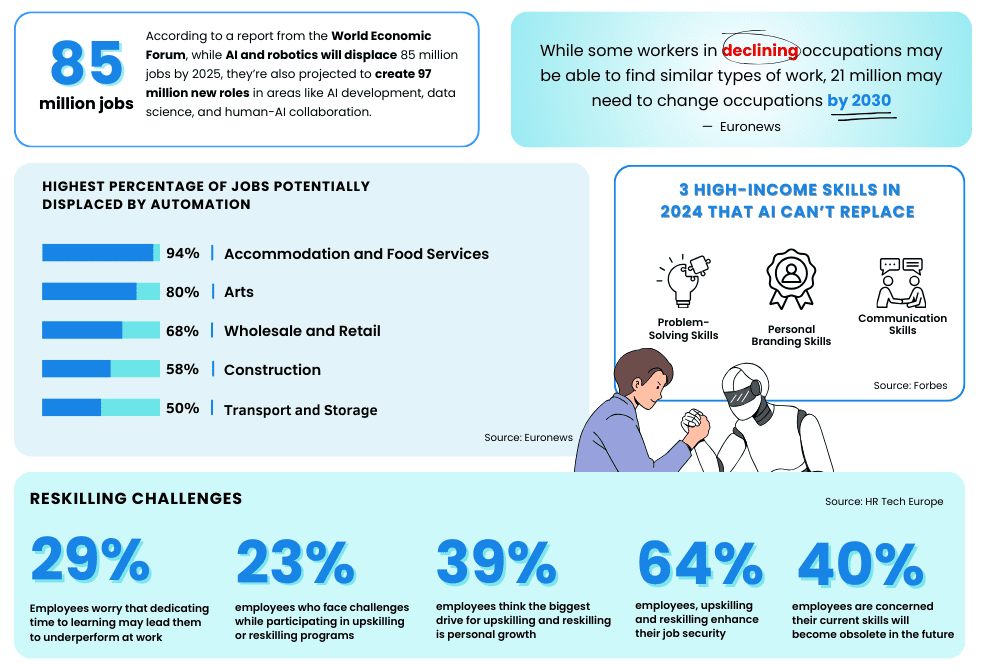
AI Workforce Solutions: Combining Human Expertise and Intelligent Automation for Sustainable Growth
How to design and operate an AI workforce that lasts: the operating model, human-in-the-loop patterns, governa...
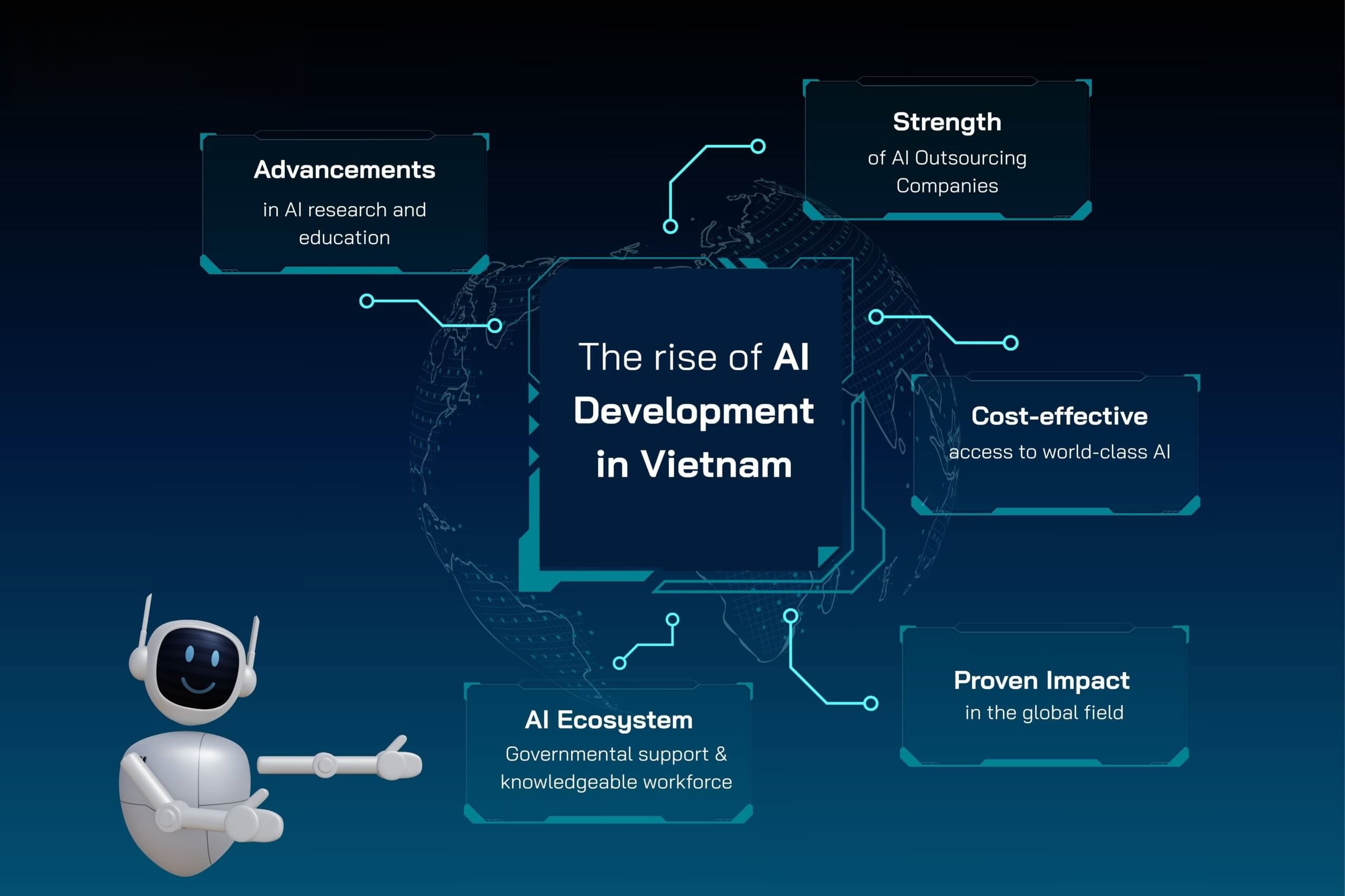

Something interesting has been happening in Southeast Asia over the past decade. While most people were watching Silicon Valley, a quieter tech revolution was taking shape in Vietnam, and global businesses are now paying close attention. According to Kearney's Global Services Location Index, Vietnam currently ranks #7 in the world for offshore services attractiveness, putting it in the same tier as India and the Philippines. For companies trying to build serious AI products without burning through their entire R&D budget, that ranking is worth understanding.
Vietnam has become one of the first choices for AI outsourcing among international companies, and for good reasons: a large pool of technically skilled engineers, costs that actually make sense, and a government that has made digital transformation a national priority. Whether your team needs custom AI development, scalable machine learning outsourcing, or end-to-end AI automation services, Vietnam's tech ecosystem has both the talent and the track record to deliver.
In this guide, Mind Supernova, your AI & Blockchain Innovative Partner, cover why Vietnam has become a go-to AI partner for companies around the world, what you can realistically expect from the partnership, how to find and evaluate the right vendor, and which firms are consistently rated among the top AI outsourcing companies in Vietnam.
Vietnam's AI vendor landscape has matured significantly over the past several years. The market has moved well beyond generalist IT service delivery into firms with real specialization in data science, ML engineering, and AI product development. Below are seven companies consistently recognized for technical quality, delivery reliability, and genuine AI capability.
 FPT Software
FPT Software is Vietnam's largest technology services company by both revenue and headcount, operating across more than 30 countries with over 30,000 employees globally. Its AI division, FPT.AI, has built a broad portfolio of intelligent automation products including NLP-driven virtual assistants, document processing tools, and enterprise chatbot platforms. These are not demo-stage products. They are already running in production at some of Vietnam's largest banks and telecommunications providers.
FPT's scale is its primary advantage. For enterprises running large, complex AI programs as part of broader digital transformation with AI initiatives, FPT has the delivery breadth and governance infrastructure to handle that kind of organizational complexity.
Best for: Large enterprises that need full-spectrum AI automation services with proven, enterprise-grade delivery governance.
 Viettel AI
Viettel AI is the artificial intelligence arm of Viettel, Vietnam's largest telecommunications conglomerate. The company works at the intersection of infrastructure-scale computing and research-oriented AI development, which is a relatively rare combination to find in a single vendor. Its R&D labs have produced advances in Vietnamese-language NLP, computer vision applications for surveillance and logistics, and AI-powered network optimization for telecommunications infrastructure. For international partners, the combination of research-grade technical capability and large-scale commercial operational resources is genuinely hard to replicate elsewhere.
Best for: Partners who need advanced NLP for Asian languages, large-scale computer vision deployments, or AI applications in the telecommunications sector.
 CMC Global
CMC Global is the international division of CMC Corporation, one of Vietnam's most established technology conglomerates. With delivery centers in Hanoi, Ho Chi Minh City, and Japan, CMC has a strong track record in IT outsourcing Vietnam, particularly with Japanese clients, and has been expanding into Europe and North America in recent years.
CMC's AI capabilities focus on data analytics, intelligent process automation, and digital twin implementations for manufacturing environments. Their structured approach to project governance and their ISO certifications make them well-suited to industries where auditability matters as much as technical output.
Best for: Manufacturing, logistics, and enterprise clients where process-centric AI and rigorous project governance are priorities.

Mind Supernova
Mind Supernova was built on a direct premise: high-quality AI and software development should be accessible to global startups and growing businesses, not just large enterprises with deep engineering budgets. Today, the company has more than 150 engineers working across AI and ML, blockchain, cloud infrastructure, and full-stack development.
MSN's AI development services cover the complete project lifecycle. That means starting from data strategy and model architecture, all the way through to production deployment, performance monitoring, and ongoing improvement. Clients are not handed a finished model and left to manage the rest on their own. The team stays involved through the stages that typically determine whether an AI system actually performs well in production.
Projects have spanned several sectors: medical image analysis and clinical NLP in healthcare, fraud detection and credit scoring models in fintech, recommendation engines and visual search in e-commerce, and predictive maintenance with computer vision-based quality inspection in industrial IoT. Engineers take active ownership of technical decisions, including architecture choices, dataset quality reviews, and system design for scale. They are not simply implementing specifications and calling that a partnership.
For teams still working out the scope of what their project needs before engaging a vendor, this guide on AI automation implementation is a practical resource for structuring the planning process first.
Mind Supernova supports fixed-scope, time-and-materials, and dedicated team retainer engagement models, with a clear NDA and IP protection framework that meets legal requirements across US, EU, and APAC jurisdictions.
Best for: Startups and growth-stage companies that need a full-cycle AI partner in Vietnam with genuine technical depth, flexible engagement structures, and direct senior engineer involvement throughout the project.
KMS Technology is a Vietnam-based software company with a strong presence in the US market. Its sister company, KMS Solutions, focuses on the domestic Vietnamese market, while KMS Technology primarily serves American clients. With over 1100 engineers, KMS has built AI and ML practices around AI-driven quality assurance and test automation, data engineering pipelines, and business intelligence solutions. Their AI work is typically embedded within broader software engineering programs, which makes them a practical choice for product companies that want AI capabilities built into existing applications rather than developed as a separate workstream.
Best for: US-focused product companies looking to incorporate AI features into SaaS platforms, mobile applications, or enterprise software.
 Axon Active
Axon Active is a software engineering company with Swiss ownership and development centers in Vietnam. Their delivery model brings European management practices together with Vietnamese engineering talent, which tends to work well for European clients who want the cost benefits of offshore development without a significant change in how projects are run day-to-day. Their AI practice covers applied machine learning including recommendation systems, predictive analytics, and intelligent automation, delivered through a sprint-based agile process. Their familiarity with GDPR compliance requirements makes them a solid option for European companies building AI systems that handle personal data.
Best for: European companies, particularly those in German-speaking markets, that need compliance-conscious AI development outsourcing in Vietnam with a Western project management structure.
| Company | Team Size | Core AI Strength | Best Client Profile | Key Differentiator |
| FPT Software | 33000+ | AI automation, NLP, document AI | Large enterprises | Scale and delivery breadth |
| Viettel AI | - | Computer vision, Vietnamese NLP | Telecom, public sector | Research-grade AI with infrastructure backing |
| CMC Global | 3000+ | Data analytics, intelligent automation | Manufacturing, logistics | Process discipline and ISO governance |
| Mind Supernova | 150+ | Full-stack AI/ML, blockchain, cloud | Startups and growth-stage global clients | Full-cycle engagement with senior technical ownership |
| KMS Technology | 1100+ | AI-driven QA, data engineering, BI | US SaaS and product companies | US-market focus and software integration depth |
| Axon Active | 650+ | Predictive analytics, recommendation AI | European enterprises | Swiss management culture with GDPR compliance experience |
Choosing the right AI partner in Vietnam is really about finding a team whose strengths match your actual project needs. Here is a practical framework for making that decision without getting distracted by polished sales presentations.
Ask for evidence, not just claims. Every vendor will tell you they specialize in AI. What you actually want to see is documented outcomes from past projects: model accuracy benchmarks, inference latency improvements, production deployment timelines from comparable work. If a vendor cannot put specific numbers behind their experience, that tells you something important.
Meet the technical team before you sign anything. The engineers who will actually build your models are usually not the same people who present in the initial sales meetings. Before committing, ask for a working session with the technical leads, including data scientists, ML engineers, and solution architects. Ask which frameworks and platforms they use day-to-day, such as PyTorch, TensorFlow, AWS SageMaker, or Azure ML, and push for depth rather than accepting a broad list of claimed competencies.
Evaluate how the team handles communication and documentation. In machine learning outsourcing engagements, communication quality between client and vendor is one of the biggest predictors of project success. Find out how the team runs sprint reviews, how they escalate problems, and whether they maintain structured documentation throughout the project. Good async habits, including detailed sprint notes, recorded demos, and well-maintained wikis, make the engagement more resilient when operating across time zones.
Review their approach to IP protection and data security. For AI projects that involve proprietary datasets or sensitive user information, this is not optional. Check that the vendor has clear policies on NDAs, data processing agreements, and relevant security certifications such as ISO 27001 or SOC 2. Reputable AI outsourcing firms will have these frameworks in place and will discuss them openly from the start.
Look for vendors who bring ideas, not just effort. The most productive offshore AI development partnerships involve teams that flag potential issues early, suggest better approaches when a specification has gaps, and take genuine interest in the project outcome. Look for signs of that orientation in early conversations before the contract is signed.
Understand the engagement structure before you start. Fixed-price, time-and-materials, and dedicated team retainer models each suit different project types and risk profiles. A vendor worth partnering with will help you think through the trade-offs and choose the model that fits your situation. If you want a head start on planning, this guide to building an effective AI automation strategy lays out a useful framework for scoping what you actually need before the first vendor conversation.

Vietnam IT Workforce Statistics
Vietnam's current position in the global tech market is not an accident. It is the result of sustained, deliberate investment in education and infrastructure that has been building for over two decades.
The numbers tell a clear story. According to the Vietnam Tech Talents Report (2023), the country has 530,000 IT employees, trained through 300 universities and colleges that offer dedicated IT programs. At any given time, more than 57,000 students are enrolled in university IT courses, entering the workforce with an average of 12.9 years of education. That is a talent pipeline that replenishes itself and grows every year.
What makes this workforce particularly relevant for AI work is where engineers are choosing to specialize. Vietnamese developers are increasingly building expertise in exactly the areas that make offshore AI development viable at scale: deep learning, natural language processing, computer vision, and MLOps. The country's #44 ranking on the Global Innovation Index (2025), placing it in the Top 3 across ASEAN, reflects not just how much technical work is happening here, but how sophisticated that work is becoming.

Vietnam IT outsourcing potential
The commercial picture backs this up. Vietnam's IT outsourcing market revenue is forecast to hit $880 million by 2026, growing at a CAGR of 16.38% between 2024 and 2028 (Statista). That kind of sustained growth does not happen in a market where quality is inconsistent. It signals a vendor ecosystem that international clients are returning to, and expanding with, over time.
Kearney's country-level outsourcing assessment gives Vietnam a composite score of 5.58, with strong marks in Financial Attraction (2.82) and Business Environment (1.17). In practical terms, this means two things: the cost structure genuinely works in your favor, and the operating environment, including regulatory stability, English proficiency, and time zone overlap with Europe, does not add unnecessary friction to cross-border collaboration.
For companies exploring IT outsourcing Vietnam as part of a broader sourcing strategy, these are not just encouraging statistics. They help explain why offshore development Vietnam has graduated from an experimental option to a standard approach for hundreds of international businesses. If you want to understand the bigger picture of how AI is reshaping business operations in this region, this overview of digital transformation with AI is a good place to start.

Benefits of AI Outsourcing in Vietnam
The most immediate benefit of AI outsourcing services in Vietnam comes down to cost, but it is worth being specific about what that actually means in practice. Senior AI engineers in Vietnam typically earn 40 to 60 percent less than equivalent talent in the US, UK, or Australia. And this is not a trade-off where cheaper means lower quality.
When you calculate AI outsourcing costs in Vietnam across a full team, including engineers, QA specialists, DevOps, and project management, the savings over twelve months are substantial enough to fund an extra development sprint, accelerate a product launch, or reinvest into growth. The engineers doing custom AI development here are training transformer models, building computer vision pipelines, and shipping production-grade machine learning systems. The cost difference reflects local economics, not a gap in capability.
Hiring AI developers in Vietnam gives you engineers who have developed their skills in environments with real constraints: limited compute budgets, messy datasets, and tight delivery timelines. That background tends to produce practical problem-solvers rather than engineers who default to the most resource-heavy approach available.
Many AI companies in Vietnam have also built genuine domain expertise across specific industries, including healthcare diagnostics, fintech risk modeling, retail personalization, and manufacturing quality control. When the team you engage has already navigated similar challenges in your sector, you get relevant context alongside technical execution. For a closer look at where AI automation tends to create the most meaningful impact, this article on the role of AI automation is worth reading before you define your project scope.
A well-established AI outsourcing company in Vietnam gives you the ability to adjust your team composition as your project evolves. Say you need three computer vision engineers for a six-month development phase, followed by two MLOps engineers to handle production deployment and monitoring. A capable partner can manage that transition cleanly, without you carrying the overhead of direct hiring, onboarding, and eventual offboarding. For companies in growth stages where requirements change faster than headcount plans, that kind of flexibility is genuinely valuable.
Vietnam's professional culture values precision, reliability, and building long-term working relationships. These are qualities that fit naturally with AI development, where feedback loops are frequent, requirements evolve, and trust between teams needs to develop over time. Vietnamese development teams working in offshore AI development typically maintain four to six hours of daily overlap with European time zones. US-based companies can often negotiate evening-overlap arrangements that keep communication moving without requiring unreasonable hours on either side.
Vietnam's government has committed to making the country a regional AI hub by 2030, and that commitment shows up in concrete ways: investment in digital infrastructure, AI research funding at the university level, and a regulatory environment that is becoming more predictable for international technology businesses. The broader ecosystem supports this direction too, with global tech companies opening R&D centers in Hanoi and Ho Chi Minh City, which raises the overall technical standard of the talent pool over time.
An honest look at AI outsourcing services in Vietnam has to include the real challenges. Understanding them upfront is what allows you to structure a partnership that reduces risk from day one, rather than discovering friction after the contract is signed.
Data quality and availability. AI systems are only as good as the data used to train them, and working across geographies adds real complexity to getting clean, properly labeled, and representative datasets to an offshore team. Inconsistent labeling standards, misaligned data schemas, and legal restrictions on cross-border data transfer can all affect project timelines in ways that are difficult to recover from mid-engagement. The most effective mitigation is establishing a clear data governance protocol before development begins, covering how data will be shared, labeled, versioned, and validated throughout the project.
Intellectual property and legal structure. Vietnam has made meaningful progress on IP frameworks, but careful legal structuring still matters for international clients. The standard recommendation is to structure contracts under a jurisdiction with well-established IP law, such as the US, UK, or Singapore, with clear work-for-hire language and NDAs that are enforceable in both countries. Established AI outsourcing companies in Vietnam will support this process without hesitation. Any vendor that resists is worth treating as a red flag.
Requirements definition and scope clarity. AI projects are particularly sensitive to vague or incomplete requirements. A brief like "build a recommendation engine" can mean very different things technically. Collaborative filtering, content-based filtering, and hybrid approaches each have different implications for data requirements, training time, computational costs, and ongoing maintenance. Investing time upfront in detailed functional specifications, clear acceptance criteria, and defined model evaluation benchmarks will prevent a significant amount of costly rework later in the project.
Time zone coordination. For US West Coast teams, the 12 to 15-hour difference with Vietnam requires intentional communication planning. Productive offshore development Vietnam partnerships typically rely on solid async documentation habits, including detailed sprint summaries, recorded demo sessions, and well-maintained technical wikis, rather than trying to schedule frequent live meetings across such a wide time gap.
Documentation and knowledge transfer at project close. When the engagement ends, you need to fully understand and be able to maintain what was built. This matters especially in regulated industries. Before the project starts, make sure your contract specifies the documentation deliverables you expect: model cards, training data registries, architecture diagrams, and deployment runbooks. Clear documentation requirements protect your investment and ensure your internal team can take real ownership of the system after handover.
Vietnam has become a well-established destination for AI development outsourcing, and the reasons behind that position are structural rather than a passing trend. The country has a large, growing base of technically trained engineers, a cost environment that makes high-quality AI development accessible to companies that cannot compete in US or European talent markets, and a vendor ecosystem that has built genuine specialization across AI disciplines and industry sectors.
If you are ready to explore what offshore AI development in Vietnam could look like for your project, the most useful next step is a direct conversation with a team that understands both the technical requirements and the business context behind them. You can get in touch with us to talk through your requirements and see what a structured engagement could look like for your situation.
How to design and operate an AI workforce that lasts: the operating model, human-in-the-loop patterns, governa...
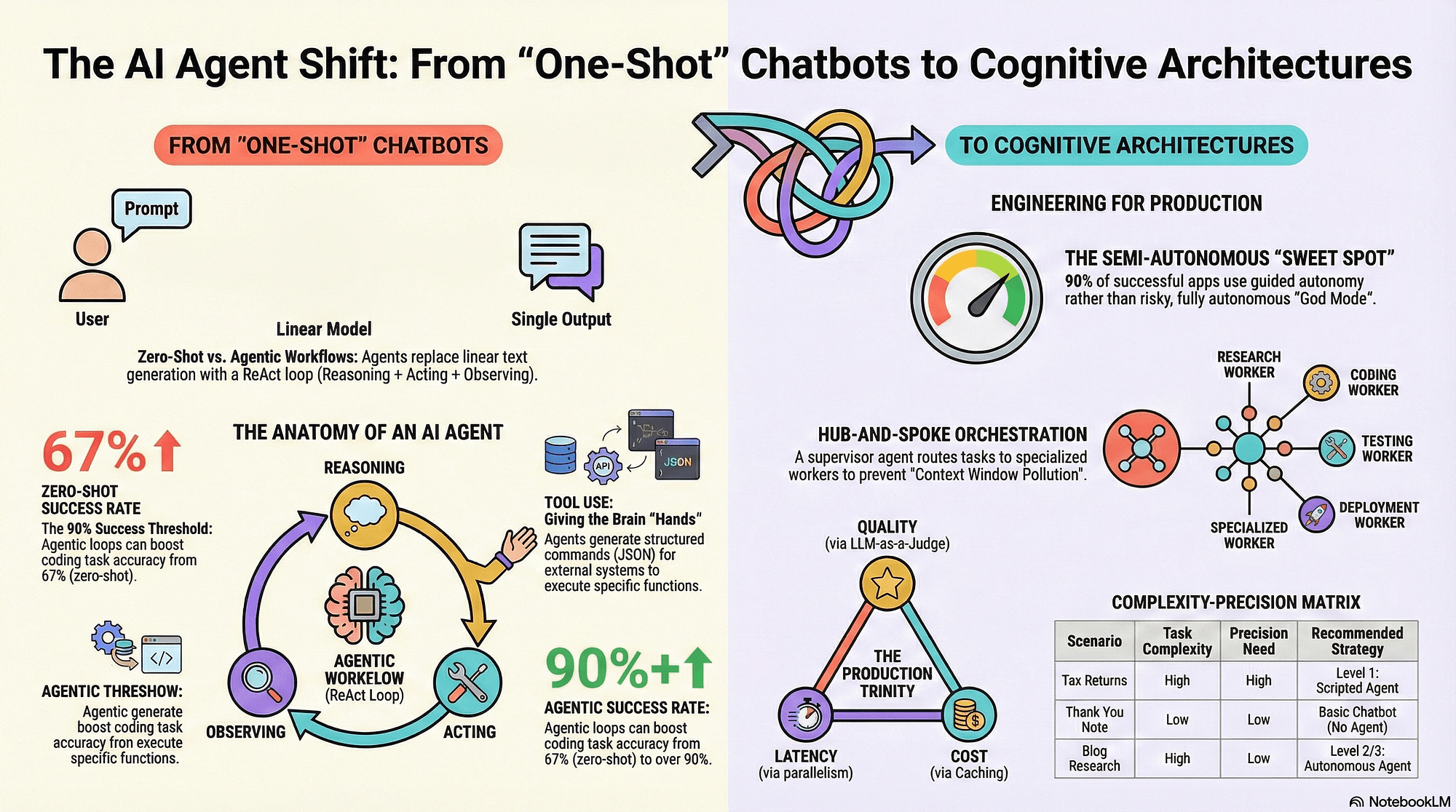
How enterprises build production AI agents: architectures, use cases, governance, and when to outsource agenti...
Data annotation for generative AI: labeling types, RLHF and preference data, quality control, and why teams ou...