How AI Agents and MCP Are Reshaping Enterprise Software Architecture
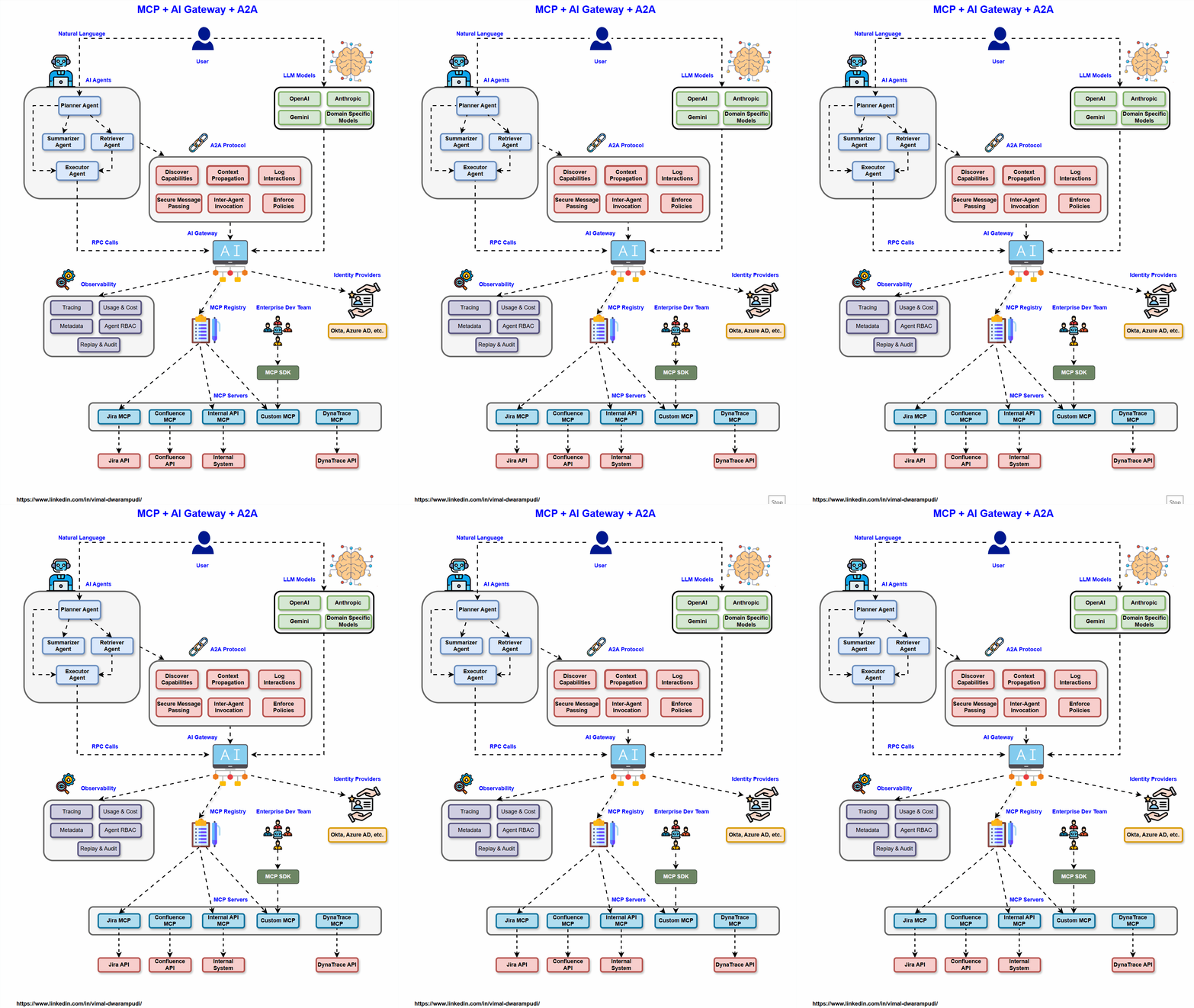
A practical reference architecture for the agentic era: how AI agents and MCP turn brittle point-to-point inte...
How to design and operate an AI workforce that lasts: the operating model, human-in-the-loop patterns, governance, reskilling, and a sustainable scaling roadmap.
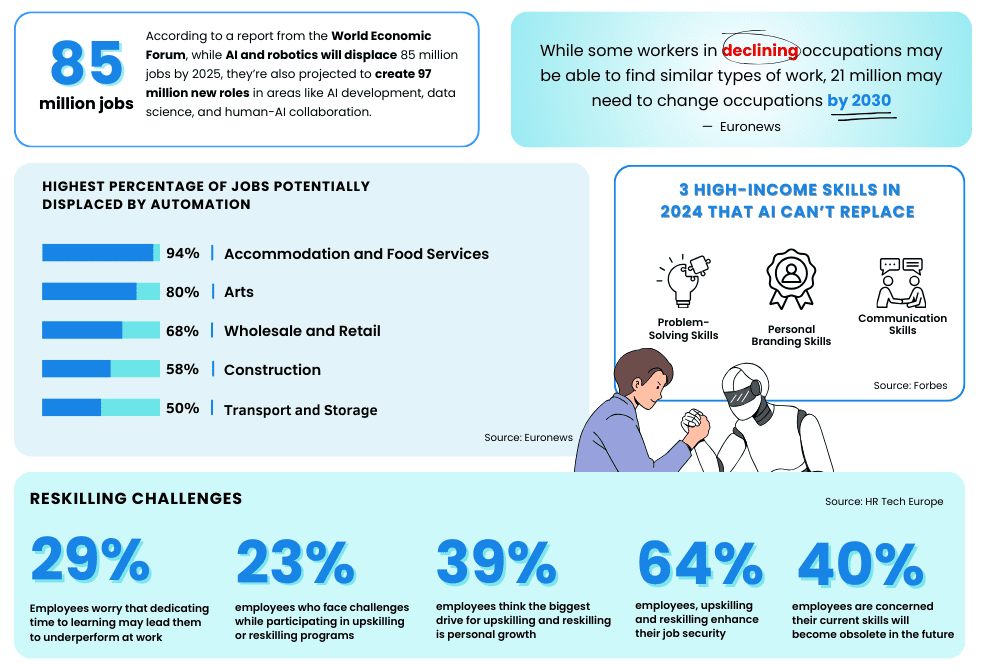
AI workforce solutions are operating models, tools, and services that combine human expertise with intelligent automation so that work is completed by the most capable resource for each task, whether that is a person, an AI agent, or the two working together. The goal is not to replace people with software or to bolt a few copilots onto existing processes. It is to redesign how work flows through an organization so that blended human-AI teams deliver more output, higher quality, and better resilience than either humans or machines could alone.
Most enterprises have already accepted the premise that a blend wins. The harder and more valuable question is operational: how do you actually design, govern, staff, and scale an AI workforce so that it keeps delivering value two and three years from now, instead of decaying into a tangle of brittle automations, unclear accountability, and demoralized staff? That is the question this guide answers.
We deliberately do not re-argue the case for hybrid teams here. If you want the underlying thesis, read our companion piece on the human and machine blend that outperforms either alone, and for the trajectory from copilots toward autonomous roles, see from AI tools to AI employees. This article builds directly on both. It is about the operating model: which work to automate, augment, or keep human; how to design human-in-the-loop oversight; how to govern accountability; how to reskill and source the human layer; how to measure productivity and quality; and how to scale sustainably.
Key Takeaways
AI workforce solutions treat work itself as the unit of design, whereas automation tools treat a single process step as the unit of automation. The distinction matters because it changes what you are buying and what you are accountable for. A tool automates a task. A workforce solution decides, for every task in a process, who or what should do it, how the pieces hand off to each other, who is accountable when something goes wrong, and how the whole arrangement is supervised, measured, and improved over time.
In practice an AI workforce blends several types of contributor. There are human specialists who own judgment, relationships, and accountability. There are AI agents that plan and execute multi-step work with varying degrees of autonomy. There is a digital workforce of more deterministic automations such as scripted bots and integrations. And there is the connective tissue between them: orchestration, escalation routing, monitoring, and governance. Designing this well is closer to operating-model design and organizational design than to software procurement.
This is also why so many AI initiatives stall. Industry surveys through 2025 and into 2026 have repeatedly shown that the large majority of organizations use AI somewhere, but only a minority have moved beyond experimentation to scaled value. McKinsey's research on the state of AI has consistently found that most deployments remain in piloting stages, and that the gap between pilots and production is rarely about model quality. It is about operating-model design: redesigned workflows, clear accountability, trained people, and governance that lets autonomy expand safely.
Start by decomposing each process into tasks, then score each task on volume, judgment intensity, error tolerance, and accountability stakes. High-volume tasks with low judgment and reversible errors are automation candidates. Judgment-heavy tasks where speed matters but a human must own the outcome are augmentation candidates. Tasks that are high-stakes, legally accountable, deeply relational, or genuinely novel should remain human-led, with AI in a supporting role at most.
This task-level decomposition is the single most important step, and the one teams most often skip. Automating an entire job role tends to fail; reallocating tasks within a role tends to succeed. The pattern emerging across research is that AI absorbs lower-risk execution work and pushes human attention toward the higher-risk, higher-liability end of the task distribution, where judgment and accountability concentrate. Your design should make that shift deliberate rather than accidental.
| Category | Task characteristics | Human role | Example tasks | Primary risk to manage |
|---|---|---|---|---|
| Automate | High volume, rules-based or well-bounded, low judgment, errors reversible and cheap | Exception handling and periodic audit only | Data entry and reconciliation, invoice matching, ticket triage, standard report generation, document classification | Silent drift and brittle edge cases; automation debt |
| Augment | Judgment-heavy, time-consuming, AI can draft or accelerate, human owns the final call | Reviewer, editor, decision-maker on AI-produced work | Drafting proposals and code, research synthesis, first-pass underwriting, customer response drafting, analysis | Over-reliance and skill atrophy; unverified AI output shipped as-is |
| Keep human | High-stakes, legally accountable, relational, novel, or ethically sensitive | Full ownership; AI provides inputs only | Final credit decisions, hiring choices, executive negotiation, crisis communication, clinical and safety calls | Inappropriate delegation to AI; loss of accountability |
Two cautions on this table. First, the boundaries move over time as models improve and as your governance matures, so treat categorization as a living register that you revisit quarterly, not a one-time exercise. Second, resist the temptation to push everything toward the automate column to chase headcount savings. Gartner has publicly cautioned that workforce reductions driven by AI may free up budget but frequently fail to deliver real returns, because the savings come at the cost of capability, quality, and institutional knowledge. Sustainable AI workforce solutions optimize for total output and resilience, not for the lowest possible headcount.
Human-in-the-loop is the discipline of placing human judgment at the right points in an automated workflow so that the system is both fast and trustworthy. The mistake teams make is treating it as a single binary, AI on or human on, when in reality there are several distinct patterns, and most production systems use more than one. The right pattern depends on the consequence of a wrong action and on how reversible that action is.
The four patterns below cover the large majority of enterprise use cases. Choose per task, not per system.
Escalation is where most human-in-the-loop designs quietly fail. An escalation path that fires too rarely lets bad actions through; one that fires too often turns your humans into a rubber stamp and recreates the bottleneck you were trying to remove. Design escalation triggers explicitly around four signals: confidence (the agent's own uncertainty), consequence (the stakes and reversibility of the action), policy (hard rules the agent must never cross), and anomaly (behavior that deviates from expected patterns). As the planned sequence of agent actions grows longer or more consequential, the required level of human approval should rise with it.
Emerging governance guidance, including work aligning the NIST AI Risk Management Framework to agentic systems, stresses that the framework deliberately leaves open the operational questions you must answer yourself: at what autonomy level human oversight becomes mandatory, how approval authority should escalate, and when an agent must pause and request confirmation. Treat those as design decisions to document per workflow, not as defaults to inherit from a vendor.
Accountability in an AI workforce must always resolve to a named human, because an AI agent cannot be accountable in any legal or organizational sense. The governing principle is simple to state and hard to operationalize: for every automated or augmented workflow, a specific person owns the outcome, including the actions the AI takes on their behalf. If you cannot name that person for a given workflow, that workflow is not ready for production.
Practical accountability governance for a blended workforce rests on a few pillars. Establish clear role definitions that specify what authority each agent has been granted and who supervises it. Maintain an agent and automation register documenting each non-human worker, its scope, its data access, its oversight mechanism, and its escalation procedure. Build in intervention points and shutdown mechanisms so a human can pause or revoke an agent's authority quickly. And keep an audit trail of agent decisions and human approvals so you can reconstruct what happened and why.
Frameworks such as the NIST AI RMF and ISO 42001 give you a vocabulary and a structure for this, organized around governing, mapping, measuring, and managing AI risk. You do not need to implement them perfectly on day one, but you do need a deliberate governance layer from the start. Governance bolted on after scale is far more expensive and far less effective than governance designed in. This is closely related to the broader enterprise transformation discipline we cover in our enterprise AI transformation roadmap, and the workforce governance layer should plug into that wider program rather than standing alone.
Reskilling and change management are the difference between an AI workforce that compounds value and one that triggers resistance and quiet sabotage. The technology rarely fails on its own; adoption fails when people do not trust the tools, do not know how to work alongside them, or fear the tools exist to eliminate them. McKinsey's research is consistent on this: organizations that invest meaningfully in upskilling and reskilling are substantially more likely to achieve positive business outcomes from AI, and a large share of employees say they would use AI tools more if they received formal training and if the tools were embedded in their daily workflows.
There is a hard counterpoint that executives should internalize. Gartner has cautioned that AI-driven layoffs and pushes toward autonomous business may create budget room but often do not deliver returns, and has predicted that enterprises lacking a people-centric AI strategy risk losing their best AI talent. The strategic implication is blunt: an AI workforce designed primarily as a headcount-reduction exercise tends to underperform one designed to multiply the capability of the people you keep.
A workable change and reskilling program operates on three interlocking layers, echoing the structure McKinsey describes for AI upskilling:
Communicate the intent honestly. If roles are shifting from execution toward oversight and exception handling, say so, and invest in helping people make that transition. The new high-value human work in a blended team is judgment, escalation handling, quality assurance of AI output, and continuous improvement of the agents themselves.
The human layer of an AI workforce, the specialists who design, supervise, and continuously improve the agents, can be built internally, accessed through a partner, or assembled as a hybrid, and the right answer depends on your urgency, your access to talent, and your governance maturity. Many organizations underestimate how much specialized human work an AI workforce requires: prompt and policy engineering, agent monitoring, escalation handling, evaluation and red-teaming, MLOps, and quality assurance are ongoing roles, not one-time setup.
| Sourcing model | Best for | Strengths | Trade-offs |
|---|---|---|---|
| Internal build | Core, differentiating workflows and sensitive domains | Deep domain context, full control, retained IP and knowledge | Slow to staff; scarce, expensive talent; high ramp time |
| Partner / AI outsourcing | Speed to capability and access to scarce AI engineering skills | Fast access to specialists, proven patterns, flexible scaling | Requires strong governance and clear ownership of accountability |
| Hybrid (build-operate-transfer) | Most enterprises scaling beyond pilots | Partner accelerates and operates; capability transfers in-house over time | Needs a deliberate transfer plan and knowledge-retention discipline |
A common and effective pattern is to keep accountability, domain ownership, and the most sensitive judgment work in-house while using a partner to access AI engineering, MLOps, and evaluation talent that is genuinely hard to hire at speed. This is where a delivery partner like Mind Supernova, a Vietnam-based AI engineering company, fits as an AI workforce and AI outsourcing partner: providing the specialist human layer that builds, monitors, and continuously improves the agentic systems while your team retains ownership of outcomes, accountability, and domain context. If you are weighing whether to stand up that capability as a dedicated offshore unit, our guide on how to build an offshore AI engineering center covers the operating models, governance, and cost considerations in depth.
Measure an AI workforce on outcomes and quality, not on the percentage of tasks automated, because automation percentage rewards the wrong behavior and hides the costs that destroy long-term value. The organizations getting this right judge success by how well their blended workforce handles complexity, adapts to change, and delivers business outcomes, not by how many humans they removed. A balanced measurement set should span four dimensions.
Tie these to business value. A 40 percent reduction in cycle time that comes with a rising defect rate and falling employee trust is not a win; it is deferred cost. Real ROI in an AI workforce shows up as more work completed at equal or better quality, freed human capacity redeployed to higher-value tasks, faster turnaround for customers, and capability that compounds, not as a one-time headcount line.
Sustainable scaling means expanding autonomy and coverage only as fast as your governance, quality monitoring, and people can absorb it, while actively paying down automation debt rather than accumulating it. The failure mode is predictable: a wave of enthusiasm produces dozens of automations, none well documented or monitored, built by people who then move on, until the system becomes a fragile web that nobody fully understands and everyone is afraid to touch. That is automation debt, and like technical debt it compounds silently and is paid back painfully.
Three disciplines keep scaling sustainable:
A pragmatic, phased rollout reduces risk and builds the governance muscle you need before scale. The following roadmap has worked across enterprise contexts.
The most common failure is treating an AI workforce as a procurement event rather than an operating-model change, which leaves you with tools nobody adopts and accountability nobody owns. Beyond that, the recurring pitfalls are consistent enough to form a checklist.
For leaders accountable for designing an AI workforce, a few decisions carry most of the weight. First, frame the initiative explicitly as an operating-model redesign and assign a senior owner, typically the COO or Head of Transformation, who is accountable for outcomes across people, process, and technology rather than for technology alone. Second, mandate task-level decomposition and the automate / augment / keep-human categorization as the entry gate to any build; nothing goes into development without it. Third, fund reskilling as a first-class line item from day one, not as a remediation after rollout, because it is the highest-leverage investment available to you.
Fourth, design governance and accountability into the first pilot, so that every workflow resolves to a named human owner with documented oversight and a shutdown path. Fifth, instrument a balanced scorecard covering throughput, quality, trust, and sustainability, and review automation debt as seriously as you review financial debt. Finally, make a deliberate sourcing decision for the human layer; for most enterprises scaling beyond pilots, a hybrid model that pairs internal accountability and domain ownership with partner-provided AI engineering capability offers the best balance of speed, cost, and control.
An AI workforce is a blended operating model in which human specialists, AI agents, and more deterministic automations each handle the work they are best suited to, coordinated by orchestration, escalation, and governance. It is defined by how work is decomposed and routed, not by any single tool.
Automating means the AI completes a task end to end with minimal human involvement, suitable for high-volume, low-judgment, reversible work. Augmenting means the AI accelerates a human, drafting or analyzing, while the human retains judgment and ownership of the outcome, suitable for judgment-heavy work where accountability must stay with a person.
Human-in-the-loop means placing human judgment at defined points in an automated workflow. In practice it spans several patterns: approval gates for consequential actions, supervision for high-volume work, exception routing for anything outside the agent's confidence or policy band, and human-led work with AI assist for the highest-stakes tasks.
Measure ROI as more work completed at equal or better quality, freed human capacity redeployed to higher-value tasks, faster customer turnaround, and compounding capability, balanced against quality, trust, and sustainability metrics. Avoid judging success by automation percentage or headcount reduction alone, which research suggests frequently fails to deliver real returns.
Treat every automation as an owned product with documentation, monitoring, a maintenance budget, and a deprecation path. Expand autonomy only as workflows prove reliable, keep the ability to roll autonomy back, and run quarterly reviews to retire or fix automations that are drifting or unmonitored.
It depends on urgency, talent access, and governance maturity. Keep accountability, domain ownership, and sensitive judgment in-house. Use a partner to access scarce AI engineering, MLOps, and evaluation talent at speed. A hybrid build-operate-transfer model, where a partner accelerates and operates while capability transfers in-house over time, suits most enterprises scaling beyond pilots.
Roles centered on routine execution shift most, moving toward supervision, exception handling, quality assurance of AI output, and continuous improvement of the agents. These changes require redesigned job descriptions, new metrics, and investment in reskilling so people can make the transition successfully.
AI workforce solutions succeed or fail on operating-model design, not on technology selection. The organizations that pull ahead are not the ones that automate the most tasks; they are the ones that decompose work carefully, place human judgment where it belongs, govern accountability rigorously, invest in their people, and scale only as fast as quality and trust allow. Done this way, a blended human-AI workforce delivers compounding gains in output, quality, and resilience, the kind of growth that lasts rather than the kind that quietly accrues debt.
If your organization is moving from AI pilots toward a sustainable AI workforce and you want a partner for the specialist human layer, Mind Supernova works with enterprise teams as an AI workforce and AI engineering partner, building, monitoring, and continuously improving agentic systems while your team keeps ownership of outcomes and accountability. The most durable advantage will belong to the leaders who treat their AI workforce as a living operating model to be designed and stewarded, not a one-time automation project to be installed and forgotten.
A practical reference architecture for the agentic era: how AI agents and MCP turn brittle point-to-point inte...
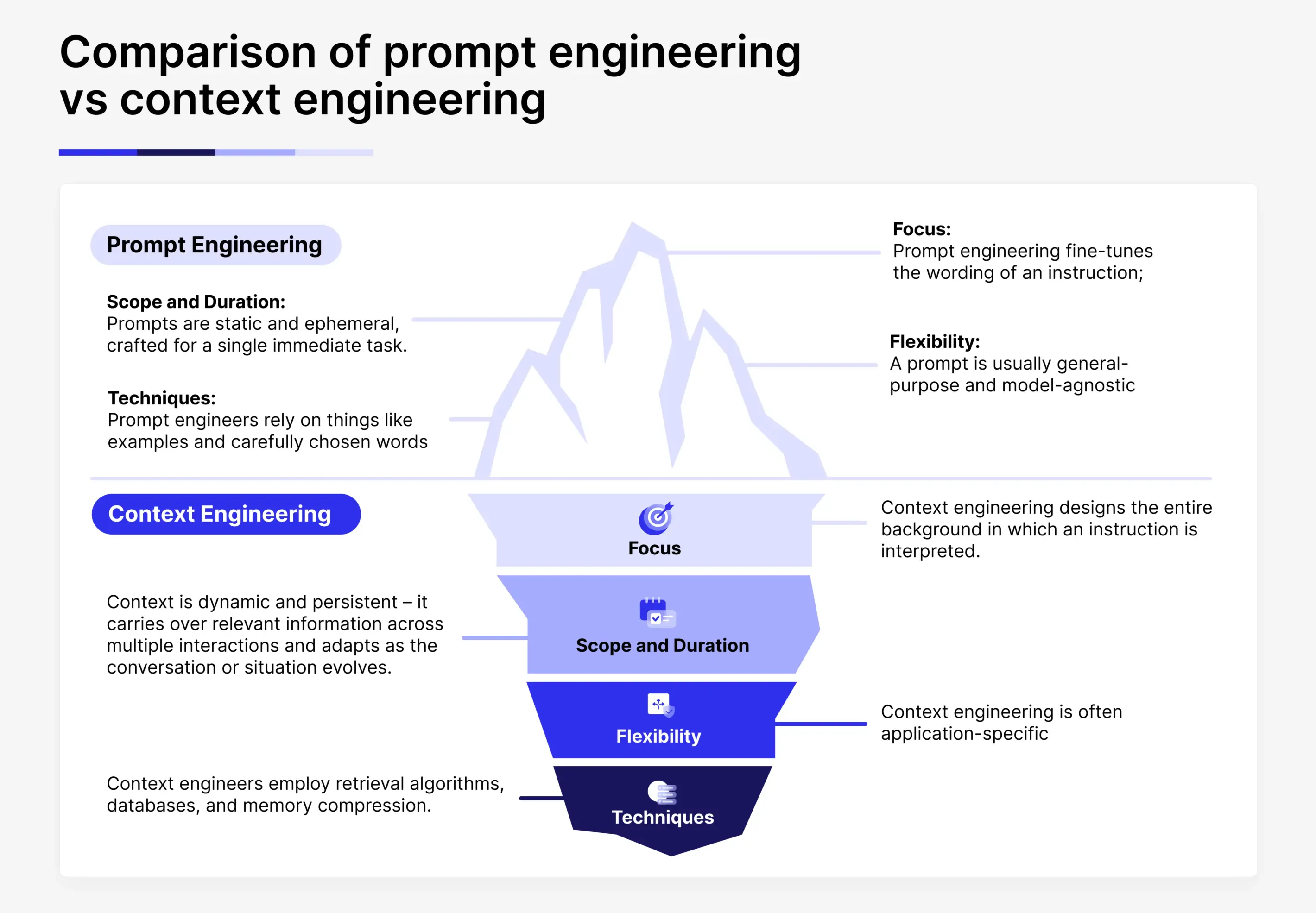
Context engineering is the discipline of curating everything an AI agent sees at inference time. Here is why i...
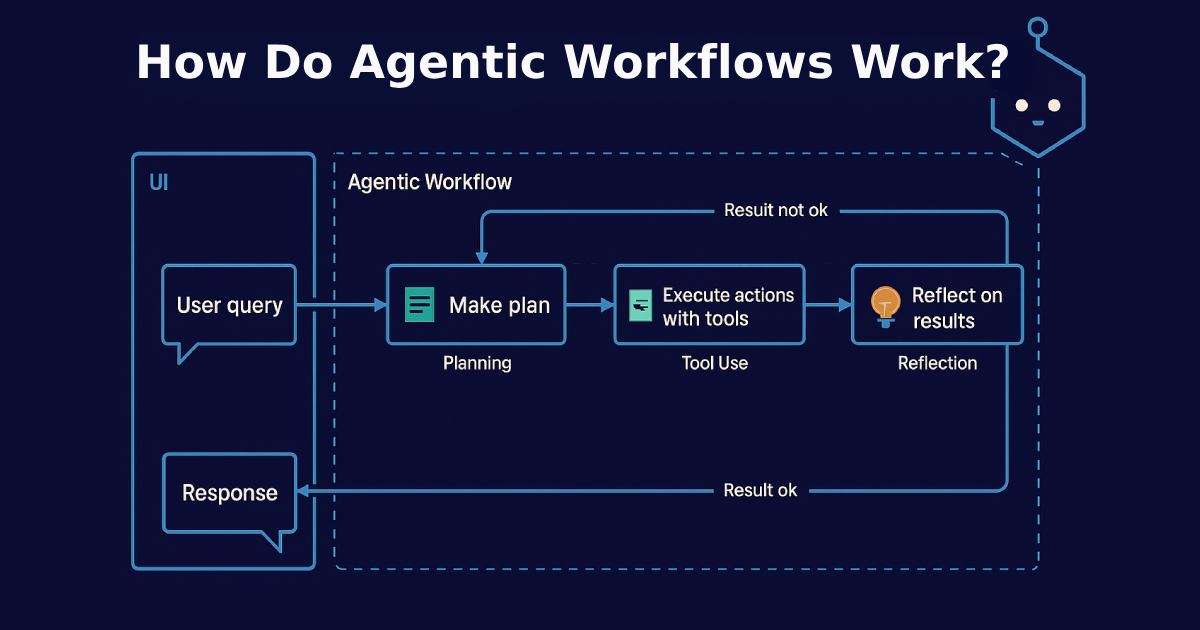
What agentic workflows are, how they differ from RPA and simple LLM calls, the six core patterns, and a practi...