Agentic AI in Banking: Beyond Chatbots to Autonomous Operations
A CIO-level guide to agentic AI in banking: high-value use cases, a human-in-the-loop reference architecture,...
What an AI control tower really is, how its architecture turns fragmented data into real-time visibility and prescriptive decisions, and how to build one without buying another dashboard.
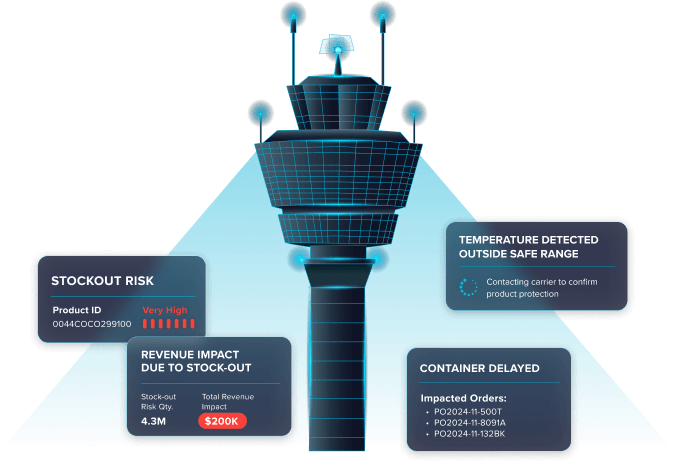
An AI control tower for the supply chain is a centralized, AI-powered command layer that fuses data from across your network to deliver both real-time visibility and decision intelligence — not just a prettier dashboard, but a system that detects exceptions, predicts their impact, and recommends or executes the best response. It sits above your transactional systems, ingesting signals from ERP, transportation, warehouse, supplier and IoT sources, and turns that flood of data into prioritized actions a planner can trust.
The distinction matters more than the marketing suggests. Many organizations have invested heavily in visibility tools over the past five years and discovered an uncomfortable truth: seeing a problem is not the same as solving it. Teams now have screens full of red alerts and still miss their service and cost targets because nobody can act on the signal fast enough. As one industry analysis put it in 2026, visibility is not decision-making — they are two separate problems that require two separate capabilities.
This article is for the Head of Supply Chain, COO, or CIO who is past the dashboard stage and wants to understand what an AI control tower actually is, how it is architected, what it costs, and how to build one without buying yet another tool that watches problems go by. We will cover the architecture in detail, the maturity path from descriptive to autonomous, concrete use cases, ROI considerations, an implementation roadmap, the pitfalls that derail these programs, and clear executive recommendations.
Key Takeaways
An AI control tower is a software-and-analytics layer that gives a supply chain organization a single, real-time view of its end-to-end network and the intelligence to act on what it sees. The term borrows from air traffic control: just as a tower coordinates many aircraft using a shared, authoritative picture of the airspace, a supply chain control tower coordinates orders, inventory, shipments, and suppliers using a shared, authoritative picture of the network.
The traditional version of this concept was largely about reporting. It pulled data together and displayed it. The AI-enabled version adds three things that change its nature entirely: it predicts what is likely to happen, it prescribes what should be done about it, and — at higher maturity — it executes routine decisions automatically within defined guardrails. Analysts increasingly describe these systems as the brains of the modern supply chain rather than its rear-view mirror.
Crucially, a control tower is not a planning system, an execution system, or a forecasting engine. It is the orchestration and command layer that sits across all of them. It does not replace your ERP, TMS, or WMS; it reads from them, reasons over them, and pushes decisions back into them.
The simplest answer: a dashboard tells you what happened, while an AI control tower tells you what is about to happen and what to do about it. A dashboard is passive and descriptive; an AI control tower is active, predictive, and prescriptive. The gap between the two is where most disappointment with supply chain technology lives.
Consider a late inbound shipment. A dashboard flags it red. A planner notices, opens three other systems to understand the downstream effect, calls a carrier, checks inventory, and makes a judgment call — often hours later, sometimes after the damage is done. An AI control tower detects the same delay, automatically calculates the impact on specific customer orders and production lines, ranks the disruption against everything else competing for attention, proposes the two or three best responses with their cost and service trade-offs, and — if the situation fits a pre-approved rule — books the expedited freight and notifies the customer without waiting for a human.
As Siemens' digital logistics team framed it in late 2025, visibility alone is no longer enough. The differentiator is the decision layer that turns signals into coordinated action.
| Dimension | Traditional Dashboard / Visibility Tool | AI Control Tower |
|---|---|---|
| Primary question answered | What happened? | What will happen, and what should we do? |
| Data scope | Often single-domain (e.g., transportation only) | End-to-end: plan, source, make, deliver, return |
| Analytics | Descriptive reporting | Predictive, prescriptive, and increasingly autonomous |
| Alerts | High volume, undifferentiated | Prioritized by impact, with root cause attached |
| Response | Manual, after the fact | Recommended or automated within guardrails |
| Outcome | Awareness of problems | Faster, cheaper, more consistent resolution |
An AI control tower is best understood as five stacked capabilities, each building on the one below it. Skipping a layer is the most common reason these programs stall: a beautiful action layer on top of dirty, partial data produces confident, wrong recommendations.
Everything starts here. The control tower must ingest and harmonize data from internal systems — ERP (orders, inventory, financials), TMS (shipments, carriers, freight status), WMS (warehouse stock, picking, capacity), and planning systems — alongside external feeds such as supplier portals, logistics partner APIs, IoT and telematics sensors (location, temperature, vibration), and contextual signals like weather, port congestion, and news of disruptions. This layer normalizes inconsistent formats, resolves the same product or location described five different ways, and creates a single, trustworthy data model. A modern, well-governed data platform is the foundation that makes this possible; we explore that foundation in depth in modern data platforms for AI-driven organizations.
On top of integrated data sits a unified model of the network — nodes, lanes, lead times, capacities, and the relationships between them. This is the “single version of the truth” that every downstream capability reasons over. It is what lets the tower understand that a delayed component at one supplier threatens a specific finished good at a specific plant serving a specific set of customers. Without this connected model, the system can only see isolated events, not consequences.
This is the intelligence layer. Predictive models estimate what is likely to happen: which shipments will arrive late, where demand will spike, which suppliers are trending toward failure. Prescriptive models go further and recommend what to do: re-route, re-allocate inventory, expedite, or change the production sequence, each option weighed against cost and service targets. For deeper forward-looking demand and supply forecasting driven by sensor data, the control tower leans on the techniques covered in predictive supply chains powered by AI and IoT, and for testing major what-if scenarios it hands off to digital twins of the logistics network.
No team can act on a thousand alerts. The exception management layer triages signals by business impact, attaches probable root cause, deduplicates noise, and surfaces only the issues that genuinely require attention — in priority order. This is the layer that rescues planners from alert fatigue, the single most common complaint about first-generation visibility tools.
Finally, the action layer closes the loop. For lower-risk, well-understood decisions that fall inside pre-defined guardrails, the tower can execute automatically — rebooking a carrier, releasing safety stock, sending a customer notification. For higher-stakes decisions, it presents ranked recommendations to a human who approves or overrides. Increasingly, this layer is implemented with autonomous software agents that carry a decision through to completion across multiple systems, a pattern we examine in how AI agents are replacing traditional software workflows.
| Layer | Core capability | Representative inputs / outputs |
|---|---|---|
| Data integration | Ingest and harmonize | ERP, TMS, WMS, IoT, supplier & carrier feeds, weather/news |
| Digital control layer | Connected network model | Nodes, lanes, lead times, capacities, dependencies |
| Predictive & prescriptive analytics | Forecast and recommend | ETA predictions, risk scores, ranked response options |
| Exception management | Triage and prioritize | Impact-ranked exceptions with root cause |
| Recommended / automated actions | Decide and execute | Auto-actions within guardrails; human-approved decisions |
Control tower capability matures along the same path as supply chain analytics generally: from descriptive to predictive to prescriptive to autonomous. Gartner's analytics maturity work frames these as ascending levels of value and difficulty, and the same progression applies cleanly to control towers.
The right target is rarely “fully autonomous everywhere.” The right target is autonomous for the high-frequency, low-risk decisions that consume planner time, with humans firmly in the loop for high-stakes calls. Most enterprises will run a blend of these stages across different decision types for years — and that is appropriate.
Control towers earn their keep on specific, repeatable decisions. The strongest early use cases share a profile: high event frequency, clear cost or service impact, and data that already exists somewhere in your systems.
The return comes from three places: lower logistics and expedite costs, less wasted planner time, and better service that protects revenue. Hard numbers vary widely by starting point, so treat any single figure with caution — the honest framing is a range tied to your own baseline, not a guaranteed outcome.
That said, the directional evidence is consistent. McKinsey research on tech-enabled supply chain transformations has linked real-time data and AI-driven orchestration to roughly 15% lower logistics costs and substantial reductions in forecasting error, with some deployments freeing meaningful warehouse capacity through better orchestration alone. Industry analysts also point to a steadily growing market for these platforms through 2030, reflecting broad enterprise investment — though published market-size estimates differ enough that they are best read as a signal of direction rather than precise forecasts.
When you build a business case, anchor it in your own numbers across four buckets:
A disciplined business case isolates two or three of these for the first phase rather than promising all four at once. Credibility with the CFO comes from a narrow, measurable first win.
The reliable path is incremental. Organizations that try to launch a fully autonomous, end-to-end tower in one program almost always stall on data and change management. A phased roadmap de-risks the investment and produces value early.
Start with one or two high-frequency decisions where faster, better action would clearly pay off — inbound disruption response or transportation exceptions are common choices. Define the decision, the data it needs, the owner, and the metric that will prove success. Resist the urge to scope the “everything” tower.
Connect the systems that feed your target decision and build the harmonized data model behind it. This is usually the longest and least glamorous phase, and it is where the program is won or lost. Establish data quality and governance now, on a real foundation; retrofitting it later is far more expensive.
Deliver real-time visibility for the chosen decision and, critically, intelligent exception triage so the team sees prioritized, root-caused issues rather than raw alerts. Earning planner trust at this stage is what makes later automation acceptable.
Introduce predictive signals and prescriptive recommendations for the target decision. Run them alongside human judgment first, measure how often the recommendation matches or beats the human call, and use that evidence to build confidence.
Once recommendations are demonstrably trustworthy, automate the lowest-risk decisions inside tight guardrails, with humans handling exceptions. Only then replicate the proven pattern to the next decision and the next domain. The tower grows decision by decision, not in one big bang.
There is no single right answer, and most enterprises end up with a blend. Packaged control tower platforms accelerate time to value and bring proven data models, but they still require deep integration into your specific ERP, TMS, and WMS landscape, and they rarely cover every bespoke decision out of the box. Building entirely in-house offers maximum fit but demands scarce data engineering, MLOps, and integration talent that most supply chain organizations do not have standing by.
The pragmatic middle path is to adopt a platform where it fits, and engineer the integrations, custom models, and agentic actions that make it work in your environment. This is where an experienced engineering partner adds leverage. Mind Supernova, a Vietnam-based AI engineering company, works with enterprise supply chain and operations teams as a Data & AI Transformation partner — building the data integration layer, predictive and prescriptive models, and the agentic action layer that turn a visibility tool into a true decision-making control tower. Engaging specialist engineering capacity for the hard integration and data work, while your internal team owns the supply chain logic and decision rights, is often the fastest route to a tower that actually changes outcomes.
Most control tower disappointments are not algorithm failures. They are data, scope, and operating-model failures. The same handful of mistakes recurs across programs.
They are complementary layers of the same intelligent supply chain, and keeping them distinct prevents wasted effort. The control tower is the visibility and command layer — it watches the live network, prioritizes what matters, and drives decisions. A digital twin is the simulation layer — a virtual model you use to test what-if scenarios and stress-test the network before committing. Predictive supply chains are the forecasting layer — the demand and supply foresight, often IoT-fed, that the tower consumes to act earlier.
In practice they reinforce each other: the predictive layer tells the tower a disruption is coming, the tower decides it needs to test a major re-routing decision, the twin simulates the options, and the tower executes the chosen response. Treating them as one undifferentiated “AI supply chain” project is a recipe for scope sprawl. Treating them as distinct, interoperating layers keeps each one tractable.
No. A dashboard reports what has already happened and leaves the response to humans. An AI control tower adds prediction (what will happen), prescription (what to do about it), and, at higher maturity, automated action within defined guardrails. The dashboard creates awareness; the control tower drives decisions and outcomes.
It needs internal transactional data from ERP, TMS, WMS, and planning systems, plus external feeds such as supplier and carrier APIs, IoT and telematics sensors, and contextual signals like weather and port congestion. The harder requirement is harmonizing all of it into one trustworthy, connected model of the network — the data work, not the data list, is what makes or breaks the project.
An initial, narrowly scoped control tower covering one or two high-value decisions typically takes a few months, with data integration consuming most of the timeline. Reaching predictive, prescriptive, and selectively autonomous capability across multiple domains is a multi-phase journey measured in quarters. A phased roadmap that delivers an early win is far more reliable than a single large program.
No. It removes the low-value work — manual triage, swivel-chair data gathering, and routine exception handling — so planners focus on judgment-heavy decisions and supplier relationships. Autonomy is applied to high-frequency, low-risk, in-policy decisions; humans stay firmly in the loop for high-stakes calls.
Decision intelligence is the discipline of turning data and predictions into prioritized, actionable decisions, with the trade-offs made explicit. In a control tower it shows up as impact-ranked exceptions, recommended actions with their cost and service implications attached, and the guardrails that determine which decisions can be automated. It is the layer that closes the gap between seeing a problem and resolving it.
Anchor the business case in your own baseline across four buckets: cost avoidance (reduced expedite and premium freight), productivity (planner hours returned by automation), service and revenue protection (improved OTIF and fill rates), and working capital (lower buffer inventory). Isolate two or three for the first phase and tie them to a hard metric; a narrow, measurable first win is more credible than a broad promise.
The control tower is the live visibility and command layer that decides and acts. The digital twin is the simulation layer used to test scenarios before committing. The predictive supply chain is the forecasting layer that anticipates demand and disruption. They interoperate — prediction feeds the tower, the twin stress-tests big decisions, and the tower executes — but they are distinct capabilities and should be scoped as such.
An AI control tower is the difference between a supply chain that sees its problems and one that solves them. The technology matters, but the leadership decisions matter more: start with a specific, high-value decision rather than an “everything” platform; invest seriously in the data foundation; earn planner trust with prioritized exceptions and parallel-run recommendations before you automate; and treat the control tower as the command layer that works alongside digital twins and predictive forecasting rather than swallowing them. Done this way, the path from descriptive visibility to selective autonomy is achievable in quarters, not years, and each phase pays for the next.
If you are scoping a control tower and weighing whether to buy, build, or blend, the practical first step is an honest assessment of your data readiness and the one or two decisions where faster action would move your numbers most. Mind Supernova partners with enterprise supply chain teams as an AI engineering and data transformation partner to build exactly that foundation — the integration, models, and agentic action layer that turn visibility into decisions. Wherever you start, anchor the program in a measurable outcome, keep humans in the loop where the stakes are high, and let the tower grow one proven decision at a time.
A CIO-level guide to agentic AI in banking: high-value use cases, a human-in-the-loop reference architecture,...
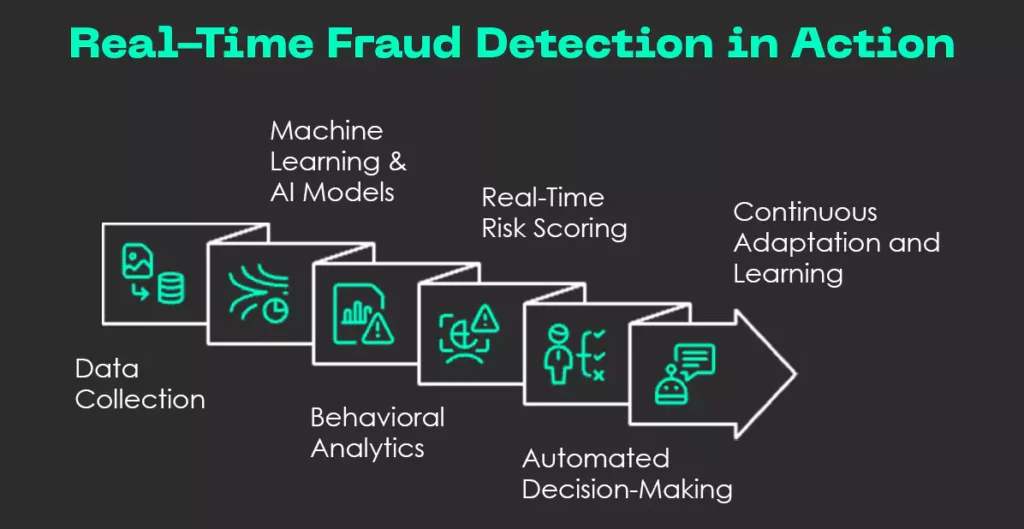
A practical guide to real-time AI fraud detection for banks, fintechs, and payment firms: streaming architectu...
How clinical operations AI transforms care delivery: ambient documentation, scheduling, patient flow, prior au...