
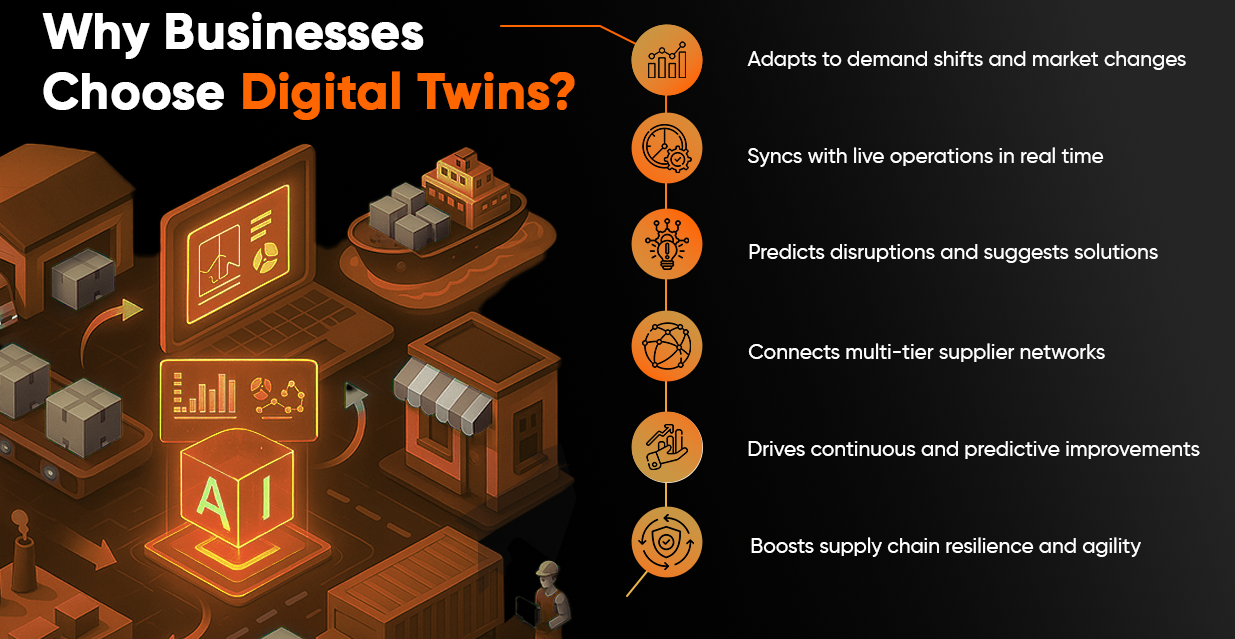
Digital Twins for Logistics: Smarter, More Resilient Supply Chains
What a logistics digital twin really is, the four twin types that matter, how they are built, and how to use s...
A CIO-level guide to agentic AI in banking: high-value use cases, a human-in-the-loop reference architecture, regulatory guardrails, ROI, and an implementation roadmap.
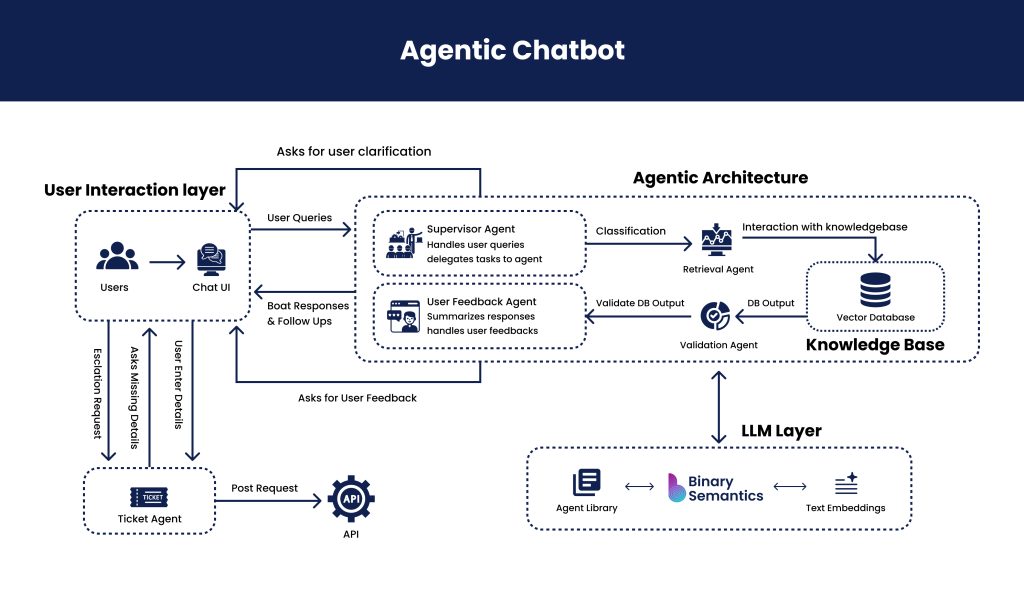
Agentic AI in banking is the use of goal-directed AI systems that plan, decide, and execute multi-step financial workflows with limited human intervention, rather than simply answering questions or following fixed rules. Where a chatbot waits for a prompt and returns text, an agent is given an objective, breaks it into tasks, calls tools and systems of record, evaluates the result, and either completes the work or escalates to a human. That shift, from conversation to autonomous action, is the most consequential change in banking technology since the move to cloud.
For most banks, the first wave of generative AI delivered assistants: smarter search, drafting help, and customer-facing chatbots. Useful, but bounded. The economics that matter to a CIO or Head of Innovation are not in deflecting a few more support tickets; they are in compressing the cost and cycle time of core operations like reconciliation, onboarding, lending, and dispute handling. Autonomous financial operations are where agentic systems earn their keep, and where the governance stakes are highest.
This guide is written for banking CIOs, Heads of Innovation, and fintech CTOs deciding how far to push autonomy and how to do it safely. It covers the practical distinction between chatbots and agents, the highest-value use cases, a reference architecture with human-in-the-loop guardrails, the regulatory reality of running autonomous models in a supervised institution, an implementation roadmap, ROI considerations, and the pitfalls that derail programs before they scale.
Key Takeaways
A chatbot responds; an agent acts. A chatbot is a conversational interface that maps a user query to an answer, often retrieving information or routing a request. An AI agent in banking is given a goal, decides on a sequence of steps, invokes tools and core systems to carry them out, checks whether the goal is met, and loops until it succeeds or hits a guardrail that forces escalation.
The distinction is not academic. A reconciliation chatbot can tell an analyst which invoices are unmatched. A reconciliation agent can pull the ledger, query the payments rail, propose matches, post the routine ones within policy limits, and queue the ambiguous remainder for human sign-off, then learn from the corrections. The first saves a lookup; the second compresses a daily process. We will not re-litigate the full taxonomy of agents here. For a deeper technical treatment of how to design and build these systems, see our 2026 playbook for building enterprise agents that actually work.
What matters for banking leaders is that autonomy is a spectrum, not a switch. Most production deployments in 2026 sit in a bounded autonomy band: agents act freely within tightly scoped policy limits and hand off anything outside those limits. The art of the program is calibrating where those limits sit for each process.
The biggest gains come from high-volume, multi-step, rules-heavy operations where work today is fragmented across systems and humans. These are exactly the workflows where a goal-directed agent that can read from and write to systems of record outperforms both a chatbot and a brittle robotic-process-automation script.
Industry deployments reported across institutions such as HSBC, Citi, UBS, DBS, and ING in 2025 and 2026 have centered on fraud monitoring, KYC onboarding, credit underwriting, compliance reporting, customer service, treasury, and relationship intelligence, with commentary citing operational cost reductions in the 20 to 40 percent range for targeted workflows. Treat such figures as directional rather than guaranteed; they reflect specific processes under specific conditions, not blanket returns.
| Operation | What the agent does | Autonomy level (typical) | Primary value |
|---|---|---|---|
| Payments & reconciliation | Matches transactions across ledgers and rails, posts in-policy matches, queues exceptions, drafts adjustment entries | High within thresholds; human sign-off on exceptions | Cycle-time and labor reduction; fewer breaks aging past SLA |
| KYC/AML & onboarding | Collects and verifies documents, screens against sanctions and PEP lists, assembles case files, drafts SAR narratives | Medium; mandatory human review on alerts and filings | Faster onboarding; consistent, documented decisions |
| Credit & lending operations | Gathers applicant data, runs affordability and policy checks, assembles credit memos, monitors covenants | Low to medium; human adjudication on decisions | Lower cost-to-originate; faster decisioning |
| Treasury & liquidity | Forecasts cash positions, flags funding gaps, proposes sweeps and hedges within mandate | Low; human approval on positions | Better liquidity use; fewer manual reconciliations |
| Customer servicing | Resolves multi-step requests end to end (limit changes, payment plans, statement disputes) within policy | Medium; escalation on edge cases | Higher first-contact resolution; reduced handle time |
| Dispute & fraud operations | Triages alerts, gathers evidence, drafts dispute responses, recommends actions for analyst approval | Medium; human decision on freezes and chargebacks | Faster case resolution; analysts focus on judgment |
Reconciliation is the canonical agentic opportunity: high volume, deterministic rules at the core, and a long tail of exceptions that consume analyst time. An agent ingests entries from ledgers and payment rails, applies matching logic, auto-posts matches that fall within configured tolerance and value thresholds, and routes the residual to humans with a drafted explanation. The labor saving is real, but the more durable win is that breaks stop aging past service levels because the routine volume clears continuously.
Onboarding and financial-crime operations are document- and check-heavy, and they are where commentators have cited the largest productivity multipliers because agents can run end-to-end workflows rather than assist a human at each step. An agent can gather and validate identity documents, run screening, assemble a structured case file, and draft a suspicious-activity narrative for a compliance officer to review. The non-negotiable design point is that filings and adverse decisions remain human-authorized; the agent compresses the work around the decision, not the decision itself.
In lending operations, agents excel at the assembly work: pulling bureau and bank data, running affordability and policy checks, and producing a credit memo a human can adjudicate. In treasury, an agent can continuously forecast positions and propose sweeps or hedges inside a defined mandate. Both are deliberately lower-autonomy: the agent prepares and recommends, a human commits the position or the credit decision, because both touch capital and fair-lending exposure.
Beyond the chatbot, the servicing agent completes the task: it executes the limit change, sets up the payment plan, or files the statement dispute, calling the systems of record and confirming the outcome. In fraud and dispute operations, agents triage alerts, gather evidence, and draft responses so analysts spend their time on judgment rather than collation. This is adjacent to, but distinct from, real-time detection models; for the detection side, see our deep dive on real-time AI fraud detection for financial institutions.
A production-grade agentic architecture in banking has six layers, and the governance layer cuts across all of them. The goal is to let agents do useful work while making every action observable, reversible where possible, and accountable to a named control.
Two control patterns dominate. Human-in-the-loop means a person approves specific actions before they execute, appropriate for irreversible or high-stakes steps such as adverse credit decisions, account freezes, large payments, and regulatory filings. Human-on-the-loop means the agent acts autonomously within policy while a person monitors outcomes and intervenes on exceptions, appropriate for high-volume, low-severity work like routine reconciliation matches. Mature programs map every action to one of these patterns explicitly. The design question is never "is there a human" but "which human, at which step, with what authority, and how is their decision recorded."
Autonomy in banking is earned process by process. Start with the agent recommending and a human deciding, then graduate specific, well-understood actions to bounded autonomy once you have evidence the agent is reliable within its limits.
Existing model-risk and AI regulation applies to agents, but autonomous, probabilistic systems strain assumptions those frameworks were built on. Banks should not wait for bespoke agent rules; they should extend the controls they already operate.
In the United States, the Federal Reserve and OCC's SR 11-7 supervisory guidance on model risk management remains the anchor. It requires sound development, robust independent validation, and ongoing monitoring of models, and supervisors increasingly expect those principles to cover AI and machine-learning models. Risk practitioners have noted that agentic systems test the framework: when a system is dynamic and self-directed, the very definition of a "model," and the meaning of validating it, comes under pressure, as the Global Association of Risk Professionals has discussed in its commentary on SR 11-7 in the age of agentic AI. The practical response is to validate not just the underlying models but the agent's action space, its guardrails, and its escalation logic.
In the European Union, the EU AI Act classifies credit scoring and creditworthiness assessment as high-risk, with high-risk obligations applying from 2 August 2026. Those obligations include a risk-management system, data governance, technical documentation, transparency to deployers, genuine human oversight, and standards for accuracy, robustness, and cybersecurity, with non-compliance carrying fines up to the higher of EUR 35 million or 7 percent of global annual turnover. Even US-headquartered banks serving EU customers fall in scope. The Act's human-oversight requirement maps directly onto the human-in-the-loop checkpoints above, so a well-designed architecture is also a compliance asset.
Three governance capabilities are non-negotiable for autonomous operations: explainability (a defensible account of why the agent did what it did), auditability (an immutable, queryable trail of every action and the data behind it), and model and action-risk management (validation, monitoring, and kill-switches). We deliberately keep this section focused on agent-specific controls. For the full financial-services regulatory landscape, including SR 11-7, EU AI Act, fair-lending, and supervisory expectations across jurisdictions, see our companion guide on AI governance in financial services and risk compliance.
A workable roadmap moves in four phases, each with an explicit exit gate. The mistake to avoid is jumping to bank-wide autonomy; the winning pattern is proving reliability in one process, then templating it.
Banks rarely build the entire stack in-house, and rarely should. Foundation models, orchestration frameworks, and MCP-based connectors are increasingly commoditized; the differentiated work is in policy guardrails, integration with core systems, validation, and the operating model. Many institutions blend internal platform and risk teams with an external AI engineering partner to accelerate the build while retaining control of governance. As a Vietnam-based AI development and AI agent partner serving UK, EU, and US enterprises, Mind Supernova works with this exact pattern: an async-first delivery model with 4+ hours of daily UK overlap, embedding engineers alongside a bank's risk and platform functions rather than handing over a black box. The goal of any partner engagement should be to leave the bank with systems its own teams can validate, explain, and operate.
The ROI case rests on three levers, only one of which is headcount. Banks that frame agentic AI purely as a labor-substitution play tend to underperform and over-promise.
On the cost side, model the total cost of ownership honestly: inference costs at production volume, integration and validation effort, the human review capacity that bounded autonomy still requires, and ongoing model-risk and monitoring overhead. Market context suggests serious money is moving, with industry estimates putting agentic-AI spend in the tens of billions of dollars in 2025 and forecasts pointing to rapid growth through the decade, but spend is not return. The institutions seeing payback are disciplined about measuring per-workflow outcomes against a clear baseline.
Most failures are organizational and architectural rather than model failures. The recurring traps are predictable enough to design around.
Autonomous agents are also the execution engine behind newer financial products. As banking capabilities are embedded into non-bank journeys, agents handle the orchestration, real-time eligibility, onboarding, servicing, that makes embedded experiences feel instant. The architectural discipline is the same: bounded autonomy, human checkpoints on high-stakes steps, and full auditability. For how this reshapes products and distribution, see our analysis of embedded finance and AI and the future of financial products.
Agentic AI in banking refers to goal-directed AI systems that plan and execute multi-step financial workflows by calling tools and systems of record, then escalate exceptions to humans, rather than just answering questions like a chatbot. Typical applications include reconciliation, onboarding, lending operations, and dispute handling.
A chatbot responds to queries with information or routing; an AI agent is given an objective and autonomously takes actions to achieve it, reading from and writing to core systems within defined policy limits. The agent completes work; the chatbot answers questions.
It can be, when deployed with bounded autonomy, human-in-the-loop checkpoints on high-stakes actions, immutable audit trails, and model-risk validation. Safety is an architectural and governance outcome, not a property of the model alone. High-stakes decisions should remain human-authorized until an agent has proven reliable.
In the US, the Federal Reserve and OCC's SR 11-7 model-risk guidance applies and is increasingly extended to AI models. In the EU, the EU AI Act classifies credit scoring as high-risk, with obligations including human oversight and documentation applying from August 2026. Fair-lending, privacy, and supervisory expectations also apply.
High-volume, multi-step, rules-heavy operations with a clear baseline, such as transaction reconciliation or onboarding triage, are the strongest starting points. They offer measurable returns while keeping irreversible decisions under human control during the early phases.
Reported early deployments cite double-digit percentage cost reductions on targeted workflows, with the strongest results in document-heavy operations like KYC and onboarding. The most durable returns come from cycle-time compression and consistent, auditable quality rather than headcount removal alone, and figures vary widely by process.
Rarely entirely. Foundation models, orchestration frameworks, and MCP connectors are increasingly standardized, so the differentiated work is integration, guardrails, validation, and the operating model. Many banks combine internal platform and risk teams with an external AI engineering partner while retaining ownership of governance.
Agentic AI moves banking from assistants that answer to agents that act. The value is concentrated in the back and middle office, payments and reconciliation, KYC and onboarding, credit, treasury, servicing, and dispute operations, where goal-directed agents compress cost and cycle time that chatbots never could. But autonomy in a supervised institution is earned, not assumed. The banks that win will be the ones that pair ambition on use cases with discipline on architecture: bounded autonomy, the right human checkpoints, immutable audit trails, and model-risk controls that satisfy SR 11-7 and the EU AI Act.
Start narrow, prove reliability in one workflow, and template what works. If you are weighing how to build, validate, and operate these systems without losing control of governance, it helps to work with an AI engineering team that has designed agents for regulated environments. Mind Supernova partners with banks and fintechs as an AI development and AI agent partner to do exactly that, embedding alongside your risk and platform teams so the systems you ship are ones your own people can explain, audit, and own.
What a logistics digital twin really is, the four twin types that matter, how they are built, and how to use s...
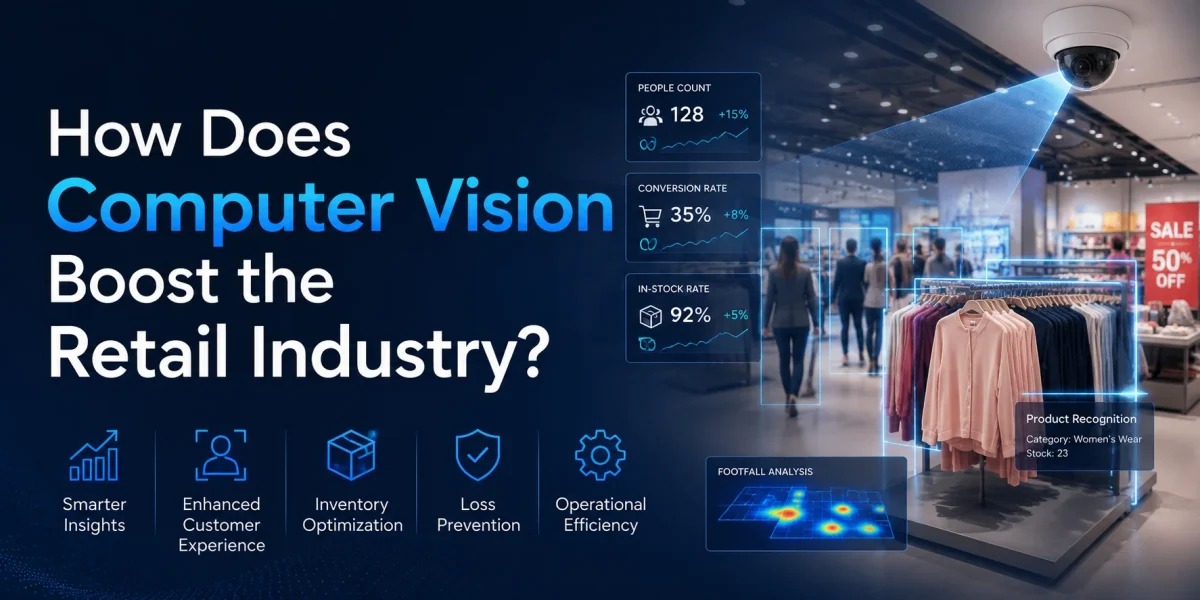
How computer vision transforms physical retail: the enabling tech, use cases from shelf compliance to checkout...
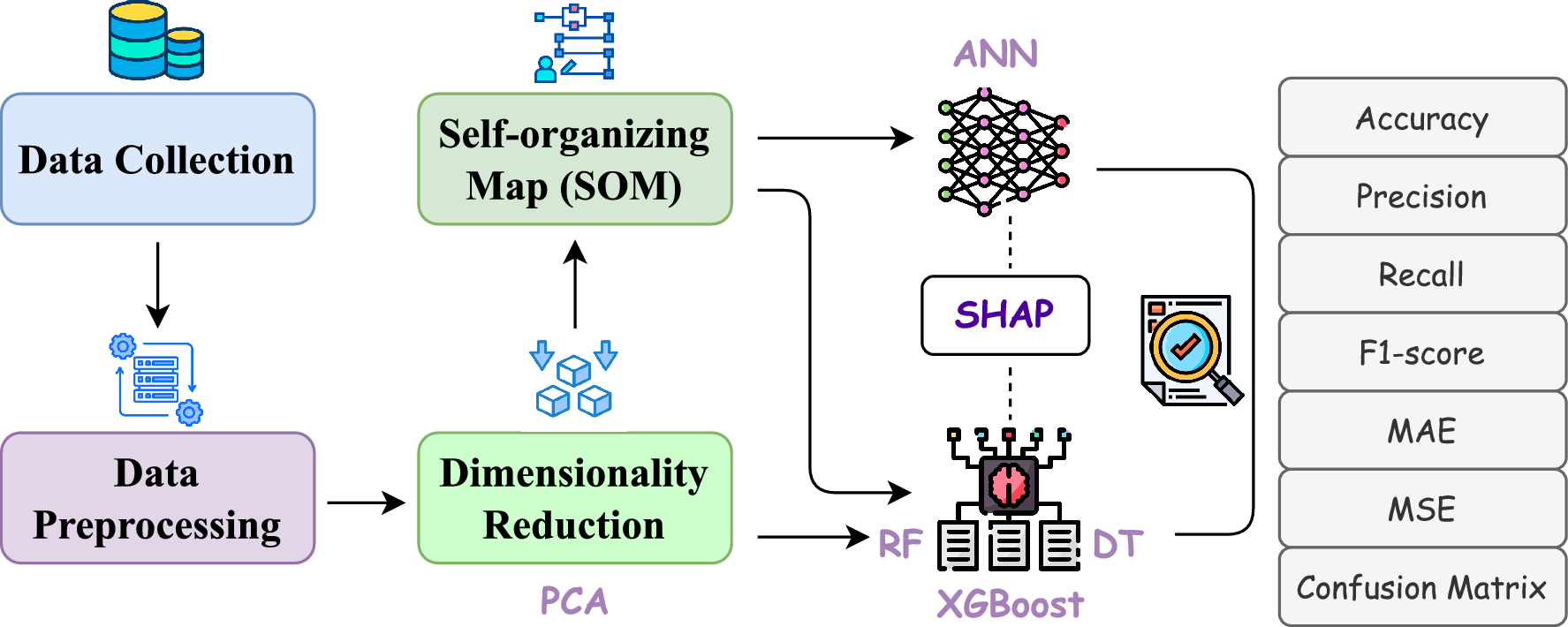
How AI demand sensing and IoT move supply chains from reactive forecasting to autonomous, closed-loop decision...