
How to Build a Compliant Digital Wallet Platform in 2026
How to build a compliant digital wallet in 2026: architecture, double-entry ledgers, PCI DSS, PSD2, KYC/AML, s...
What SaaS development really costs in 2026: cost drivers, MVP vs scale, team makeup, and build-vs-buy, with realistic budget ranges.
Building a modern SaaS product in 2026 typically costs between $30K and $100K for a credible MVP and crosses $300K once you reach enterprise-grade scale, but the build figure is only the visible part of the bill. The real number is total cost of ownership: engineering, cloud, security, compliance, and the people who keep it running after launch. SaaS development costs depend less on lines of code and more on the decisions you make about architecture, team composition, and what you build versus buy.
This guide breaks down where the money actually goes, how costs change from MVP to scale, and how to estimate a realistic budget for your situation. All ranges here are estimates drawn from industry benchmarks and our team's collective experience. Your figures will shift with scope, region, and risk tolerance.
If you are sizing a budget right now and want a second opinion on the numbers, you can schedule a call with our engineering team. Now let us look at what drives the cost.
Key Takeaways
- A functional SaaS MVP usually costs $30K–100K (estimate); enterprise-grade SaaS with multi-tenancy, compliance, and SLAs typically exceeds $300K (estimate) [Gartner-adjacent industry benchmark].
- Build cost is roughly 30–40% of three-year TCO. Cloud, security, compliance, support, and ongoing engineering make up the rest.
- Team composition is the single largest lever: a senior-led team of 4–6 often ships faster and cheaper over 12 months than a larger junior team.
- Build the differentiating core; buy auth, payments, search, and observability. Reinventing commodity infrastructure is the most common budget leak.
- Multi-tenancy default is shared database plus a tenant_id column with row-level security; database-per-tenant is reserved for regulated or premium tiers.
The price of a SaaS product is set long before the first commit. It is set by scope, by the non-functional requirements you accept, and by how much risk your market forces onto you. Two products with identical feature lists can differ by 5x in cost because one serves regulated enterprise buyers and the other serves solo founders.
Here are the cost drivers that move the budget the most, ranked by how often they surprise teams.
Uptime targets, latency budgets, data residency, audit logging, and recovery objectives cost real money. A 99.5% target is cheap. A 99.95% target with multi-region failover can double your infrastructure and on-call costs. Decide these early, because retrofitting them is far more expensive than building them in.
How you separate customer data shapes your entire architecture. The pragmatic default for most SaaS is a shared database with a tenant_id column and row-level security enforced at the database layer. Database-per-tenant isolation suits regulated or premium tiers but multiplies operational overhead. We cover this in depth in our companion piece on multi-tenant SaaS platform architecture.
SOC 2, ISO 27001, HIPAA, or PCI DSS each add a recurring cost in tooling, audits, and engineering time. Security is not a feature you bolt on. The average cost of a data breach was $4.44M in 2025, down from $4.88M in 2024 [IBM]. That number reframes a security budget as insurance rather than overhead.
Every third-party integration is a small project: auth flows, rate limits, error handling, and maintenance forever. Enterprise buyers expect SSO, your CRM, and their data warehouse to connect on day one. Migrating a prospect's legacy data is often the hidden line item that sinks a quarter.
The SaaS market sits around $315B in 2025 and is growing at roughly 18% annually [Fortune Business Insights], with SaaS spend estimated near $299B in 2025 [Gartner]. Worldwide IT spending is forecast at $6.31T in 2026, up 13.5% [Gartner]. That growth pulls two costs in opposite directions.
Cloud and tooling have become cheaper and more capable, so a small team can ship more in 2026 than a large team could five years ago. At the same time, buyer expectations have risen. Enterprise customers now treat SOC 2, SSO, granular permissions, and an API as table stakes. The floor for a "serious" product is higher, which pushes the enterprise-grade figure up even as MVP costs hold steady.
GenAI spend reached an estimated $644B in 2025 [Gartner], and AI features are increasingly expected in new products. Adding even a basic AI capability introduces inference costs, prompt-injection risk, and evaluation work that did not exist in prior budgets. Plan for it explicitly rather than treating it as a free add-on.
SaaS cost is not a single number. It is a curve. The MVP proves a customer will pay; the scale phase proves the product can serve thousands of them reliably. The engineering priorities, and therefore the costs, are different at each stage.
The table below shows representative cost bands by stage. Treat every figure as an estimate. The point is the relative shape, not a quote.
| Stage | Goal | Typical build cost (estimate) | Team size | Timeline | Key cost focus |
|---|---|---|---|---|---|
| MVP | Validate demand, get first paying users | $30K–100K | 2–4 | 2–4 months | Core feature, basic auth, single-tenant or simple multi-tenant |
| Product-market fit | Retain users, iterate on usage data | $100K–250K | 4–6 | 4–9 months | Onboarding, billing, analytics, reliability basics |
| Scale | Serve many tenants reliably and securely | $300K+ | 6–12 | 9–18 months | Multi-tenancy, compliance, observability, performance |
| Enterprise-grade | Win regulated and large accounts | $500K+ ongoing | 10+ | Continuous | SOC 2/ISO, SSO/SCIM, SLAs, dedicated isolation tiers |
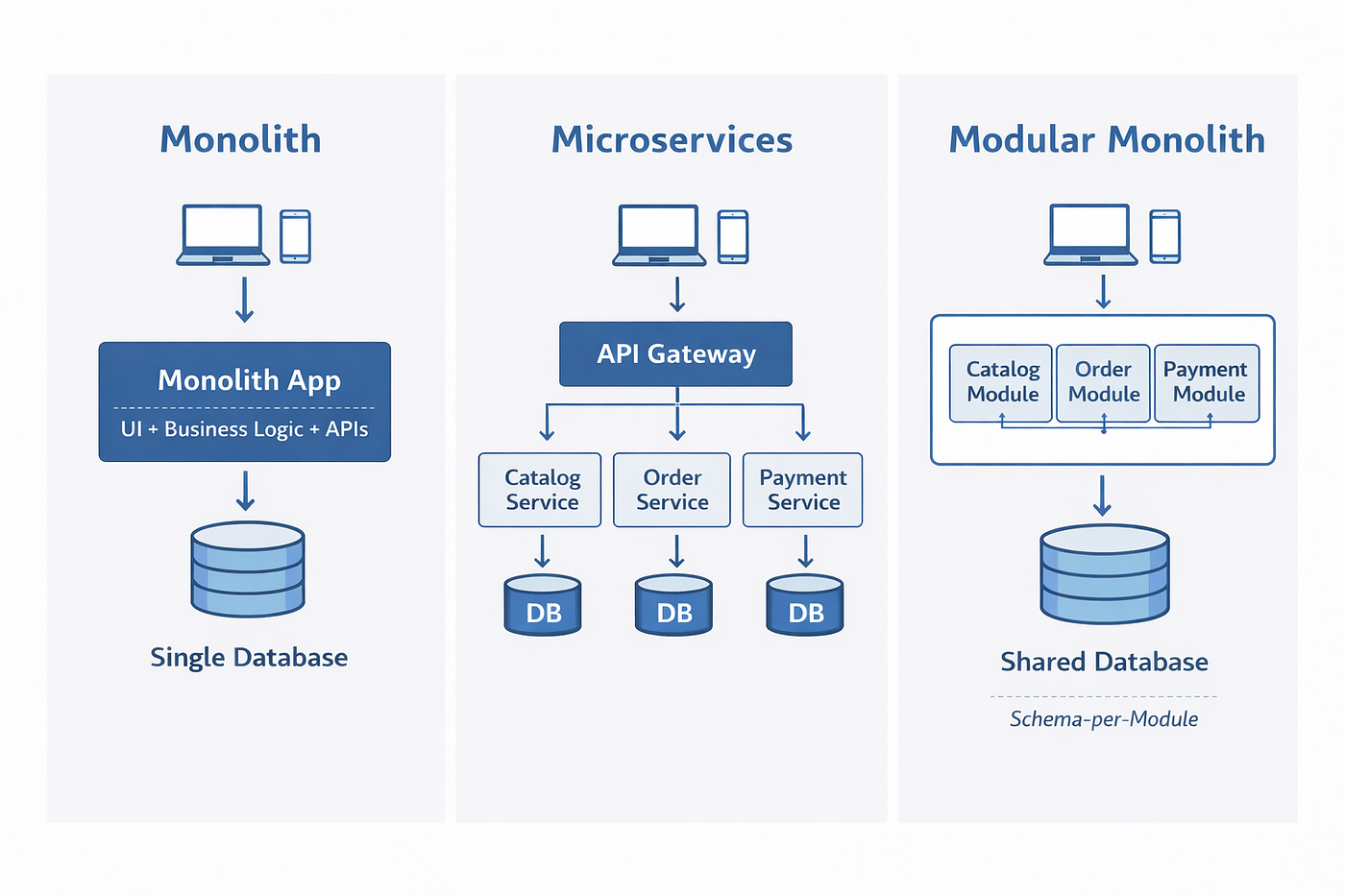
The most expensive mistake at MVP stage is building for scale you do not have yet. Premature microservices, multi-region deployment, and elaborate infrastructure burn the runway you need to find customers. A well-factored monolith on a single managed database serves the first few hundred customers comfortably and costs a fraction of a distributed system.
The inverse trap appears at scale: an MVP shortcut that becomes load-bearing. Hard-coded tenant assumptions, missing audit logs, and a database schema that cannot partition will all force costly rewrites. The skill is knowing which shortcuts are safe to take and which will compound. That judgment is where senior engineers pay for themselves.
Who builds the product matters more than which framework they choose. Team composition determines velocity, quality, and how much rework you pay for later. The cheapest hourly rate rarely produces the cheapest product.
A typical SaaS team spans several roles. You do not need all of them at once, and a senior generalist can cover two or three in the early stages.
| Role | When you need it | Impact on cost and risk |
|---|---|---|
| Senior full-stack engineer | Day one | Sets architecture; prevents the rewrites that dominate budgets |
| Backend / platform engineer | Scale stage | Owns multi-tenancy, data model, performance |
| Frontend engineer | PMF stage | Owns UX quality, which drives retention and lowers churn cost |
| DevOps / SRE | Scale stage | Owns CI/CD, cloud cost, reliability; reduces on-call burn |
| Product designer | MVP onward (part-time ok) | Reduces expensive build-the-wrong-thing cycles |
| QA / test automation | PMF onward | Cuts regression cost and incident frequency |
A focused team of 4–6 senior engineers usually ships faster over a 12-month horizon than a larger team weighted toward junior developers. Senior engineers make fewer architectural mistakes, and architectural mistakes are the costliest kind to fix. They also need less supervision, which lowers your management overhead.
Most SaaS companies use a blend. A small in-house core holds the product vision and owns the differentiating code. External partners add capacity for well-scoped work or specialized skills. Models like staff augmentation and dedicated teams let you flex headcount without the fixed cost of hiring. Teams like Mind Supernova, a Vietnam-based software engineering partner founded in 2023, work offshore with 4+ hours of daily UK overlap and can place senior engineers in 5–7 days, which suits the capacity spikes common in early-stage SaaS. You can explore the trade-offs of the model in our guide to outsourcing web application development without losing control.
The single most effective budget control in SaaS is refusing to build commodity infrastructure. Authentication, payments, email, search, and observability are solved problems with mature vendors. Building them yourself rarely produces a better result and always produces a maintenance liability.
The rule of thumb: build what differentiates you, buy what does not. Your unique value is the core domain logic that customers pay for. Everything around it is plumbing.
| Capability | Default decision | Why | When to reconsider |
|---|---|---|---|
| Authentication / SSO | Buy | Security-critical, commoditized, expensive to get wrong | Highly unusual identity requirements |
| Payments / billing | Buy | PCI scope and tax complexity are enormous | You are building a payments product |
| Search | Buy / managed | Relevance tuning is a deep specialty | Search is your core differentiator |
| Observability | Buy | Building dashboards is not your product | Extreme scale where vendor cost dominates |
| Core domain logic | Build | This is your competitive advantage | Never outsource the moat |
| Internal workflow tooling | Buy then build | Start with low-code, replace when it constrains you | When the tool blocks a key workflow |
For nearly every SaaS team in 2026, the right answer is: buy the platform layer, build the product layer. Spend your scarce senior engineering hours on the logic that no vendor can sell you. A useful test is to ask whether a capability would appear on your sales page. If it would not, a customer will not pay extra for you to have built it, so buy it.
The build cost is the down payment. The TCO is the mortgage. Over a three-year horizon, the initial build is often only 30–40% of what you spend on the product. Underestimating the rest is how SaaS budgets quietly fail.
The table below shows an illustrative three-year TCO for a mid-stage B2B SaaS serving a few hundred tenants. All figures are estimates and will vary widely with scale and region.
| Cost category | Year 1 (estimate) | Years 2–3 annual (estimate) | Notes |
|---|---|---|---|
| Initial build | $150K–300K | n/a | One-time, front-loaded |
| Ongoing engineering | $120K–250K | $200K–400K | Features, maintenance, tech debt paydown |
| Cloud infrastructure | $15K–60K | $30K–120K | Scales with tenants and data volume |
| Third-party tools / SaaS | $20K–50K | $30K–80K | Auth, payments, observability, search |
| Security & compliance | $25K–80K | $30K–70K | Audits, tooling, pen tests, certifications |
| Support & operations | $20K–60K | $40K–120K | On-call, customer support, incident response |
Three categories are routinely missing from early budgets. Cloud cost grows non-linearly with tenants if your architecture is not efficient; 84% of organizations cite cost as their top cloud challenge and roughly 27% of cloud spend is wasted [Flexera 2025]. Technical debt interest accrues every sprint you defer it. And customer support scales with your customer count, not your code, so it never stops growing.
Cost decisions in SaaS are really trade-offs between speed, cost, quality, and optionality. You cannot maximize all four. A clear framework keeps the trade-offs explicit instead of accidental.
Run any significant build decision through these five questions in order. If a "build" answer fails the first three, default to buy.
| Decision | Cheaper / faster choice | What you trade away | Better when |
|---|---|---|---|
| Architecture | Modular monolith | Independent service scaling | Early to mid stage; most SaaS |
| Tenancy | Shared DB + tenant_id + RLS | Strict per-tenant isolation | Standard tiers, non-regulated |
| Team | Small senior team | Raw parallel throughput | Complex domain, tight budget |
| Infrastructure | Managed services | Fine-grained control / lowest unit cost | Almost always before extreme scale |
| Compliance | Defer certification | Enterprise deal eligibility | Pre-PMF, SMB-focused only |
A cost-efficient SaaS architecture in 2026 keeps the core simple and pushes commodity concerns to managed services. The diagram below shows the shape we recommend for most teams up to mid-scale.
        Customers (web / mobile / API)
                  |
        [ CDN + WAF ]  (managed, buy)
                  |
        [ API gateway / load balancer ]
                  |
   +--------------------------------------+
   |     Modular monolith application     |  <-- BUILD: your domain logic
   |  (modules: billing, core, reporting) |
   +--------------------------------------+
        |            |              |
   [ Auth/SSO ]  [ Payments ]  [ Search ]   <-- BUY: commodity layer
   (vendor)      (vendor)      (managed)
        |
   [ Shared database ]  tenant_id + row-level security  <-- BUILD: data model
        |
   [ Object storage ] [ Managed cache ] [ Queue ]       <-- BUY: managed infra
        |
   [ Observability / logging / metrics ]  (vendor)      <-- BUY
The clearest public lesson on SaaS cost discipline comes from Amazon Prime Video. In 2023, the Prime Video team published an account of moving a monitoring service away from a distributed serverless and microservices design back to a monolith, and reported a cost reduction of over 90% for that service. The point is not that microservices are wrong. The point is that the fashionable architecture is not automatically the cheap one.
This pattern repeats across SaaS budgets. Teams adopt distributed architectures, multi-cloud, and elaborate tooling because the industry signals them as best practice, then pay the operational tax for scale they never reach. Microservices sit at "Trial, not default" on the ThoughtWorks Technology Radar [ThoughtWorks], and Martin Fowler's MonolithFirst guidance is explicit: start with a well-factored monolith and extract services only when scale justifies the cost [Fowler].
The cost lesson generalizes. Match your architecture to your actual load, not your aspirational load. The Prime Video case is valuable precisely because a hyperscaler with unlimited resources still chose the simpler, cheaper design when the numbers demanded it. For deeper guidance on this choice, our companion article on web application architecture in 2026 walks through the full decision.
Spreading spend across phases protects your runway and ties each investment to evidence. Each phase has an exit gate. Do not fund the next phase until the current one clears its gate.
Most blown SaaS budgets fail for predictable reasons. Knowing them in advance is the cheapest insurance you can buy.
A credible MVP typically costs $30K–100K and an enterprise-grade product exceeds $300K (industry estimates). The wide range reflects scope, compliance needs, and team seniority. Remember that build cost is only 30–40% of three-year total cost of ownership once cloud, support, and security are included.
Ongoing engineering and operations. Maintenance, technical debt, cloud growth, and customer support scale with your customer base, not your codebase. Over three years these recurring costs usually exceed the initial build. Roughly 27% of cloud spend is wasted on average [Flexera 2025], so efficiency matters.
Buy both, in nearly every case. Authentication is security-critical and payments carry heavy PCI and tax complexity. Mature vendors do this better and cheaper than you can, and a mistake in either is expensive. Reserve your engineering for the domain logic that differentiates your product.
It is the largest lever you control. A small senior-led team of 4–6 usually ships faster and cheaper over twelve months than a larger junior team, because senior engineers avoid the architectural mistakes that dominate rework costs. Optimize for velocity and quality, not the lowest hourly rate.
It can be, when scoped well. A blended model keeps a small in-house core for product vision and uses staff augmentation or a dedicated team for capacity. Offshore partners with strong daily overlap can lower cost without sacrificing control if you set clear governance and quality gates.
SaaS development costs in 2026 are governed by decisions, not by code volume. The teams that control cost build the differentiating core, buy the commodity layer, staff with senior engineers, and budget for three-year TCO rather than the launch invoice. Architecture matched to real load, not aspirational load, is the difference between a sustainable product and a burned runway.
This quarter: map your planned features into build-versus-buy categories and estimate three-year TCO, not just the build cost. Identify the commodity capabilities you are tempted to build and stop.
Next 90 days: lock your tenancy model, pick managed services for the platform layer, and assemble a senior-led team sized to your stage. If you want help pressure-testing your estimate or scaling capacity quickly, talk to our engineering team. For broader context, see our guides on when building your own CRM creates advantage and on choosing a partner in how to choose an outsourcing partner without getting burned. If your costs are weighted toward AI features, the 2026 guide to AI outsourcing costs in Vietnam breaks down those numbers in detail.
How to build a compliant digital wallet in 2026: architecture, double-entry ledgers, PCI DSS, PSD2, KYC/AML, s...
Monolith, microservices, or modular monolith in 2026? A decision framework, trade-offs, and real cases to choo...
A practical PHP to Go migration playbook: when it pays off, the strangler fig approach, performance trade-offs...