
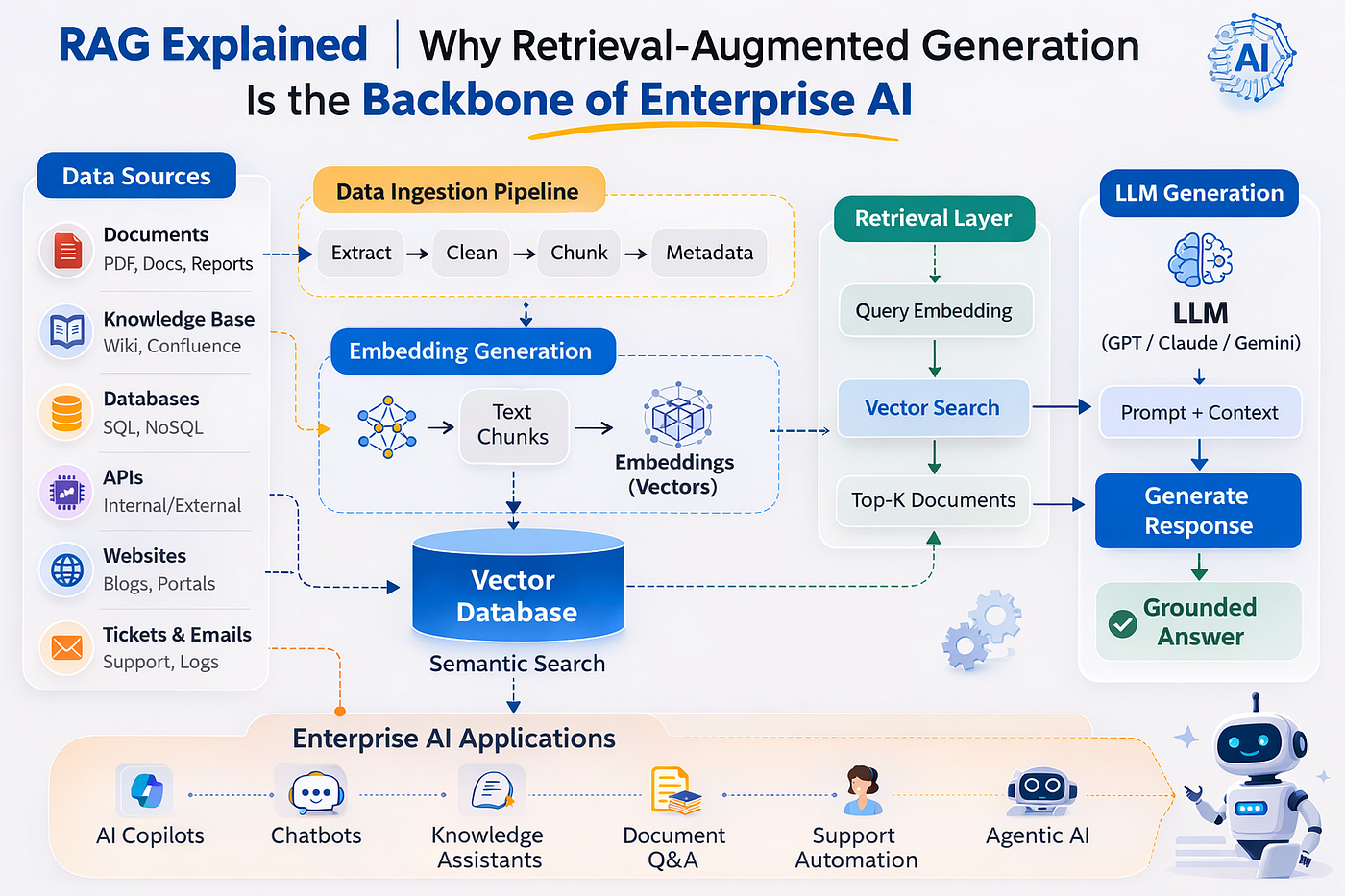
Enterprise RAG Systems: The Secret to Secure, Reliable AI That Does Not Hallucinate
RAG grounds AI in your own data for accuracy and security. Learn the architecture, RAG vs fine-tuning, and how...
How to build high-quality AI training data at scale: sourcing, pipelines, synthetic data, quality control, and governance.
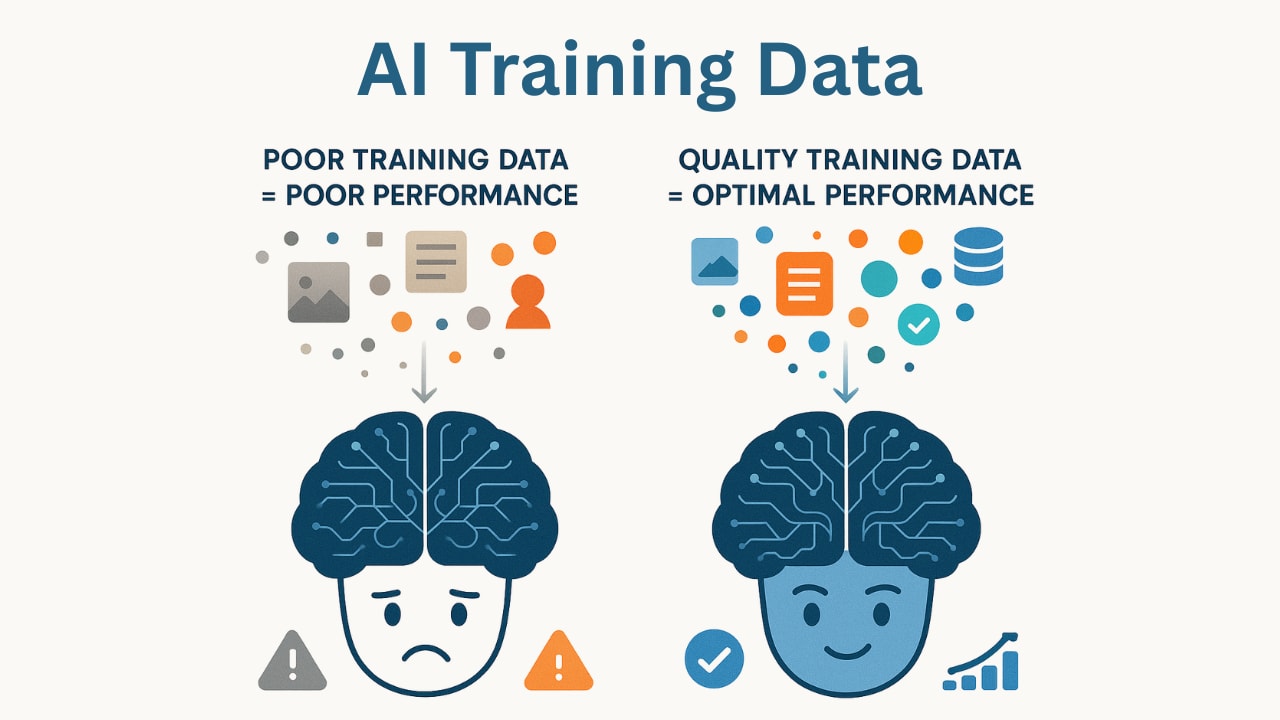
Building AI training data at scale means designing repeatable pipelines that source, clean, label, validate, and govern very large datasets so that machine learning models keep improving as you grow. It's the unglamorous foundation under every impressive model demo, and it's where most AI projects quietly succeed or fail. A clever architecture cannot rescue a dataset that's noisy, biased, or poorly governed.
This guide walks through the full lifecycle: where training data comes from, how to move it through reliable pipelines, how to measure and enforce quality, when synthetic data helps, and how to keep the whole operation compliant as volumes climb into the millions of examples. We'll also cover the scaling traps that inflate cost and slow teams down, and why many companies build these capabilities through partners. Mind Supernova, a Vietnam-based engineering company, runs data and ML pipelines for clients in UK fintech and EU manufacturing, so the trade-offs here come from real delivery work rather than theory.
If you're weighing whether to staff this internally or outsource it, the cost and talent math in Vietnam is part of why so many teams ship faster. We'll get to that, but first the fundamentals.
Key Takeaways
Scale isn't only about row count. A dataset becomes a scale problem when the volume, variety, and refresh rate exceed what a few people can manage with spreadsheets and ad hoc scripts. At that point you need engineering discipline: versioned datasets, automated checks, and clear ownership for every stage.
Three dimensions usually grow together. Volume rises as you collect more examples. Variety rises as you add modalities like text, images, audio, and structured logs. Velocity rises as fresh data arrives daily and models need retraining. Each dimension multiplies the others, so a system that handled 100,000 labeled rows can buckle at 10 million.
There's a useful distinction between raw data and training-ready data. Raw data is whatever you collected. Training-ready data has been cleaned, deduplicated, labeled, validated, and packaged with metadata so a model can consume it reliably. Most of the work, and most of the cost, lives in that transformation. The data-labeling market is growing at a high-double-digit annual rate precisely because that transformation is so labor- and expertise-intensive [8].
Model architectures are increasingly commoditized. You can pull a strong open-weight model off the shelf in an afternoon. What you cannot download is a dataset that reflects your domain, your customers, and your edge cases. That asset is proprietary, and it's where durable advantage comes from. Teams that treat data as a first-class product, with roadmaps and quality SLAs, tend to outperform teams that treat it as a chore.
Every dataset starts with sourcing, and the source determines your legal exposure, your quality ceiling, and your bias profile. Get this stage wrong and no amount of downstream cleaning fully recovers. So treat sourcing as a deliberate decision, not a scramble.
The main sources break down as follows:
Whatever the source, vet it against three questions. Do you have clear rights to use it for AI training? Does it represent the population your model will serve, or does it skew toward easy cases? And can you trace where each example came from if a regulator or customer asks? If you can't answer all three, the data isn't ready, no matter how large it is.
More data helps only if it adds new information. Once your dataset covers the common cases well, marginal value comes from rare and hard examples: the fraud pattern that appears once in 50,000 transactions, the dialect your support model keeps misreading, the product photo shot in bad light. Active learning, where the model flags examples it's uncertain about for human labeling, is one of the most cost-effective ways to find those high-value cases instead of labeling everything blindly.
A production data pipeline turns messy inputs into reproducible, versioned training sets. Think of it as a factory line with distinct stations, each with checks before data moves on. The goal is that any engineer can rebuild a given dataset version months later and get the identical result.
A typical pipeline has these stages:
The annotation step is large enough to deserve its own treatment. If you're standing up labeling operations, our guide to data annotation services for generative AI covers annotation types, RLHF preference data, and tooling in detail, and it pairs directly with the pipeline described here.
You don't need to build everything from scratch. Mature open-source tools cover most needs: orchestration tools schedule and monitor pipeline runs, data version control tools snapshot datasets alongside code, and feature stores serve consistent features to training and inference. The skill is wiring these into a coherent system that's observable, so when a nightly run produces fewer rows than expected, someone gets alerted before a bad dataset reaches training. That observability discipline is part of what we describe across our broader AI development services, where data engineering and MLOps sit together rather than in separate silos.
Data quality is the single biggest lever on model performance, and it's measurable. The teams that win treat quality like a manufacturing process with defined metrics, sampling plans, and acceptance thresholds, not a gut-feel "looks fine" review at the end.
Track a small set of concrete metrics rather than a vague sense of cleanliness:
A practical workflow runs three layers of checks. Automated rules catch the obvious problems like nulls, out-of-range values, and schema drift. A statistical layer watches distributions over time and flags drift, so you notice when this month's data quietly stops resembling last month's. Then human spot-checks on a random sample catch the subtle errors machines miss. Each layer is cheap relative to the cost of training on bad data.
Bias usually enters through sourcing and labeling, not the model. If your support data over-represents one customer segment, the model will serve that segment best and everyone else worse. Audit class balance and slice performance by demographic or segment during validation, not after launch. Documenting these checks also helps you meet the transparency expectations of the EU AI Act, which we cover in the governance section.
Synthetic data is artificially generated data that mimics the patterns of real data, produced by generative models, simulations, or rule-based engines. Used well, it fills gaps that real data can't reach. Used carelessly, it amplifies the very biases and blind spots you're trying to fix.
The strongest use cases are clear. Synthetic data shines for rare events where real examples are scarce, like uncommon fraud patterns or equipment failures. It helps in privacy-sensitive domains where you can train on realistic but non-identifying records instead of real personal data. And it's valuable for balancing under-represented classes so a model doesn't ignore minority cases. In manufacturing computer vision, for example, simulating defects you rarely see in production can dramatically improve detection.
The risks are equally real. Models trained too heavily on synthetic data can drift away from reality, a failure mode sometimes called model collapse, where each generation looks plausible but loses fidelity. Synthetic data inherits the biases of the model that produced it. And it can give a false sense of coverage, masking the fact that you still lack genuine edge cases.
Always validate synthetic data against a held-out set of real data before trusting it, and keep synthetic as a supplement rather than the bulk of any production dataset for a high-stakes task. A common pattern is to use synthetic data for early experimentation and rare-class augmentation, then anchor final training on validated real data. The mix that works depends on the domain, which is why this is an engineering decision, not a default setting.
Governance is the system that lets you prove where your data came from, who can touch it, and that you have the right to use it. As datasets grow and regulators sharpen their focus, governance shifts from nice-to-have to a precondition for shipping. Under the EU AI Act, non-compliance can trigger fines in the tens of millions of euros, and GDPR penalties scale with global revenue, so the stakes are concrete.
A workable governance setup rests on a few pillars:
For regulated sectors like fintech, governance has to be designed into the pipeline from day one, not retrofitted. That means PII detection at ingestion, encryption at rest and in transit, and clear data-residency boundaries. When clients outsource this work, contractual clarity on IP ownership and security controls matters as much as engineering skill. Our piece on how to choose an AI outsourcing partner goes deep on the contract, IP, and security questions to ask before handing any data to a vendor.
Scaling training data is less about a single hard problem and more about many small frictions that compound. The teams that ship reliably are the ones that anticipate these and design around them early. Below are the most common stall points and what actually fixes them.
Cost is the headline concern. Labeling and review are labor-intensive, infrastructure for storage and processing grows with volume, and the human expertise to run it all is scarce and expensive in Western markets. AI and ML engineers command a premium everywhere, which is why where you staff this work has a large effect on the total bill.
| Scaling challengeSymptomPractical fix | ||
| Labeling cost growth | Annotation budget rises faster than dataset value | Active learning plus model-assisted pre-labeling with human review |
| Quality drift at volume | Agreement scores fall as more labelers join | Tighter guidelines, gold sets, and continuous reviewer calibration |
| Pipeline fragility | Runs fail silently, bad data reaches training | Automated quality gates and alerting on every stage |
| Reproducibility loss | Cannot recreate a past dataset version | Data version control with full lineage metadata |
| Talent scarcity and cost | Senior data engineers are unaffordable to hire in-house | Offshore delivery with daily overlap and senior staff |
This is where geography changes the equation. Vietnam has more than 500,000 software developers and over 1.2 million IT professionals, with 50,000-75,000 new graduates entering the market each year [3]. Senior developer rates run roughly $9-25 per hour, against $25-60 in India, $50-90 in Eastern Europe, and $75-135 or more in the US and UK [4]. Attrition sits at 6-8% in Vietnam versus 20% or more in India, which matters enormously for data work, where institutional knowledge of your labeling guidelines and edge cases is hard to transfer [5]. Vietnam also ranks seventh on Kearney's Global Services Location Index, top-three in Southeast Asia [1].
For sustained data operations, low attrition is not a minor detail. A labeling and pipeline team that stays together for years builds compounding domain knowledge, while a high-churn team keeps re-learning the basics. That's a core reason companies build scaled data functions through Vietnam-based partners, and it connects directly to the broader case made in the complete guide to AI outsourcing in Vietnam.
Once you've decided data is a priority, the next question is who runs it. There's no universal answer, but the trade-offs are predictable, and getting the staffing model right often matters more than the tooling.
Building a fully in-house team gives you maximum control and is the right call when data is your core IP and you have the budget to attract scarce senior engineers. The downside is cost, hiring lead time, and the risk that a few key people leaving sets you back months. Pure freelancer or crowdsourced labeling can be cheap for simple, high-volume tasks, but quality and consistency suffer on anything nuanced, and governance becomes hard to enforce.
A dedicated outsourced team sits in the middle and suits most companies building data at scale. You get senior engineers and trained labelers who work as an extension of your team, with the cost and continuity advantages above. Mind Supernova structures this as async-first delivery with 4+ hours of daily UK overlap, and vetted senior engineers can typically start in 5-7 days, which compresses the months a Western in-house hire would take. Whether you need a full dedicated team or just to augment your existing staff with data and ML specialists, the model flexes to the work.
This data foundation also feeds directly into the models you'll train on top of it. Once your pipeline produces clean, validated datasets, the natural next step is adapting a model to your domain, which is exactly what our explainer on LLM fine-tuning services covers, from LoRA and PEFT to when fine-tuning beats RAG. Mind Supernova treats data engineering and fine-tuning as one continuous workflow rather than separate handoffs.
It depends on the task, but quality and coverage matter more than raw size. For fine-tuning a strong base model, a few thousand high-quality, well-labeled examples often beat hundreds of thousands of noisy ones. Start small, measure performance, and add data targeting the cases your model gets wrong.
Sometimes, as a supplement. Synthetic data works well for rare cases, privacy-sensitive scenarios, and class balancing. But it inherits the biases of the model that made it and can drift from reality, so validate it against real held-out data and avoid relying on it as the bulk of any high-stakes dataset.
Most of the cost is labor: labeling, review, and the senior engineers who run pipelines. Rates vary hugely by location, from $9-25 per hour in Vietnam to $75-135 or more in the US and UK [4]. Where you staff the work is often the largest single factor in total cost.
Build governance into the pipeline: track data lineage, document consent and usage rights, detect and handle PII at ingestion, and maintain dataset documentation. The EU AI Act adds transparency and risk-assessment duties, with potential fines in the tens of millions of euros, so design compliance in early rather than retrofitting it.
Vietnam combines a deep talent pool of 500,000+ developers, senior rates of roughly $9-25 per hour, and low 6-8% attrition that preserves the institutional knowledge data work depends on [3][4][5]. It ranks seventh on Kearney's Global Services Location Index, making it a credible choice for sustained data operations rather than one-off tasks [1].
Models are increasingly commodities. Your training data isn't. The companies that pull ahead in 2026 are the ones treating data as a versioned, governed, quality-measured product, not a one-time cleanup job. Get the pipeline, the quality metrics, and the governance right, and everything downstream gets easier.
This week: audit your current data sources for usage rights and bias, and pick one quality metric, such as inter-annotator agreement, to start measuring. This month: stand up a versioned pipeline with automated quality gates, and decide your build-versus-outsource model based on talent cost and continuity rather than headcount alone.
If you want senior data and ML engineers who can run scaled, governed pipelines with 4+ hours of daily UK overlap and a 5-7 day start, schedule a call with Mind Supernova. You can also learn more about our team and how we approach data and ML engineering as a core discipline, not an add-on.
RAG grounds AI in your own data for accuracy and security. Learn the architecture, RAG vs fine-tuning, and how...
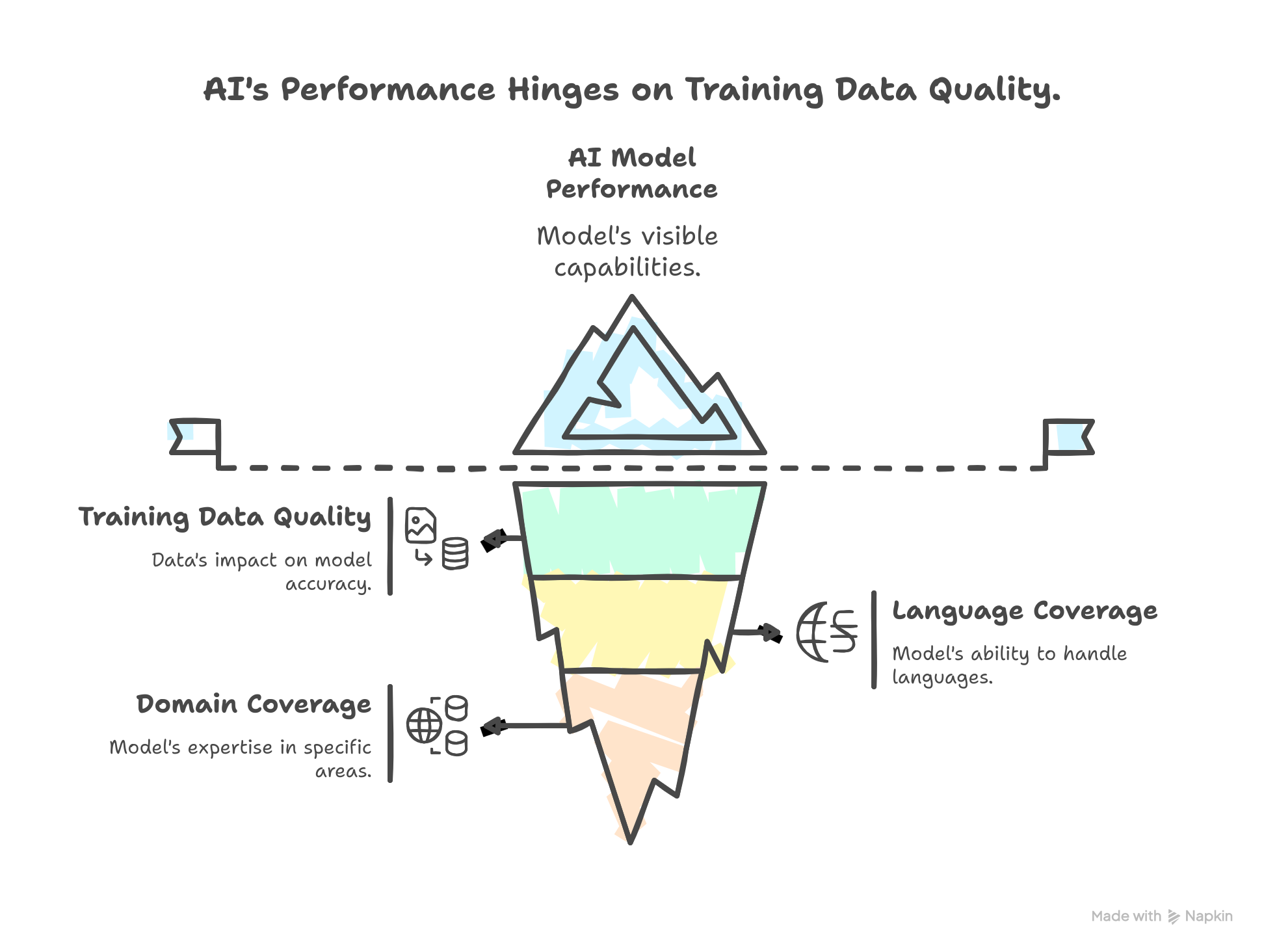
Bigger models do not fix bad data. Here is why high-quality training data drives AI performance, and how to bu...
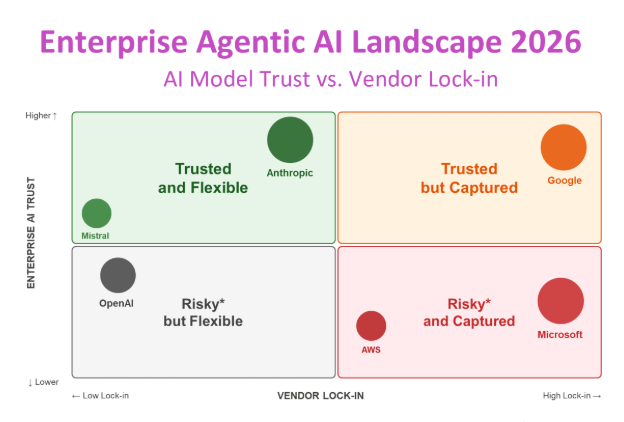
Multimodal AI reads text, images, audio, and video together. Learn the enterprise use cases and the competitiv...