Multi-Agent Systems Explained: A Business Leader's Guide to Scalable AI
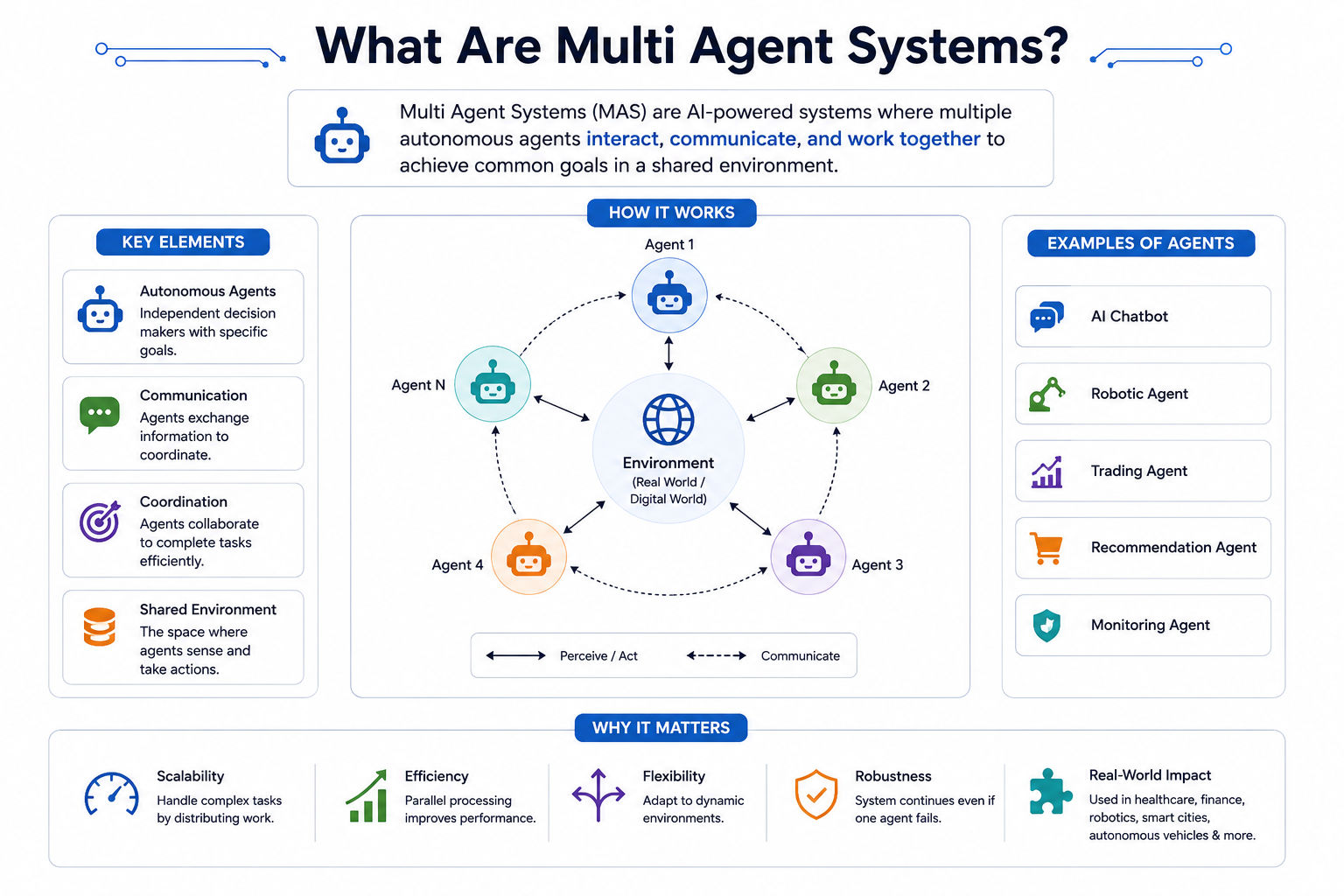
What multi-agent systems are, how they differ from single agents, the four coordination topologies, the real t...
Multimodal AI reads text, images, audio, and video together. Learn the enterprise use cases and the competitive edge it creates, plus how to deploy it.
Multimodal AI is creating new competitive advantages for global enterprises by letting a single system reason across text, images, audio, and video at once, turning messy real-world inputs into structured decisions that older single-mode models simply could not handle. That shift matters because most enterprise work is not plain text. It is scanned contracts, factory-floor photos, recorded sales calls, medical scans, and product videos. A multimodal model reads all of it together.
The momentum is real. Gartner predicts that 40% of generative AI solutions will be multimodal by 2027, up from just 1% in 2023 [1]. For CTOs and heads of AI, that trajectory signals a closing window: the firms that operationalize multimodal capabilities first will set the cost and quality bar for everyone else in their sector.
This article breaks down where multimodal AI delivers durable advantage, the use cases worth funding now, the data and implementation work behind them, and the enterprise risks that quietly sink these projects. If you're weighing whether to build internally or partner for the engineering and data work, we'll cover that trade-off too. Want a second opinion on your roadmap? You can schedule a call with our team.

Key Takeaways
Multimodal AI refers to models that accept and reason over more than one type of input, and often produce more than one type of output. A multimodal system can take a photo of a damaged shipment plus a typed complaint plus a recorded voicemail, and resolve them as one coherent claim. Single-mode systems force you to stitch those signals together with brittle glue code and human handoffs.
The enterprise relevance is straightforward. Your highest-value data has always been locked in formats that text-only AI ignored. Inspection photos, CAD drawings, support call recordings, X-rays, shelf images, and video walkthroughs all carry decision-grade information. Multimodal models read them natively.
There is a real difference between a chatbot that can describe an uploaded image and a production pipeline that inspects 50,000 weld joints a day with traceable confidence scores. The first is a demo. The second is a competitive moat. The gap between them is engineering, data, and governance, which is where most of this article lives.
Three forces are converging. Frontier models now handle vision, audio, and long documents with usable accuracy. Inference costs keep falling, making per-image and per-minute-of-audio processing affordable at scale. And enterprise adoption of generative AI broadly has jumped, from 33% of people using it regularly in 2023 to 71% in 2024 per Stanford HAI's 2025 AI Index [4]. Multimodal is the next layer riding that adoption curve.

Competitive advantage from AI rarely comes from the model itself, since competitors can license the same one. It comes from applying it to proprietary data and embedded workflows that rivals can't easily copy. Multimodal AI widens that surface area because it unlocks data your competitors are probably still ignoring.
The table below maps the four use cases with the clearest near-term ROI, the modalities involved, and the moat each one builds.
| Use caseModalities combinedPrimary advantageWhere the moat comes from | |||
| Document intelligence | Text + image (layout) + tables | Faster, cheaper processing of contracts, invoices, claims | Proprietary document templates and labeled extraction data |
| Visual quality inspection | Image + video + sensor text | Higher defect-catch rates, lower scrap and recall risk | Years of defect imagery from your own production line |
| Voice and call assistants | Audio + text + tone | Better resolution, real-time agent support, QA at 100% coverage | Recorded calls plus domain-specific intent labels |
| Healthcare imaging support | Image + clinical text | Triage speed, radiologist throughput, fewer missed findings | Annotated scans tied to confirmed outcomes |
Most enterprises still process invoices, contracts, and claims with a mix of optical character recognition, rules, and manual keying. Multimodal document intelligence reads the layout and the language together, so it understands that a number in the bottom right of a structured table is the total, not a line item. That cuts straight-through-processing failures and review time.
The advantage compounds because the model improves on your own document mix. A logistics firm's bills of lading and a bank's loan packets need different extraction logic, and that tuning is hard to replicate from the outside.
Manufacturing, energy, and infrastructure operators are deploying vision models to inspect components, welds, packaging, and field assets from photos and video. The advantage is twofold: catch more defects than tired human inspectors, and create a permanent, auditable visual record. A model trained on your own decade of defect imagery is something a competitor cannot buy.
Audio plus text lets contact centers do what was previously impossible: analyze 100% of calls instead of a 2% sample. Multimodal assistants transcribe, detect sentiment and intent, surface the right knowledge to live agents, and flag compliance breaches in real time. The result is higher first-contact resolution and a feedback loop that keeps improving on your specific customer conversations.
In regulated clinical settings, multimodal systems pair medical images with patient notes to triage cases and assist specialists. These deployments are deliberately human-in-the-loop: the model surfaces candidate findings and a radiologist confirms. Done right, it raises throughput without removing accountability, which matters enormously under the EU AI Act's treatment of medical AI as high-risk [6].

Consider a mid-sized international insurer drowning in auto claims. Each claim arrives as a soup of formats: photos of vehicle damage, a PDF police report, a typed customer description, and sometimes a voicemail. Adjusters were spending most of their time assembling and re-keying these inputs before any actual judgment happened.
The insurer built a multimodal pipeline. Damage photos are scored for severity by a vision model. The police report and customer text are parsed by a document model. Voicemails are transcribed and summarized. All signals merge into a single structured claim record with a recommended payout band and a confidence score.
The outcomes that mattered were not flashy. Routine claims that previously took days now route in hours. Adjusters spend their time on the genuinely ambiguous 20% of cases. Fraud signals, like a damage photo that doesn't match the described incident, surface automatically. Critically, every recommendation is traceable to its source inputs, which keeps auditors and regulators satisfied.
This pattern, taking messy multimodal inputs and producing an auditable structured decision, is the template most enterprises should copy. The technology is reusable. The advantage comes from your proprietary claims history and the workflow redesign around it. For a related view on how grounded retrieval keeps these outputs accurate, see our piece on enterprise RAG systems.

A multimodal model is only as good as the data it's grounded and tuned on, and multimodal data is harder to wrangle than text. You're now managing images, audio, and video alongside text, each with its own storage, labeling, and quality challenges. Around 70% of organizations already report data difficulties with conventional AI [2]. Multimodal multiplies that.
The discipline that separates winners is treating training and evaluation data as a first-class asset, not an afterthought. This echoes a broader truth across enterprise AI: data quality often beats raw model size, a theme we cover in depth in why high-quality training data matters more than model size.
The market reflects this reality. The data-labeling sector is projected to grow from $3.77B in 2024 to $17.1B by 2030, a 28.4% compound annual growth rate [2]. That spend is enterprises recognizing that the bottleneck is curated data, not algorithms.

Most multimodal projects fail not because the technology can't work, but because they skip the unglamorous steps. MIT's Project NANDA found that roughly 95% of enterprise generative AI pilots show no measurable P&L return [3]. Disciplined scoping and workflow redesign, not model selection, are what move that number. Here is a sequence that works.
On build-versus-buy: most enterprises shouldn't train multimodal models from scratch. The leverage is in combining foundation models with your data, your fine-tuning, and your evaluation harness. That blend of AI engineering and human-in-the-loop data work is exactly where a focused partner adds speed.
Buying a packaged tool is fastest for commodity tasks like generic document OCR. Building in-house makes sense when the use case is core to your differentiation and you have the engineering and data-ops depth. Partnering bridges the gap: you keep ownership of the moat while accessing vetted engineers and annotation capacity quickly. Mind Supernova, a Vietnam-based AI engineering firm founded in 2023, works in this mode, pairing senior AI developers with a human-in-the-loop data workforce and 4+ hours of daily UK overlap. For the wider decision framework, our colleagues' write-up on the future of AI outsourcing is a useful companion.

Multimodal AI carries every risk of text-only AI plus new ones unique to images, audio, and video. Naming them early is what keeps a project from joining the 95% that stall [3].
The talent gap deserves its own mention. McKinsey reports 46% of leaders cite skills gaps as the top blocker to shipping generative AI [5]. Multimodal work needs computer-vision, audio, and data-engineering skills that are scarce, which is one reason many enterprises augment with external teams that can start in days rather than quarters.

An advantage you can't defend to a regulator or a customer isn't an advantage for long. Trustworthy multimodal AI rests on two pillars: grounding outputs in verified data, and governing the system end to end.
Grounding means the model's claims trace back to real source inputs rather than plausible-sounding invention. Retrieval-augmented generation extends naturally to multimodal: the system retrieves the relevant image, document, or transcript before answering, so outputs cite evidence. Our deep dive on enterprise RAG systems covers the architecture.
Governance means mapping each deployment to a recognized framework. The NIST AI RMF and its Generative AI Profile give a vocabulary for identifying and managing risk [8]. ISO/IEC 42001:2023 provides a certifiable management system. The OWASP Top 10 for LLM Applications catalogs the concrete attack vectors to defend against [7]. And in Europe, the EU AI Act sets binding obligations, with high-risk and product-embedded duties phasing in through 2027 and 2028 under the provisional Digital Omnibus timeline [6]. Build for these now, not after an audit forces it.
This connects to the broader 2026 picture. Multimodal capability is one of several intertwined shifts reshaping the enterprise, alongside agentic systems and stronger governance, which we map across the cluster starting with our overview of the top AI trends transforming enterprise growth in 2026.

Multimodal AI is a team sport. You need AI engineers who can integrate foundation models, data engineers who can build robust pipelines, domain experts who define what good looks like, and an annotation workforce that produces clean labeled data at scale. Few enterprises have all four in-house on day one.
That is why many global firms combine internal product ownership with external delivery capacity. The work splits cleanly: keep strategy, data ownership, and evaluation criteria inside; bring in vetted engineering and human-in-the-loop annotation to move fast. Mind Supernova operates this way from Vietnam, offering AI development, data annotation, and dedicated teams with senior engineers who can start in 5 to 7 days. If you're standing up offshore delivery with daily UK overlap, our perspective on AI development services in Vietnam and on data annotation services for generative AI lays out how the pieces fit. You can also explore our AI development services directly.
The point is not to outsource judgment. It's to remove the data and engineering bottlenecks that keep most multimodal projects stuck in pilot purgatory, while you retain the proprietary assets that make the advantage yours.

Multimodal AI is a system that understands and reasons over more than one type of data at the same time, such as text, images, audio, and video. Instead of handling each format separately, it combines them into one understanding, which lets it process real-world inputs like a photo plus a description together.
It unlocks proprietary data that text-only AI ignored, like inspection photos, call recordings, and scanned documents. Because rivals can license the same models but not your data and workflows, advantage comes from applying multimodal AI to assets only you own. Gartner expects 40% of generative AI solutions to be multimodal by 2027 [1].
The clearest near-term wins are document intelligence for contracts and claims, visual quality inspection in manufacturing, voice and call-center intelligence, and healthcare imaging support. Each converts messy unstructured inputs into auditable structured decisions, which is where measurable cost savings and quality gains appear fastest.
Start with one measurable workflow, audit your proprietary data, build a grounded prototype on a foundation model, and design human-in-the-loop checkpoints. Then redesign the surrounding workflow and add governance before scaling. Data quality and process redesign matter more than model choice, since about 95% of pilots show no return without them [3].
Key risks include compounding errors across modalities, high processing cost for video and images, privacy exposure from faces and voices, bias from unrepresentative data, and security threats like prompt injection hidden in images. Mitigate them with confidence thresholds, human review, strong access controls, diverse data, and frameworks like NIST AI RMF [8] and OWASP [7].
Multimodal AI is moving from novelty to default, with Gartner projecting 40% of generative AI solutions multimodal by 2027 [1]. The enterprises that win won't be those with the fanciest model. They'll be the ones who pair foundation models with proprietary multimodal data, redesign the workflow around the output, and govern the whole thing so they can defend it.
This week: pick one painful workflow where images, audio, or documents cause real cost, and define a single success metric for it. This quarter: build a grounded prototype on your own data with human-in-the-loop review, instrument it honestly, and add the governance controls before you scale.
If you'd rather not build the engineering and annotation muscle from scratch, that's exactly the gap a focused partner fills. Schedule a call with Mind Supernova to pressure-test your multimodal roadmap and map a path from pilot to production.
What multi-agent systems are, how they differ from single agents, the four coordination topologies, the real t...
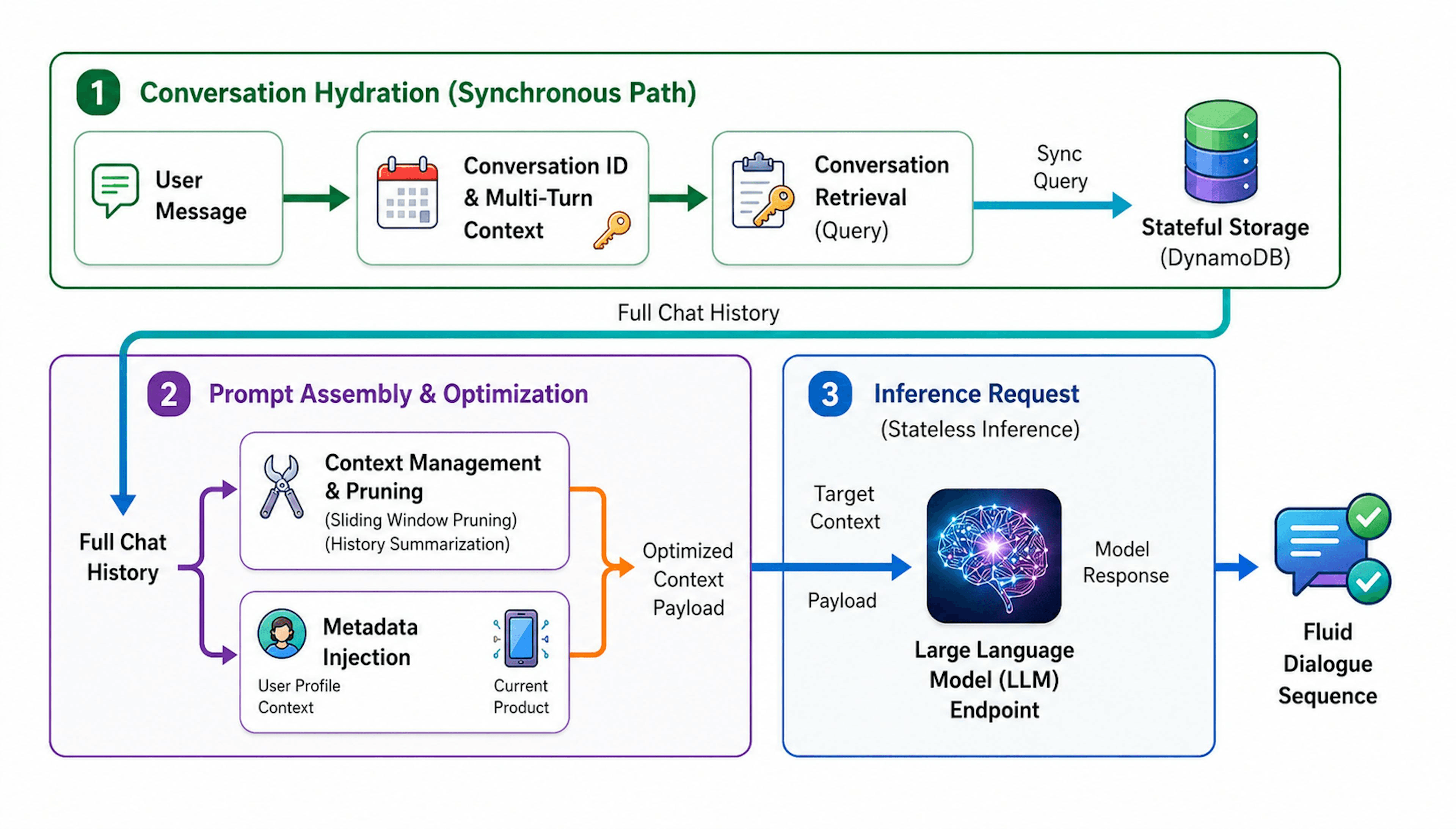
Why stateless LLMs need an external memory layer: short-term vs long-term agent memory, how it's built, memory...
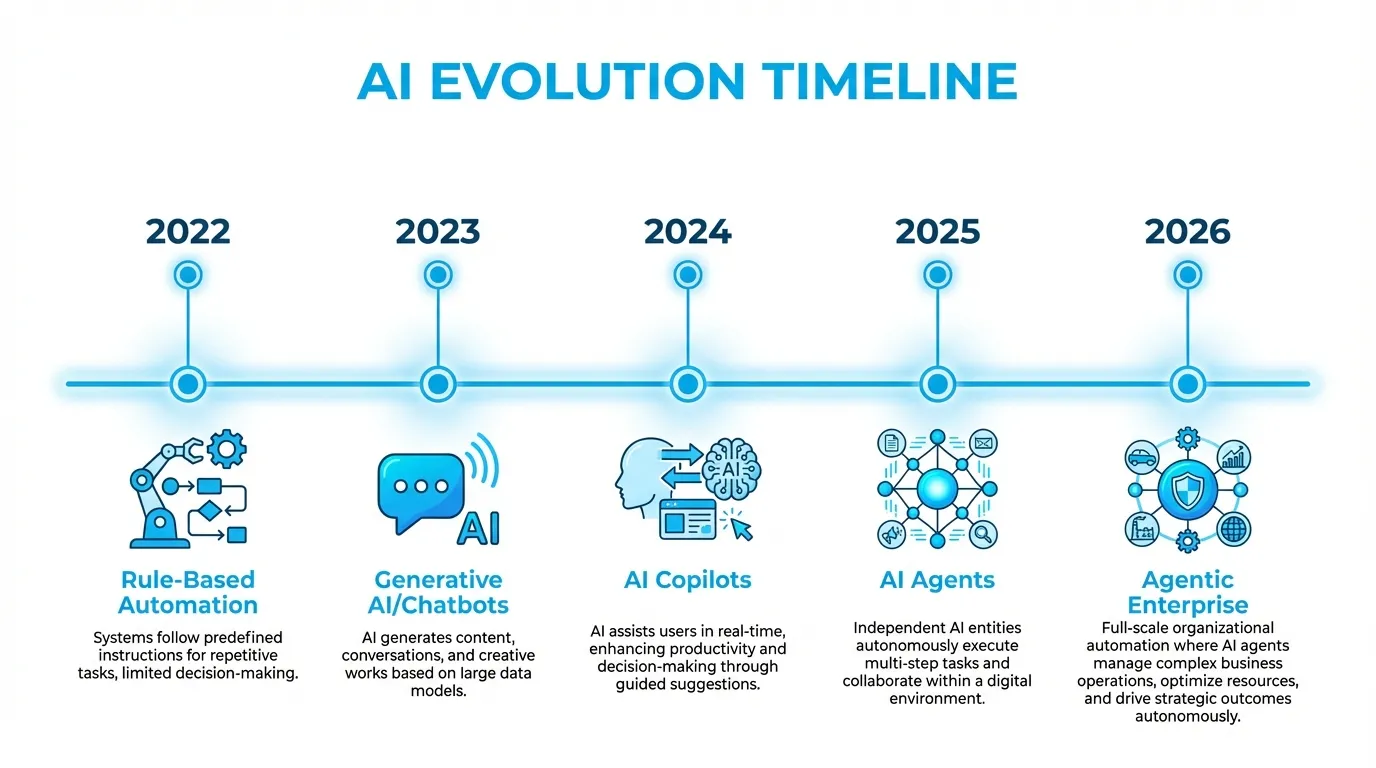
A clear, stage-by-stage guide to the evolution from chatbots to autonomous AI agents, including a maturity mod...