Blog
LLM Fine-Tuning Explained: When It Beats RAG and What It Truly Costs
Fine-tuning vs RAG vs prompting, methods like LoRA and RLHF, when to fine-tune an LLM, costs, and how to outsource it.
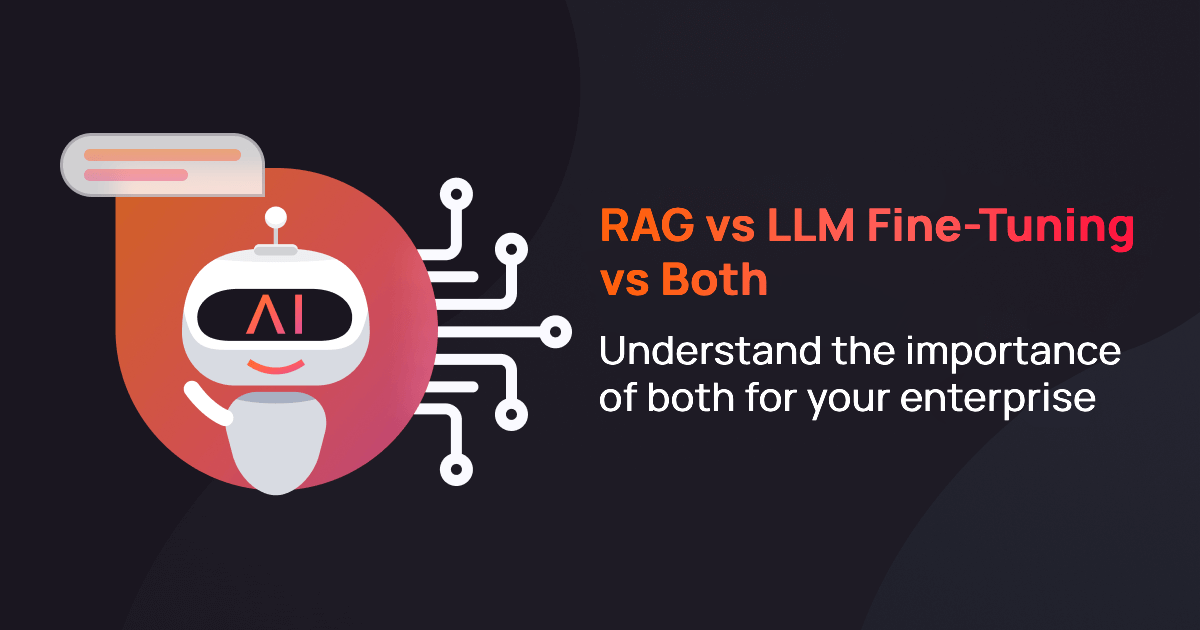
LLM fine-tuning is the process of further training a pre-trained large language model on your own labeled examples so it reliably produces the format, tone, and domain knowledge your application needs. It is one of three ways to adapt a model, alongside prompting and retrieval-augmented generation (RAG), and it sits at the heart of serious enterprise AI work. If you are weighing LLM fine-tuning services, the first question is rarely "how" but "whether", because fine-tuning is powerful, sometimes expensive, and easy to misapply.
This guide explains the methods that vendors actually use, from supervised fine-tuning (SFT) to LoRA, PEFT, RLHF, and DPO, and where each one fits. We will compare fine-tuning against RAG and prompt engineering, walk through the data you need, estimate cost and effort, and show how teams evaluate results. We will also cover when outsourcing the work makes sense, and why a growing number of companies route this engineering to specialist teams in Vietnam.
By the end you will be able to scope a fine-tuning project, ask vendors the right questions, and avoid the most common mistake: paying to fine-tune a model when a better prompt or a retrieval layer would have solved the problem at a fraction of the cost.
Key Takeaways
- Fine-tuning teaches a model new behavior and style; RAG injects fresh facts at query time. Most production systems combine RAG plus a strong prompt before they ever fine-tune.
- LoRA and other PEFT methods update less than 1% of model weights, cutting compute cost dramatically versus full fine-tuning while keeping most of the quality.
- SFT handles "do this task in this format"; preference methods like RLHF and DPO handle "prefer this kind of answer over that one".
- You typically need hundreds to a few thousand high-quality labeled examples for SFT, not millions; data quality beats data volume.
- Vietnam offers senior AI/ML engineers at roughly $9–25/hr, about 30–50% below Western rates, with attrition of 6–8% versus 20%+ in India [4][5], which is why fine-tuning work is increasingly outsourced there.
What LLM fine-tuning actually is
Fine-tuning starts with a model that already understands language, such as an open-weight Llama, Mistral, or Qwen model, or a hosted model that exposes a tuning API. You then continue training it on a curated dataset of input-output pairs that reflect your task. The model's weights shift slightly so that, given a similar input later, it behaves the way your examples taught it to.
The key word is "behavior". Fine-tuning is excellent at locking in a consistent output structure, a brand voice, a classification scheme, or a domain dialect such as legal or clinical phrasing. It is far weaker at memorizing specific facts, and it cannot keep up with information that changes weekly. A fine-tuned model still gives you a snapshot of what it learned at training time.
That distinction drives almost every architecture decision. If your problem is "the model never formats the output the way we need" or "it does not sound like us", fine-tuning helps. If your problem is "the model does not know our latest pricing or this customer's order history", fine-tuning is the wrong tool and retrieval is the right one. The two are complementary, not competing.
Where it fits in the AI stack
Fine-tuning is one layer in a larger system. Upstream you have data engineering and annotation; downstream you have evaluation, deployment, and monitoring (MLOps). A fine-tuned model often becomes the reasoning core inside a larger application, including the agentic AI systems many enterprises now build to automate multi-step workflows. Getting the model to follow tool-calling formats reliably is a classic fine-tuning use case.
Fine-tuning vs RAG vs prompting: which to choose
Before spending a dollar on fine-tuning, exhaust the cheaper options. Prompt engineering and RAG solve a large share of real problems, and they iterate in minutes rather than days. A sensible order of operations is: get the prompt right, add retrieval for facts, and only then fine-tune for behavior the first two cannot deliver.
Prompting is changing the instructions and examples you send the model at inference time. It costs nothing to set up, but it consumes context window on every call and can be brittle at scale. RAG retrieves relevant documents from a vector store or database and feeds them into the prompt, so the model answers from current, private data without retraining. Fine-tuning changes the model itself.
| DimensionPrompt engineeringRAGFine-tuning | |||
| Best for | Quick behavior tweaks, formatting | Fresh, private, or large factual knowledge | Consistent style, format, domain behavior |
| Adds new facts? | Only what fits in the prompt | Yes, at query time | Poorly; not its strength |
| Setup effort | Hours | Days to weeks | Weeks (data + training + eval) |
| Ongoing cost driver | Token usage per call | Retrieval infra + tokens | Training runs + hosting weights |
| Updates with new data | Edit the prompt | Re-index documents | Retrain the model |
| Data needed | A few examples | A document corpus | Hundreds to thousands of labeled pairs |
| Typical time to value | Same day | 1–3 weeks | 3–8 weeks |
In practice the strongest systems blend all three. You fine-tune a model so it reliably follows your output schema and tone, wrap it in RAG so it answers from current data, and keep a tight prompt to steer edge cases. Asking a vendor to "just fine-tune our model" without this layered view is a warning sign.
Fine-tuning methods explained: SFT, LoRA, PEFT, RLHF, DPO
"Fine-tuning" is an umbrella over several techniques with very different cost and complexity. Understanding them lets you read a vendor proposal critically and push back when someone quotes full fine-tuning for a job that LoRA would handle.
Supervised fine-tuning (SFT)
SFT is the workhorse. You provide pairs of input and the ideal output, and the model learns to map one to the other. This is how you teach a model to classify support tickets, extract structured fields from documents, or answer in a fixed JSON shape. Most enterprise fine-tuning projects are, at their core, SFT projects with clean data.
Full fine-tuning vs PEFT and LoRA
Full fine-tuning updates every weight in the model. It can deliver the highest quality but is expensive, needs serious GPU memory, and produces a large model copy for every variant you train. Parameter-efficient fine-tuning (PEFT) avoids this by freezing the base model and training only a small set of new parameters.
LoRA (Low-Rank Adaptation) is the most popular PEFT method. It inserts small trainable matrices into the model and updates only those, often less than 1% of total parameters. The result is dramatically cheaper training, tiny adapter files you can swap in and out, and quality that is close to full fine-tuning for most tasks. QLoRA adds quantization so you can fine-tune large models on a single consumer or mid-range GPU. For the majority of business use cases, LoRA or QLoRA is the right default.
Preference tuning: RLHF and DPO
SFT teaches the model what a good answer looks like. Preference methods teach it to prefer one answer over another, which is how you tune for helpfulness, safety, or a subtle tone. Reinforcement learning from human feedback (RLHF) trains a reward model on human preference judgments, then optimizes the LLM against it. It is powerful but operationally heavy.
Direct preference optimization (DPO) reaches a similar goal more simply by training directly on pairs of preferred and rejected responses, skipping the separate reward model. DPO has become a common, lighter-weight alternative for teams that want preference alignment without the full RLHF pipeline. Both depend on high-quality human preference data, which is exactly the kind of work that benefits from specialist data annotation services for generative AI.
When to fine-tune and when not to
The honest answer is that many teams should not fine-tune yet. Fine-tuning earns its cost when you have a stable, well-defined task, a clear quality gap that prompting and RAG cannot close, and enough good data to train on. Skip it when your requirements are still shifting or your data is thin or messy.
Good reasons to fine-tune:
- You need the model to follow a strict output format every time, such as a fixed schema for downstream systems.
- You want a consistent brand voice or a specialized domain style that prompts only approximate.
- You are doing high-volume narrow tasks where a smaller fine-tuned model beats a large general model on cost and latency.
- You need to reduce prompt length, because behavior baked into weights frees up context window.
- You require on-prem or open-weight deployment for compliance, so a hosted model's prompt tricks are not enough.
Reasons to wait:
- The knowledge you need changes often; use RAG instead so you never retrain for new facts.
- You have fewer than a few hundred quality examples, or your labels are inconsistent.
- You have not yet tried a strong prompt with a few good in-context examples.
- Your task is still being defined, and the target output keeps changing week to week.
A practical heuristic: if you cannot write a clear specification of "good output" and produce 200 clean examples of it, you are not ready to fine-tune. You are ready to do the data work first, which is a project in its own right.
Data requirements: the part that decides everything
Fine-tuning quality is mostly data quality. A model trained on 500 carefully reviewed examples will usually beat one trained on 5,000 noisy ones. The dataset must reflect the real distribution of inputs you will see in production, including the awkward edge cases, not just the clean happy path.
For SFT you generally need input-output pairs that are accurate, consistent in format, and free of contradictions. For preference tuning you need ranked or paired responses where humans have judged one better than another. Both require disciplined sourcing, labeling, and review, which is why serious teams treat building AI training data at scale as a dedicated workstream rather than an afterthought.
How much data do you need?
- Style or format adaptation: often a few hundred well-chosen examples are enough.
- Narrow classification or extraction: typically 500 to a few thousand labeled pairs.
- Preference alignment (DPO/RLHF): thousands of comparison judgments, growing with the subtlety of the behavior.
Equally important is the held-out evaluation set you never train on. Without it you cannot tell whether the model improved or simply memorized. Many fine-tuning failures trace back to a missing or leaky evaluation split, where test examples accidentally appear in training and inflate the scores.
Cost and effort: what fine-tuning really takes
Cost splits into three buckets: data, compute, and engineering time. For most projects, data and engineering dominate, not raw GPU spend, especially once LoRA or QLoRA brings training compute down. A common mistake is budgeting for GPUs while underbudgeting the human work of building and curating the dataset.
Compute for a LoRA run on a mid-sized open model can be modest, sometimes a few hours on a single GPU. Full fine-tuning of larger models is far heavier and may need a multi-GPU setup. Hosting matters too: serving an open-weight model yourself adds ongoing infrastructure that a hosted tuning API would bundle into per-token pricing.
The engineering effort is where projects overrun. A realistic LoRA SFT project includes data sourcing and cleaning, an evaluation harness, several training iterations, error analysis, and deployment plus monitoring. That is weeks of senior AI/ML work, which is the single largest driver of total cost and the reason teams look hard at where that work is done.
| Project typeMethodData effortComputeTypical timeline | ||||
| Brand voice / formatting | LoRA SFT | Low to moderate | Low | 3–4 weeks |
| Domain extraction / classification | LoRA or QLoRA SFT | Moderate | Low to medium | 4–6 weeks |
| Tool-calling / agent reliability | SFT + targeted data | Moderate | Medium | 5–7 weeks |
| Helpfulness / safety alignment | DPO or RLHF | High (preference data) | Medium to high | 6–10 weeks |
| Maximum-quality custom model | Full fine-tuning | High | High (multi-GPU) | 8–12+ weeks |
Evaluating a fine-tuned model
You cannot ship what you cannot measure. Evaluation should start before training, with a held-out test set and a clear definition of success, and continue after deployment with live monitoring. Skipping rigorous evaluation is the fastest way to deploy a model that looks fine in a demo and fails quietly in production.
Use a layered approach. Automated metrics give cheap, repeatable signals; human review catches what metrics miss; and ongoing monitoring detects drift once real users arrive. The right mix depends on the task, but a serious vendor will propose evaluation as a first-class deliverable, not a checkbox.
- Task metrics: accuracy, F1, or exact-match for classification and extraction; format-validity rate for structured output.
- LLM-as-judge: a strong model scores outputs against a rubric, useful for open-ended tasks but always validated against human spot checks.
- Human evaluation: domain experts rate a sample for correctness, tone, and safety, especially for preference-tuned behavior.
- Regression checks: confirm the model did not get worse on tasks it previously handled well, a common side effect of fine-tuning.
- Production monitoring: track output quality, latency, and failure rates after launch as part of an MLOps pipeline.
Watch for overfitting, where the model memorizes training examples and generalizes poorly, and for catastrophic forgetting, where it loses general capability it once had. Both are detectable with a good evaluation set and both are manageable with the right method and data balance.
Outsourcing LLM fine-tuning, and why Vietnam
Fine-tuning is expertise-intensive and intermittent. Few companies need a full-time fine-tuning team year-round, yet the work demands genuinely senior AI/ML engineers when it does happen. That mismatch is why fine-tuning, along with RAG pipelines, AI agents, MLOps, and data annotation, is among the most commonly outsourced areas of enterprise AI work.
Vietnam has become a leading destination for this work. The country has more than 500,000 software developers and over 1.2 million IT professionals, concentrated in Ho Chi Minh City and Hanoi, with 50,000 to 75,000 new IT graduates each year [3]. It ranks #7 on Kearney's Global Services Location Index and sits in the top three in Southeast Asia [1]. For a deeper landscape view, see the pillar guide on AI outsourcing in Vietnam for 2026.
The economics are hard to ignore. Senior developer rates in Vietnam run about $9–25/hr, roughly 30–50% below Western markets where US and UK rates reach $75–135+/hr [4]. Attrition runs 6–8% versus 20%+ in India, so the engineer who started your fine-tuning project is far more likely to still be on it months later [4][5]. Lower churn matters disproportionately for AI work, where context about your data and evaluation criteria is expensive to rebuild.
What a good fine-tuning partner does
- Pushes back when RAG or prompting would solve your problem more cheaply, instead of selling you a training run.
- Treats data curation and evaluation as core deliverables, not extras.
- Chooses the lightest method that works, defaulting to LoRA or QLoRA before full fine-tuning.
- Builds reproducible pipelines so you can retrain as your data evolves.
- Handles deployment and monitoring, not just a one-off model handoff.
Mind Supernova, a Vietnam-based engineering company founded in 2023, works this way across AI development, LLM integration, agentic AI, and MLOps. Engagement options range from staff augmentation when you need to plug a senior ML engineer into your team, to a full dedicated team for an end-to-end fine-tuning and deployment program. Async-first delivery with 4+ hours of daily UK overlap keeps iteration tight, and vetted senior engineers can start in 5–7 days. It is one strong option among several; evaluate it on the same criteria you would apply to anyone.
If you want help deciding between fine-tuning, RAG, and a hybrid before committing budget, schedule a call and we will scope it with you. For the broader vendor-selection question, the cluster guide on how to choose an AI outsourcing partner lays out a full evaluation framework.
Frequently asked questions
Is fine-tuning better than RAG?
Neither is universally better; they solve different problems. Fine-tuning changes how a model behaves, formats, and sounds. RAG injects fresh, private facts at query time without retraining. Most production systems use RAG for knowledge and fine-tuning for behavior, often together. Start with RAG and prompting before you fine-tune.
How much data do I need to fine-tune an LLM?
Less than people expect. Style or formatting tasks can work with a few hundred clean examples, while narrow classification or extraction usually needs 500 to a few thousand labeled pairs. Preference tuning needs thousands of comparisons. Data quality and a clean held-out evaluation set matter far more than raw volume.
What is the difference between LoRA and full fine-tuning?
Full fine-tuning updates every weight in the model, which is costly and memory-heavy. LoRA, a parameter-efficient method, freezes the base model and trains tiny adapter matrices, often under 1% of parameters. LoRA is much cheaper, produces small swappable files, and matches full fine-tuning quality for most business tasks.
What does it cost to outsource LLM fine-tuning?
Cost depends on data, method, and scope more than GPUs. A LoRA SFT project is typically a few weeks of senior AI/ML engineering plus modest compute. Outsourcing to Vietnam, where senior rates run about $9–25/hr versus $75–135+/hr in the US and UK [4], substantially lowers the engineering portion that dominates total cost.
Can fine-tuning teach a model new facts?
Not reliably. Fine-tuning is strong at behavior, format, and style but weak at memorizing specific facts, and it cannot track information that changes frequently. For current or private knowledge, use retrieval-augmented generation so the model reads the latest data at query time. Reserve fine-tuning for consistent behavior the prompt cannot enforce.
Conclusion: turn fine-tuning into a deliberate decision
Fine-tuning is a precision tool, not a default. Used well, it gives you a model that follows your format, speaks in your voice, and runs cheaper and faster on narrow tasks. Used reflexively, it burns budget on a problem that a better prompt or a retrieval layer would have solved in an afternoon.
This week: write a one-page specification of "good output" for your task, then test whether a strong prompt plus a few in-context examples gets you most of the way there. If a knowledge gap remains, prototype RAG before anything else.
This month: if a genuine behavior gap persists, assemble 200 to 500 clean labeled examples and a held-out evaluation set, then run a LoRA SFT pilot and measure it honestly against your baseline. Decide on full fine-tuning or preference tuning only after the pilot proves the gap is real.
If you would rather have senior engineers scope and execute this, schedule a call with Mind Supernova. We will tell you honestly whether fine-tuning is worth it for your case, and if it is, build the data pipeline, train the model, and ship it with proper evaluation and monitoring.
References
- Kearney. Global Services Location Index. https://www.kearney.com/service/digital-analytics/gsli/
- Dirox. Vietnam IT Outsourcing 2025: Market Reports and Trends. https://dirox.com/post/vietnam-it-outsourcing-2025-market-reports-trends
- Designveloper. Offshore Software Development in Vietnam. https://www.designveloper.com/blog/offshore-software-development-vietnam/
- Aalpha. Offshore Software Development Hourly Rates. https://www.aalpha.net/articles/offshore-software-development-hourly-rates/
- Pixitech. India vs Vietnam Developers Comparison. https://pixitech.io/india-developers-and-vietnam-developers-comparison/
- McKinsey. The State of AI. https://www.mckinsey.com/capabilities/quantumblack/our-insights/the-state-of-ai
Keep reading
Related articles.
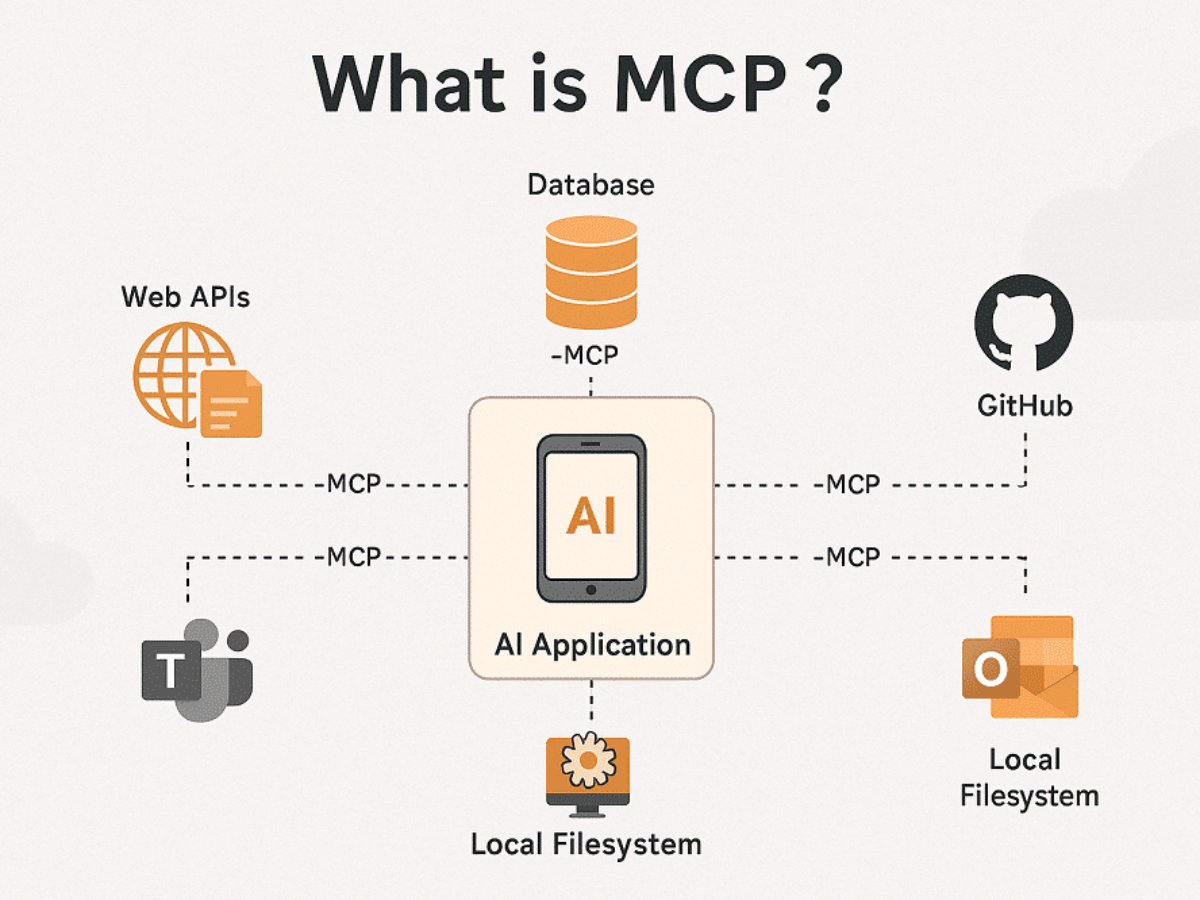
What Is MCP (Model Context Protocol)? The Enterprise AI Standard Explained for 2026
What is MCP? A clear, technical guide to the Model Context Protocol — the open standard that connects AI apps...
How AI Agents and MCP Are Reshaping Enterprise Software Architecture
A practical reference architecture for the agentic era: how AI agents and MCP turn brittle point-to-point inte...