
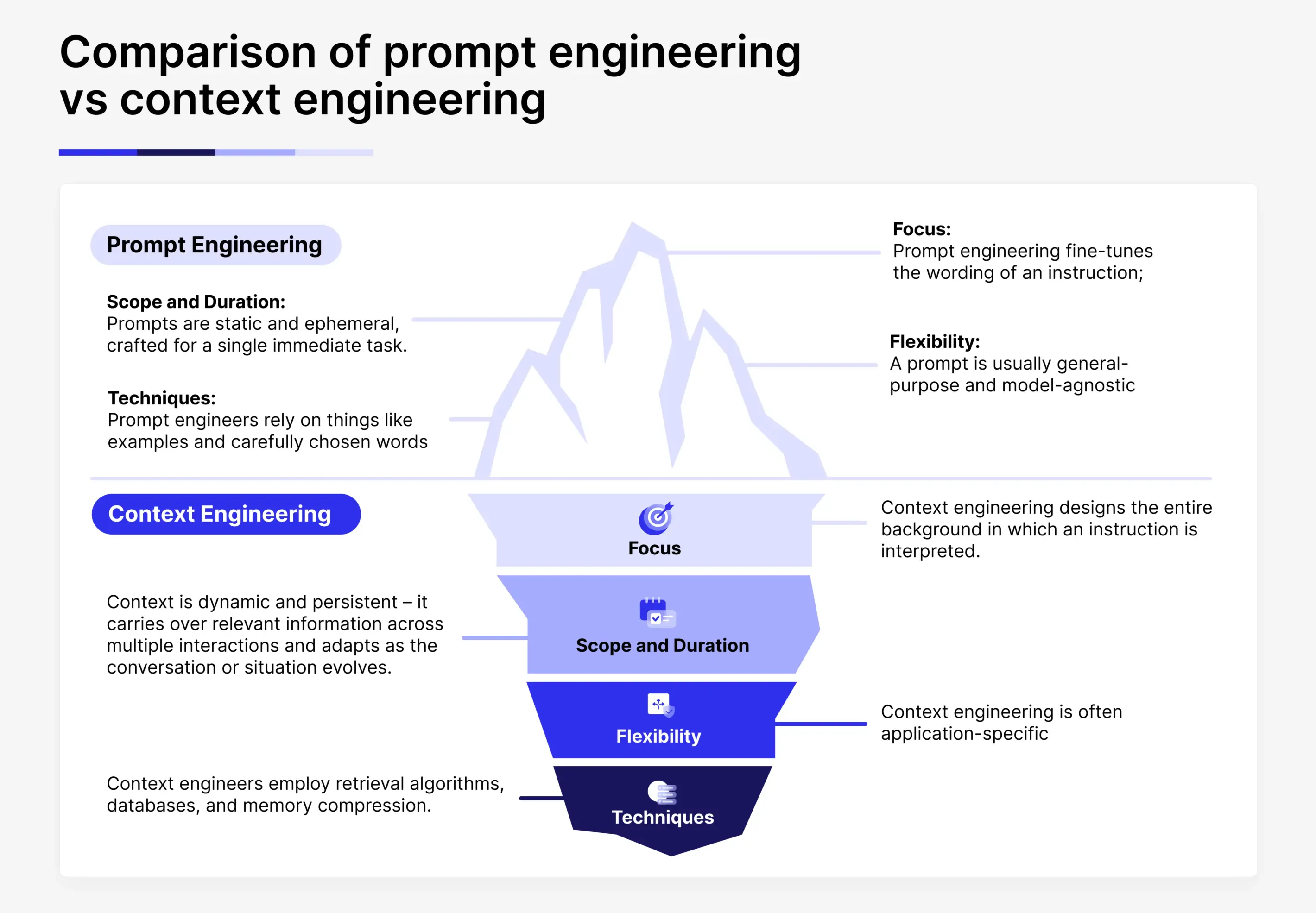
Context Engineering vs Prompt Engineering: Why the Smartest AI Teams Are Shifting Focus in 2026
Context engineering is the discipline of curating everything an AI agent sees at inference time. Here is why i...
The 2026 enterprise AI adoption trends that matter: top use cases, barriers, ROI, build vs buy, and the talent gap.

Enterprise AI adoption in 2026 has moved from experimentation to operational reality: most large organizations now run generative AI in production, not just in pilots, and the State of AI surveys show a clear majority of enterprises using or actively piloting genAI [1]. The headline trend isn't whether companies adopt AI anymore. It's whether they can staff, govern, and scale it fast enough to capture returns. That gap between ambition and capacity is reshaping how enterprises build, buy, and source AI talent, and it's a big reason many of them now look to AI outsourcing Vietnam and similar markets to close the engineering shortfall.
This article maps the enterprise AI adoption trends that matter for 2026: where adoption actually stands, the use cases driving spend, the barriers slowing returns (talent, data, governance), how leaders think about ROI, the build-versus-buy decision, and what's coming next with agents, multimodal models, and governance. Throughout, we'll connect each trend to a practical question every technology leader is asking. How do we get the right people on this fast enough?
Mind Supernova works with UK fintech, EU manufacturing, and global enterprise teams on exactly this problem, so we've written this as a planning resource rather than a hype piece. If you want to discuss your roadmap directly, you can schedule a call at any point.
Key Takeaways
Adoption is broad but uneven. A clear majority of organizations report using generative AI in at least one business function, and a growing share say they use it in two or more, according to McKinsey's State of AI research [1]. The plateau isn't in interest. It's in depth. Many enterprises have several live pilots and a handful of production workloads, yet only a minority have reached the stage where AI is embedded across multiple core processes and tied to measurable outcomes.
It helps to think of adoption as a maturity ladder rather than a single switch. Most enterprises sit somewhere in the middle rungs.
Why does the ladder stall in the middle? Pilots are easy because they tolerate rough edges. Production is hard because it demands data pipelines, evaluation, security, monitoring, and people who can own all of it. That's an engineering and operations problem, and it's precisely where most adoption efforts run out of internal capacity.
Spend in 2026 concentrates around a recognizable set of high-value, repeatable use cases. They share a pattern: each is labor- and expertise-intensive to build well, which is why so many enterprises pair internal product owners with outsourced engineering to ship them.
Most of these depend on connecting a model to proprietary data and existing systems. That integration layer, plus the data work behind it, is where the real engineering effort lives. For a deeper catalog of the underlying capabilities, see our overview of AI development services in Vietnam, and for the production techniques behind grounded answers, our guide to LLM fine-tuning services explained.
When enterprises miss their AI targets, the cause is rarely the model. It's almost always one of three operational barriers: talent, data, or governance. Treat these as the real project, and the model becomes the easy part.
Demand for AI and ML engineers far outstrips supply in most Western markets, and these roles command a premium over general software developers everywhere. The shortage is acute for the people who can do the unglamorous production work: data engineering, evaluation harnesses, MLOps, and agent orchestration. Hiring full-time specialists is slow and expensive, and competition is fierce. This is the single most cited reason enterprises turn to outsourcing for AI delivery.
AI is only as good as the data feeding it. Many enterprises discover that their data is fragmented, poorly labeled, or locked in systems that resist clean access. RAG systems hallucinate when the underlying corpus is messy. Fine-tuned models drift when training data is inconsistent. Getting data ready is often the longest phase of any serious AI program. For how teams handle the labeling and pipeline side, see data annotation services for generative AI and our deep dive on building AI training data at scale.
As AI moves into production, governance stops being optional. Boards now ask about data privacy, model bias, IP exposure, security, and regulatory compliance before approving deployment. Many organizations lack a clear framework for who owns AI risk, how outputs are evaluated, and how systems are monitored after launch. Weak governance is now a leading reason promising pilots never reach production.
| BarrierWhat it looks likePractical mitigation | ||
| Talent | Cannot hire ML/AI engineers fast enough; production work stalls | Augment with vetted senior engineers; outsource delivery for specific workloads |
| Data | Fragmented, unlabeled, or inaccessible data; RAG and fine-tuning underperform | Invest in pipelines, annotation, and evaluation before scaling models |
| Governance | No clear owner of AI risk; pilots blocked at security review | Define a lightweight governance framework early; build monitoring in from day one |
ROI conversations have matured. In 2024, "we're experimenting with AI" was an acceptable answer to the board. By 2026, finance wants to see the return. The challenge is that AI returns show up in different forms, and the most defensible programs measure several at once rather than chasing a single headline number.
Two patterns separate programs that report impact from those that don't. First, they instrument before they launch, defining the baseline and the metric up front rather than reverse-engineering a story later. Second, they keep total cost of ownership in view: model and infrastructure costs are real, but the larger line item is usually engineering time. Lowering the cost of that engineering, without lowering its quality, is often the fastest way to improve the ROI math, which is exactly the lever outsourcing pulls.
The old framing of build versus buy doesn't fit how enterprises actually deploy AI in 2026. Almost nobody trains a foundation model from scratch, and almost nobody gets full value from a vendor product without integration work. The real question is which layers you buy and which you build, and who builds the parts you keep in-house.
A useful way to think about it is by layer.
| LayerTypical approachWhy | ||
| Foundation models | Buy (API or hosted) | No cost or quality advantage in building your own |
| Tooling and infrastructure | Buy / managed | Commoditized; vendors iterate faster |
| Data, retrieval, agents | Build | Source of differentiation and accuracy |
| Engineering capacity | Build in-house or outsource | Speed and cost; talent is the constraint |
For the engineering-capacity question specifically, an experienced partner can shorten the path considerably. Mind Supernova's vetted senior engineers can typically start in 5-7 days, which compresses the months a full-time AI hire can take. For the trade-offs in choosing such a partner, our guide on how to choose an AI outsourcing partner walks through the evaluation framework, and the complete guide to AI outsourcing in Vietnam covers engagement models end to end.
Three shifts will define enterprise AI through 2027. None is purely about bigger models. Each raises the engineering and governance bar, which keeps the talent question front and center.
The biggest near-term shift is from assistants that suggest to agents that act. Agentic systems plan multi-step tasks, call tools, and take actions across business systems with limited human supervision. They promise large efficiency gains, but they also raise the stakes: an agent that can act can also act wrongly. Building them well requires careful orchestration, guardrails, and evaluation. We cover the architectures and governance in detail in AI agent development for enterprises.
Text-only is giving way to systems that handle images, audio, documents, and video together. Manufacturing teams inspect with vision, support teams process screenshots and voice, and document workflows read layout, not just words. Multimodal use cases expand the kinds of data that need collection, labeling, and evaluation, which increases the data and engineering workload behind each deployment.
As regulation matures and AI takes on higher-stakes decisions, governance shifts from a blocker to an enabler. Organizations with clear frameworks for evaluation, monitoring, IP protection, and risk ownership ship faster because they spend less time stuck at review. Expect governance, observability, and evaluation to absorb a growing share of AI engineering effort, not a shrinking one.
Tie the trends together and a single constraint keeps surfacing: enterprises can buy the models and the tooling, but they struggle to staff the engineering, data, and governance work that turns those models into production value. That's the structural reason AI outsourcing has become a core part of enterprise AI strategy rather than a cost-cutting afterthought.
Vietnam has emerged as one of the most practical answers to this gap. The country has 500,000+ software developers and 1.2M+ IT professionals, with 50,000-75,000 new IT graduates each year, and it ranks #7 on Kearney's Global Services Location Index [2][3]. Senior developer rates run roughly $9-25/hr, about 30-50% below Western markets, while attrition sits near 6-8% versus 20%+ in some competing markets, which means the team that starts your AI project is likely the team that finishes it [4][5].
Outsourcing fits the AI adoption ladder in concrete ways. Staff augmentation adds specialist ML or MLOps engineers to an existing team to push a stalled pilot into production. A dedicated team can own a data or agent layer end to end. And because AI engineering is core to how Mind Supernova works, not bolted on, the same partner can support LLM integration, RAG pipelines, agentic AI, and the data work underneath. Delivery is async-first with 4+ hours of daily UK overlap, so reviews and standups happen in real time despite the offshore model. To put Vietnam in context against other destinations, the case for why global startups choose Vietnam for AI development and the list of top AI outsourcing companies in Vietnam are useful next reads.
If you'd like to map your own roadmap against this talent model, you can schedule a call with our team, or review the AI development services we offer and our staff augmentation and dedicated team options.
A large majority of organizations now use or pilot generative AI in at least one business function, according to McKinsey's State of AI research [1]. Far fewer have scaled it across multiple functions or report clear bottom-line impact, so broad adoption and deep adoption are very different numbers in 2026.
The three consistent barriers are talent shortage, data readiness, and governance. The models themselves are rarely the problem. Most stalled programs fail because enterprises cannot staff the production engineering, cannot get their data clean and accessible, or cannot clear security and risk review fast enough to deploy.
In practice it's both. Enterprises buy foundation models, tooling, and infrastructure, then build the integration, data, retrieval, and agent layers where differentiation lives. The hardest part is staffing that build, which is why many use staff augmentation or dedicated outsourced teams to add AI engineering capacity quickly.
Outsourcing gives enterprises fast access to senior AI and ML engineers without lengthy hiring cycles. Markets like Vietnam offer senior rates around $9-25/hr, roughly 30-50% below Western rates, with low attrition [4][5]. Vetted engineers can often start within a week, which compresses the time to move pilots into production.
Three stand out: agentic AI moving from suggestion to action, multimodal systems becoming standard across text, image, and audio, and governance maturing into a competitive advantage. All three raise the engineering and data workload per deployment, which keeps the talent and outsourcing question central to AI strategy.
The defining enterprise AI trend of 2026 isn't a new model. It's the gap between widespread adoption and the much smaller share of organizations actually capturing returns. Closing that gap is an execution problem rooted in talent, data, and governance, and the enterprises pulling ahead are the ones treating it as such.
This week: audit where each of your AI initiatives sits on the maturity ladder, and identify the single barrier (talent, data, or governance) blocking your most promising pilot from production. This month: define ROI baselines for your top two use cases, decide which layers you'll buy versus build, and assess whether your internal team can staff the build on the timeline you need.
If talent is your constraint, that's where an experienced partner makes the biggest difference. Mind Supernova provides vetted senior AI engineers who can start in 5-7 days, working async-first with 4+ hours of daily UK overlap on LLM integration, RAG, agentic AI, and the data engineering underneath. To plan your 2026 AI roadmap with a team that does this every day, schedule a call.
Context engineering is the discipline of curating everything an AI agent sees at inference time. Here is why i...
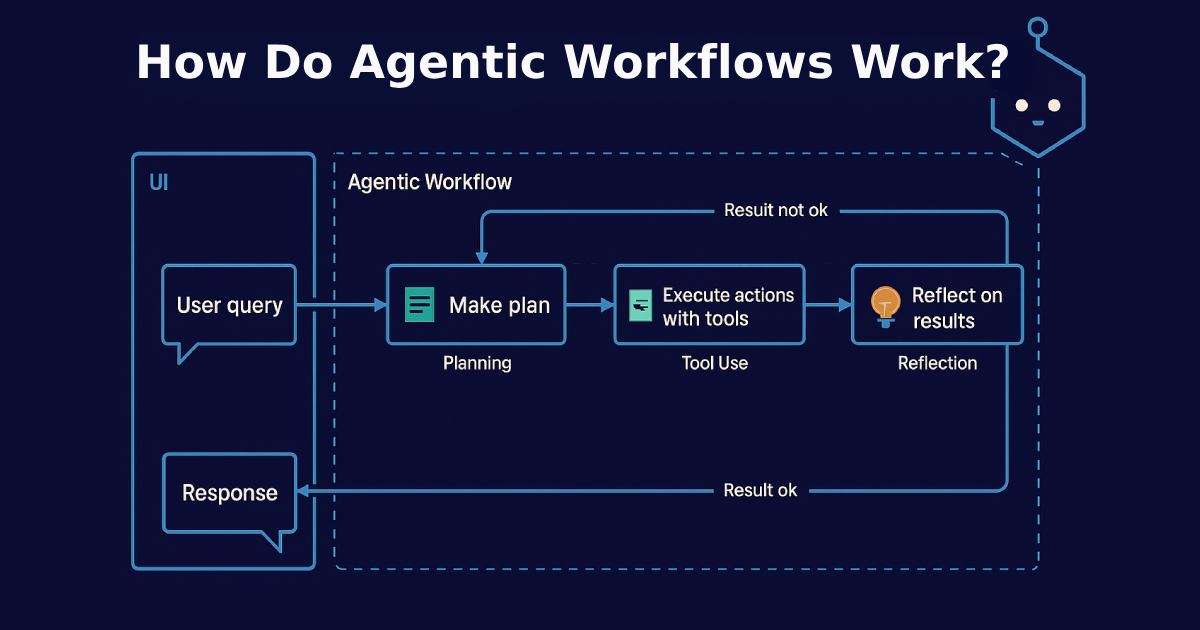
What agentic workflows are, how they differ from RPA and simple LLM calls, the six core patterns, and a practi...
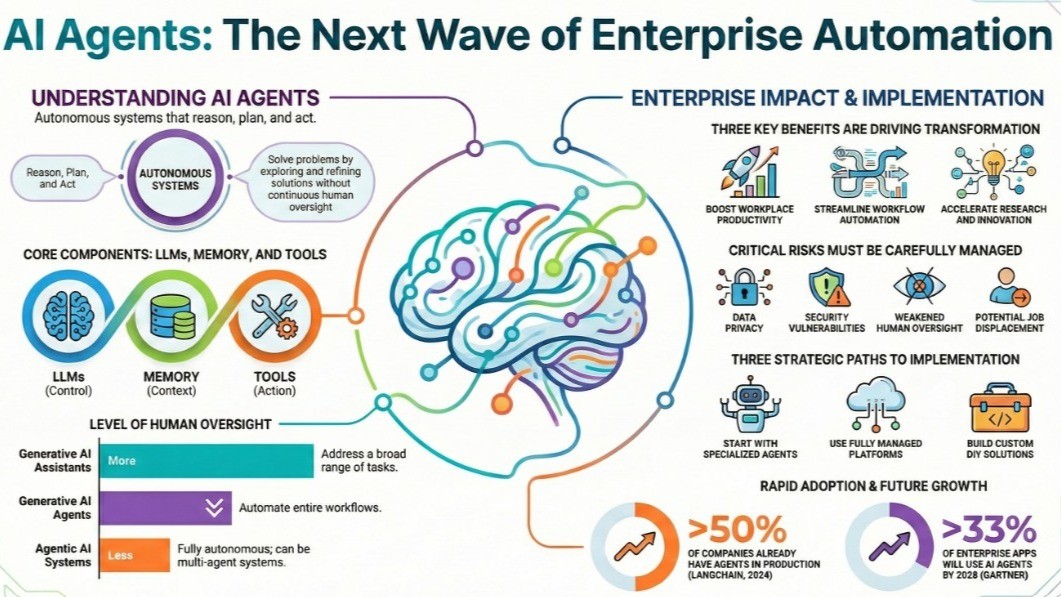
How enterprises are moving from AI copilots to AI employees: autonomous digital workers that own a scoped role...