
Data Annotation for Generative AI: The Hidden Engine Behind Models That Actually Work
Data annotation for generative AI: labeling types, RLHF and preference data, quality control, and why teams ou...
Autonomous AI systems are moving from pilots to operations. Learn the levels of autonomy, the operational impact, and how to keep humans in control.
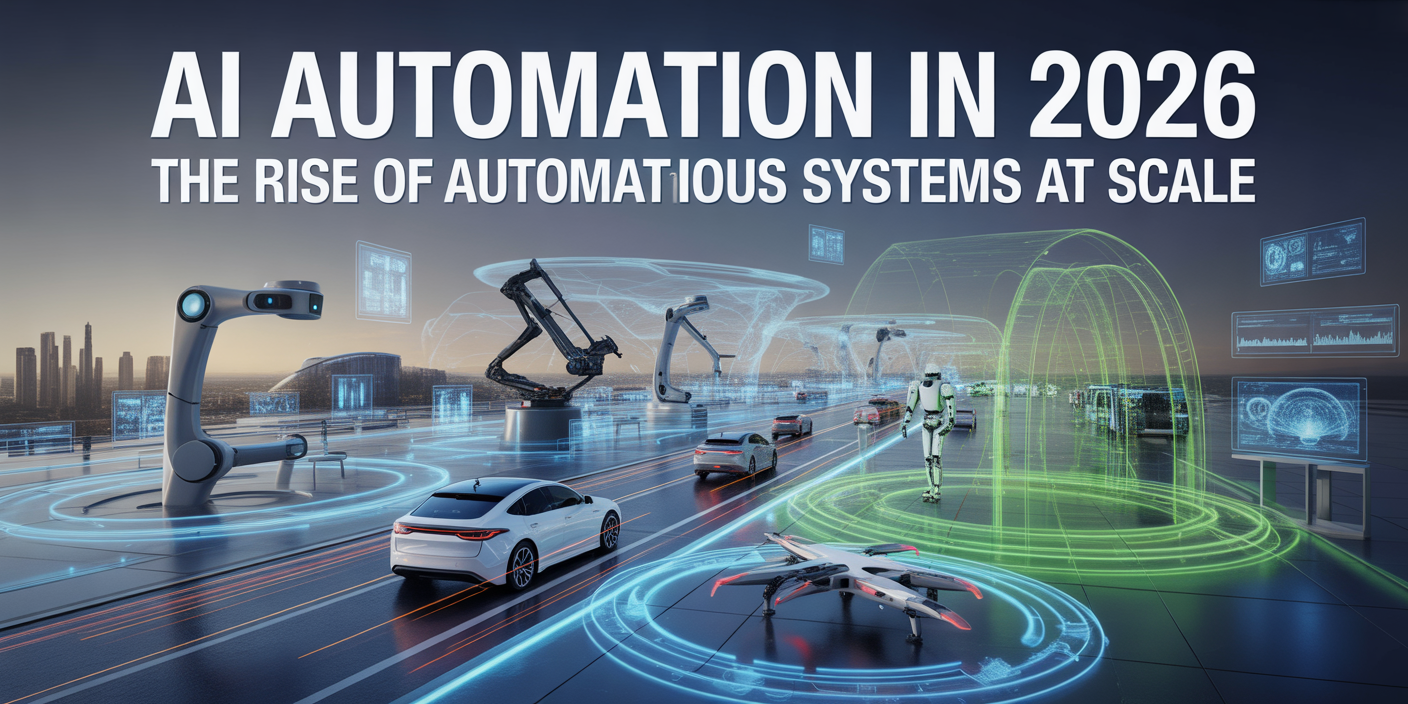
Autonomous AI systems are software entities that perceive context, plan multi-step actions, and execute them toward a goal with limited or no human input at each step, and they are starting to run real enterprise operations rather than just assist with them. That shift is the headline of 2026. Gartner expects that by 2028, roughly 15% of day-to-day work decisions will be made autonomously by agentic AI, up from effectively zero in 2024 [1]. For operations leaders, the question is no longer whether autonomous systems will touch the business, but how much authority to hand them and how to keep that authority safe.
The promise is concrete: faster cycle times, fewer manual handoffs, and processes that adapt without waiting for a ticket queue. The catch is equally concrete. Gartner also predicts that more than 40% of agentic-AI projects will be canceled by the end of 2027, citing escalating costs, unclear business value, and weak risk controls [1]. The companies that win will treat autonomy as an engineering and governance discipline, not a demo.
This article maps the levels of autonomy, the orchestration patterns that make multi-agent systems work, the operational impact you can expect, and the human oversight and governance controls that separate a durable deployment from a canceled pilot. If you want help scoping a first autonomous workflow, you can schedule a call with our team.
Key Takeaways
An autonomous AI system differs from a generative model by what it does after it produces an output. A generative model returns text, an image, or code when prompted. An autonomous system uses a model as a reasoning engine inside a loop: it observes the environment, decides on a next action, calls a tool or API to act, observes the result, and repeats until the goal is met or a stop condition fires. The model thinks; the surrounding scaffolding gives it agency.
That scaffolding has four parts. A planner decomposes a goal into steps. A set of tools (databases, APIs, code execution, browsers) lets the system act in the real world. A memory layer holds context across steps and sessions. A controller enforces limits: budgets, permissions, and stop conditions. Remove any one and you have either a chatbot or an uncontrolled process.
The distinction between generative and agentic AI carries real cost and risk implications, which we cover in depth in generative AI vs agentic AI. The short version: autonomy multiplies both the upside and the blast radius of every decision the system makes.
Autonomy is not binary. Borrowing from how the automotive industry graded self-driving, it helps to think of enterprise AI on a ladder where each rung transfers more decision authority from people to the system. Naming the level you are deploying forces clarity about who is accountable when something goes wrong.
Most enterprises in 2026 operate productively at Levels 2 and 3. Level 4 and 5 deployments exist in narrow, well-bounded domains where actions are reversible and verification is cheap. The table below maps the ladder to oversight needs and realistic enterprise use.
| LevelNameWho decidesHuman roleTypical enterprise use | ||||
| 0 | Manual | Human | Does the work | Legacy processes, no AI |
| 1 | Assisted | Human | AI suggests, human acts | Copilots, draft generation, search |
| 2 | Supervised | Human approves | AI proposes a full action; human confirms | Drafting refunds, routing tickets, code PRs |
| 3 | Conditional | AI within limits | Human handles exceptions and escalations | Invoice matching, tier-1 support resolution |
| 4 | High autonomy | AI in a bounded domain | Human audits outcomes after the fact | Inventory reordering, ad-bid optimization |
| 5 | Full autonomy | AI end to end | Human sets goals and policy only | Rare; narrow, reversible, low-stakes tasks |
A practical rule: the higher the level, the more you must invest in observability, reversibility, and guardrails before go-live. Pushing a payroll or pricing process to Level 4 without an audit trail and a kill switch is how projects end up in the 40% cancellation bucket [1].
Single-agent autonomy hits a ceiling fast. Real operations involve many specialized steps, so the durable architecture in 2026 is multi-agent orchestration: a set of focused agents coordinated by an orchestrator that routes tasks, manages shared state, and resolves conflicts. Think of it as an operating model for software workers rather than one oversized prompt.
The hard parts are rarely the agents themselves. They are state management, error recovery when a tool call fails midway, cost control across many model calls, and preventing two agents from making conflicting changes. Strong orchestration treats these as first-class concerns with idempotent tool calls, transactional boundaries, and per-run budgets. For teams building these systems from scratch, our guide to AI agent development for enterprises covers the engineering stack in detail, and how AI agents are replacing traditional software workflows shows what changes at the process level.
Autonomous systems change operations in three ways: they compress cycle time, they shift human work from execution to exception-handling, and they make process capacity elastic. A support queue that grows 3x overnight no longer needs 3x staff if Level 3 agents resolve routine tickets and escalate the rest.
The impact is uneven by function. The pattern below reflects where most enterprises see early traction.
A caution is warranted. MIT's Project NANDA reported that roughly 95% of enterprise generative-AI pilots showed no measurable P&L return [4], and McKinsey found only about 6% of firms qualify as AI high performers attributing 5% or more of EBIT to AI [2]. The differentiator was not the model. McKinsey identifies workflow redesign as the single biggest driver of EBIT impact [2]. Bolting an agent onto a broken process automates the dysfunction.
Consider a mid-market property insurer drowning in first-notice-of-loss intake. Adjusters spent the first hour of every claim gathering documents, checking policy coverage, and assigning severity before any real judgment happened. Cycle time was slow and customer satisfaction suffered during peak weather events.
The team deployed a Level 3 conditional autonomous workflow. A multimodal agent ingests the claim form, photos, and policy document, extracts structured facts, cross-checks coverage against the policy, scores severity, and either routes a clean low-value claim straight to payment within set limits or assembles a complete dossier and escalates to an adjuster with a recommendation. Humans handle every exception and every claim above a dollar threshold.
The mechanics that made it safe: a hard payout ceiling for autonomous approval, a confidence threshold below which the system must escalate, full logging of every decision for audit, and a human-in-the-loop review on a sampled basis. The reusable lesson is that autonomy delivered value precisely because it was bounded. The agent owned the repetitive 80%, and people kept authority over the consequential 20%. That balance, not maximum autonomy, is what produced a measurable return.
Adoption is still early. McKinsey reports about 62% of organizations are experimenting with agents but 10% or fewer are scaling them in any function [2], and Deloitte found roughly 74% plan to use agentic AI within two years while only 21% have mature agent governance [3]. The gap between intent and readiness is where most projects fail. A disciplined rollout closes it.
The talent dimension matters too. McKinsey reports 46% of leaders cite skills gaps as the top blocker to shipping generative AI [2]. Many enterprises close that gap with a delivery partner. Mind Supernova, a Vietnam-based AI engineering company founded in 2023, provides vetted senior engineers who can start in 5 to 7 days and work async-first with 4 or more hours of daily UK overlap, drawing on our team's collective experience in AI development and agent engineering. It is one option among several; the point is that autonomy projects rarely fail for lack of models and often fail for lack of disciplined engineering.
Human oversight is the control that keeps autonomy accountable. There is a useful distinction between human-in-the-loop, where a person approves each action before it executes, and human-on-the-loop, where the system acts autonomously while a person monitors and can intervene. The right choice depends on the autonomy level and the cost of an error.
Mature programs anchor controls to recognized frameworks rather than inventing their own. The NIST AI Risk Management Framework 1.0 (2023) and its Generative AI Profile (2024) structure how to map, measure, and manage AI risk [5]. ISO/IEC 42001:2023 provides a certifiable AI management system standard. The OWASP Top 10 for LLM Applications (2025) names the technical threats, with prompt injection ranked first and sensitive-information disclosure a top risk [6]. For autonomous systems specifically, layer these controls:
Regulation reinforces this. The EU AI Act has been in force since August 2024, with prohibited-practices and AI-literacy duties applying since February 2025 and general-purpose AI obligations since August 2025 [7]. Per the provisional Digital Omnibus as of mid-2026, certain high-risk obligations are expected to be deferred to December 2027, though the final text should be confirmed. The deeper treatment of these requirements lives in our companion piece on AI governance, security and compliance strategies.
Autonomy introduces failure modes that traditional software does not have. Naming them is the first step to controlling them.
None of these are reasons to avoid autonomy. They are the engineering and governance work that converts a flashy pilot into a system you can trust in production. The 40% that get canceled tend to skip this work; the survivors build it in from day one [1].
An autonomous AI system uses an AI model inside a loop to perceive context, plan steps, take actions through tools or APIs, and adjust toward a goal with limited human input. Unlike a chatbot that only responds, it acts on the world, which is why governance, limits, and oversight are essential.
Generative AI produces content when prompted and then stops. Autonomous AI uses that generative capability as a reasoning engine within a loop that plans and executes multi-step actions toward a goal. The added agency increases both potential value and risk, demanding stronger controls and human oversight.
Autonomy spans a ladder from assisted (AI suggests, humans act) through supervised and conditional autonomy to high and full autonomy where AI handles tasks end to end. Most enterprises in 2026 operate productively at supervised and conditional levels, reserving higher autonomy for narrow, reversible, low-stakes processes.
Safe deployment combines least-privilege tool access, input and output validation, action gating for high-value steps, full audit logging, and kill switches. Anchoring controls to NIST AI RMF, ISO 42001, and the OWASP LLM Top 10, plus human oversight on exceptions, keeps autonomy accountable and auditable.
Gartner expects over 40% of agentic-AI projects to be canceled by end of 2027 due to escalating cost, unclear value, and weak controls [1]. Most failures trace to automating a broken process, skipping workflow redesign, and lacking governance, not to limitations of the underlying models.
Autonomous AI is moving from demo to dependable operations, but only for teams that treat it as an engineering and governance discipline. Name your autonomy level, redesign the workflow first, start supervised, instrument everything, and keep humans on the consequential decisions. That is how you land in the small group capturing measurable returns rather than the 40% that get canceled [1].
This week: pick one bounded, high-volume process and map its current steps, owners, and failure points. This quarter: ship a Level 2 supervised agent on that process, instrument every decision, and define the limits and kill switch before graduating any action to conditional autonomy.
If you want experienced engineers to scope and build a first autonomous workflow with governance built in, Mind Supernova can help, drawing on our collective experience across enterprise agent development and the broader practices in our guide to AI outsourcing. Schedule a call to talk through your first deployment.
Data annotation for generative AI: labeling types, RLHF and preference data, quality control, and why teams ou...
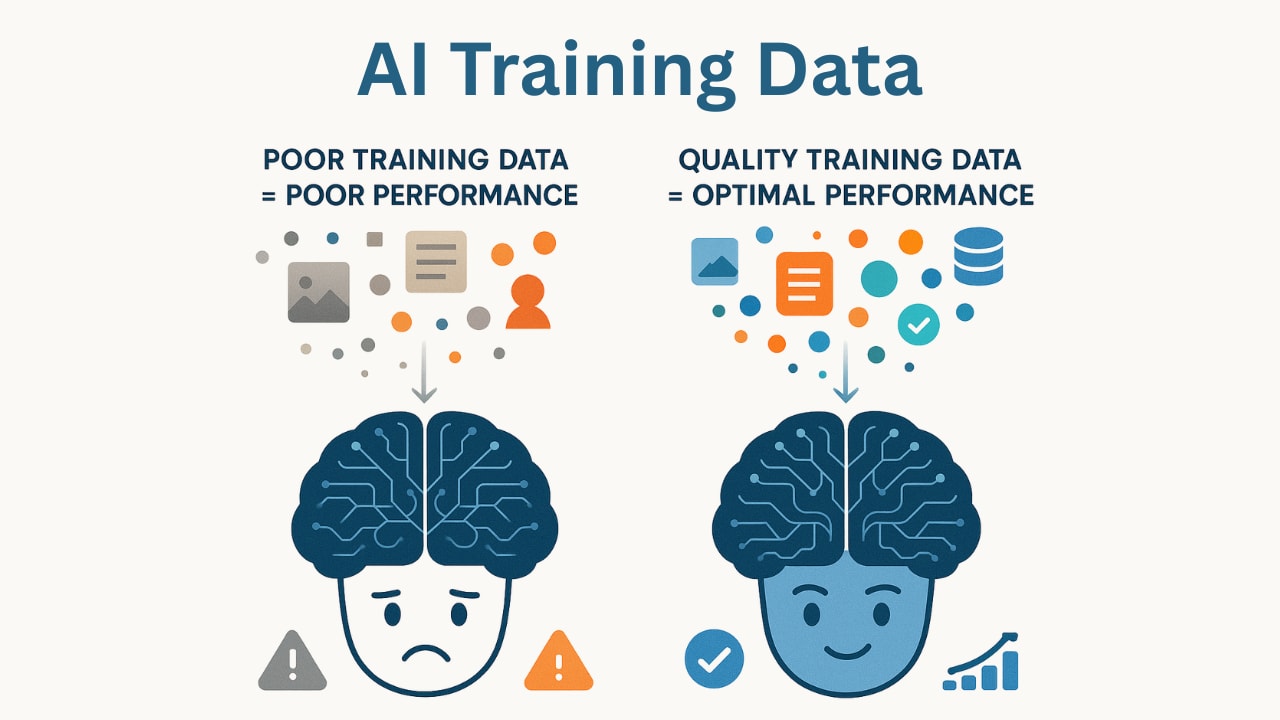
How to build high-quality AI training data at scale: sourcing, pipelines, synthetic data, quality control, and...
Fine-tuning vs RAG vs prompting, methods like LoRA and RLHF, when to fine-tune an LLM, costs, and how to outso...