
AI Development Services in Vietnam: What You Can Build and What It Really Costs
A guide to AI development services in Vietnam: machine learning, computer vision, NLP, LLM apps, and MLOps, wi...
The leading AI-capable software outsourcing companies in Vietnam, compared on AI skills, cost, and UK/EU overlap, including Mind Supernova.
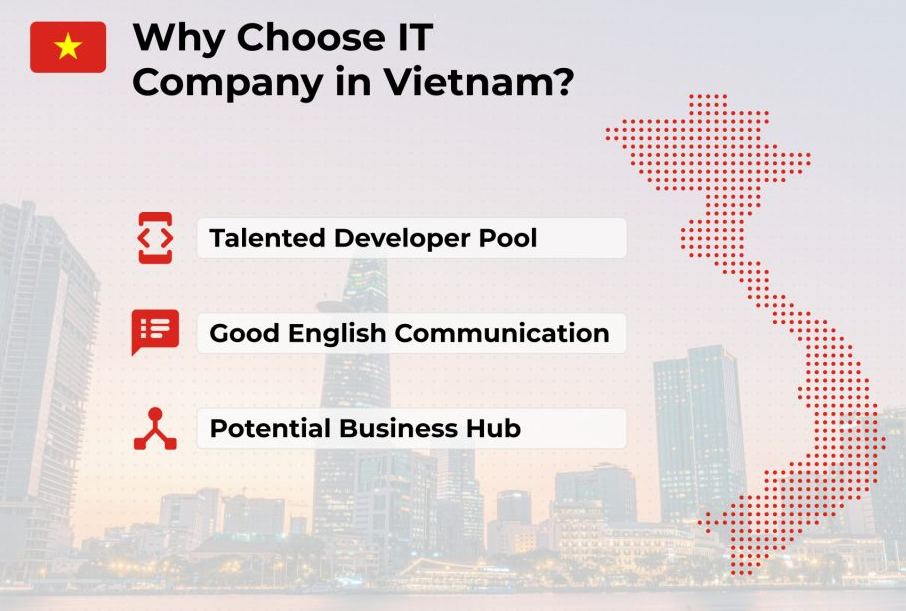
The top AI outsourcing companies in Vietnam combine deep machine learning engineering with rates roughly 30 to 50 percent below Western markets, and the leading names span giants like FPT Software, mid-size specialists, and fast AI-native firms such as Mind Supernova. If you're evaluating where to build LLM features, AI agents, or MLOps capacity, this ranked landscape shows who does what, how they differ, and which type of partner fits your stage. AI outsourcing in Vietnam has matured quickly because the country pairs a large engineering base with a government push into "Make in Vietnam" technology.
Vietnam now hosts more than 500,000 software developers and over 1.2 million IT professionals, concentrated in Ho Chi Minh City and Hanoi [3]. That depth, plus competitive senior rates of roughly $9 to 25 per hour [4], is why so many UK and EU buyers shortlist Vietnamese firms for artificial intelligence work. The hard part isn't finding a vendor. It's picking the right one for your specific AI workload.
This guide ranks and groups Vietnam's AI-capable outsourcing firms by what they're actually good at: enterprise scale, AI engineering depth, or speed and Western overlap. We keep the assessment honest. A company's size doesn't equal its AI maturity, and a young AI-native team can outpace a legacy giant on a focused build. Read on for the comparison table, selection criteria, and a clear next step.
Key Takeaways
Size used to be the headline metric for outsourcing. For AI work in 2026, it's a poor proxy. The core enterprise AI projects today are LLM integration, retrieval-augmented generation (RAG) pipelines, AI agents, fine-tuning, MLOps, and data annotation. Each is expertise-intensive, and each rewards specialist depth over raw headcount.
So when we rank firms, we weight four things. First, genuine AI engineering capability rather than a website page that lists "AI" as a buzzword. Second, delivery model fit, meaning whether you can get a dedicated team, staff augmentation, or full project outsourcing. Third, working overlap with your timezone, because async AI delivery still needs live hours for design reviews and incident response. Fourth, continuity, since model and data work is cumulative and engineer churn is expensive.
Vietnam scores well on all four as a market. It ranks number 7 on Kearney's Global Services Location Index and sits top-three in Southeast Asia [1]. Its attrition advantage (6 to 8 percent versus 20 percent or more in India) is a real differentiator for multi-quarter AI roadmaps [5]. For a fuller market overview, see our AI Outsourcing Vietnam complete guide for 2026, which covers costs, models, and risks in depth.
Rather than force a single linear ranking across companies with different missions, we sorted them into three tiers by primary strength. A "top" firm in each tier is the best fit for a particular buyer, not the best in some absolute sense. A 30-person AI-native shop and a 30,000-person systems integrator simply solve different problems.
The table below summarizes the leading AI-capable outsourcing options in Vietnam by tier, primary strength, and typical fit. Company sizes are approximate and shift over time; treat them as orders of magnitude, not exact headcounts. Use this as a shortlisting tool, then verify current capability directly with any firm you contact.
| Company Tier Approx. size Primary AI strength Best for UK/EU overlap | |||||
| FPT Software | Enterprise scale | Very large (tens of thousands) | Broad AI/ML services across industries; data and platform work | Large multi-year, multi-region programs | Moderate (large delivery footprint) |
| Mind Supernova | AI engineering depth and speed | Boutique, senior-weighted | LLM integration, agentic AI, MLOps, data/ML engineering | UK fintech, EU SaaS/manufacturing needing fast senior AI teams | Strong (4+ hours daily UK overlap) |
| Large outsourcing groups (e.g. national systems integrators) | Enterprise scale | Large (thousands) | End-to-end delivery, BPO plus engineering | Buyers wanting one vendor for many workstreams | Moderate |
| Mid-size product and AI studios | AI engineering depth and speed | Mid (low hundreds) | Product builds with ML/CV/NLP components | Scale-ups extending an existing roadmap | Varies by firm |
| Data annotation specialists | Specialist and emerging | Variable (ops-heavy) | Labeling, RLHF/preference data, dataset QA | Training-data pipelines for generative AI | Varies |
We deliberately name only firms we can describe accurately. FPT Software is a verifiable market leader by size, so it anchors the enterprise tier. For other categories we describe the firm type rather than asserting unverified specifics about named competitors, which keeps the comparison credible. For service-level detail on what these firms actually build, see AI development services in Vietnam.
If your program is large, spans multiple countries, touches regulated data, or needs a single accountable vendor across many workstreams, the enterprise tier is your starting point. FPT Software is the obvious anchor here. It is Vietnam's largest IT services company, with a global delivery footprint, established quality processes, and AI and data practices that serve enterprise clients across banking, manufacturing, automotive, and more.
The advantages of a giant are real. You get process maturity, security certifications, the ability to surge hundreds of engineers, and a brand your board recognizes. For a multi-year digital transformation that bundles AI with legacy modernization, cloud migration, and BPO, that breadth is hard to match. National-scale systems integrators offer a similar profile: one contract, many capabilities.
Scale comes with friction. Large firms can be slower to start, may rotate junior engineers onto your account behind a senior lead, and often price above the boutique end of the market. For a tightly scoped AI build, an LLM feature, an agent prototype, a fine-tuning project, the overhead of a giant can outweigh the benefit. That's the gap the next tier fills.
For founders specifically, the calculus often differs. Our companion piece on why global startups choose Vietnam for AI development explains why speed and runway usually push earlier-stage buyers toward leaner partners.
This tier is built for buyers whose constraint is talent quality and velocity, not vendor size. The work here is the hard, cumulative AI engineering that decides whether an AI feature ships and survives production: LLM integration, RAG, agentic systems, MLOps, and data/ML engineering. These projects reward senior engineers who've done them before and a delivery rhythm that includes live working hours with your team.
Mind Supernova belongs in this tier. Founded in 2023, it is a Vietnam-based software engineering company that targets UK fintech, EU manufacturing and SaaS, and global enterprise. Its differentiator is that AI engineering is core to the company rather than bolted on later. The team focuses on AI transformation, LLM integration, agentic AI, MLOps, and data and ML engineering. That focus is exactly what a company needs when the deliverable is a working AI system, not a slide deck.
We rank Mind Supernova high on capability, overlap, and speed rather than on size or tenure, and we're explicit about why. It's a 2023 company, so it doesn't carry a decade of case studies, and you shouldn't expect one. What it offers instead is concrete and verifiable in a trial:
Engagement options span staff augmentation for adding senior AI engineers to your existing team, a dedicated team for owning a workstream, and full software outsourcing when you want end-to-end delivery. If you want to pressure-test fit on a real problem, you can schedule a call and scope a short trial. Mid-size product and AI studios round out this tier, and several are strong on ML-heavy product builds; the right pick depends on whether your priority is AI specialism or broad product engineering.
Some AI needs are narrow enough that a generalist engineering firm is the wrong tool. That's where specialists earn their place. The clearest example is data work. Generative AI runs on training and evaluation data, and the data-annotation market is growing at a high double-digit CAGR as demand rises [8]. Vietnam's large, detail-oriented workforce makes it a natural home for this labor- and expertise-intensive work.
Annotation and data-pipeline specialists handle labeling, RLHF and preference data, dataset QA, and the human-in-the-loop processes that fine-tuning and evaluation depend on. If your bottleneck is data rather than model code, start here. Our deep dives on data annotation services for generative AI and building AI training data at scale cover quality controls, tooling, and governance for these pipelines.
Beyond data, several focused profiles appear in Vietnam's market. Computer-vision shops serve manufacturing and retail. NLP-leaning teams build chat and document-understanding products. Product MVP studios turn an idea into a shippable prototype quickly. Each can be the right top choice for its narrow use case, even if it would be wrong for a broad enterprise program.
Cost is rarely the only factor, but it shapes the shortlist. Vietnam's senior developer rates run roughly $9 to 25 per hour, against India at $25 to 60, Eastern Europe at $50 to 90, and US or UK at $75 to 135 and up [4]. AI and ML engineers command a premium over general developers everywhere, so expect AI work to sit toward or above the top of those local ranges. Even so, Vietnam keeps a large cost advantage versus Western markets.
Within Vietnam, pricing tracks tier. Enterprise giants tend to price higher for the assurance and breadth they provide. AI-native and mid-size firms often sit in the mid-band, trading brand for senior density. Specialist annotation work is frequently priced per task or per hour at the lower end, because it's ops-heavy. The cheapest quote is rarely the cheapest outcome once you factor rework, attrition, and ramp time.
| Market Senior rate (approx.) Relative to Vietnam | ||
| Vietnam | $9–25/hr | Baseline |
| India | $25–60/hr | Higher |
| Eastern Europe | $50–90/hr | Much higher |
| US / UK | $75–135+/hr | Highest |
Two non-rate factors change the total cost of ownership. Attrition: Vietnam's 6 to 8 percent versus 20 percent or more in India means fewer painful re-ramps on long AI projects [5]. And start speed: a partner that staffs vetted seniors in days, not months, shortens your time to value. Both favor the depth-and-speed tier for cumulative AI work.
Start from your workload, not from a vendor list. The single best question is: what kind of AI problem am I actually solving, and what does failure look like? A regulated, multi-region rollout fails on governance and integration, so it favors scale. A product AI feature fails on velocity and senior judgment, so it favors depth and speed.
Run a short, structured evaluation before signing anything. Ask for the named engineers who will do the work, request a paid trial sprint on a real slice of your problem, and check references for continuity rather than just delivery. Probe security, IP ownership, and data handling early, because AI projects move sensitive data and model weights. Our framework-led guide, how to choose an AI outsourcing partner, gives a full scoring checklist and red-flag list.
Whatever tier you choose, capability shows up in the work, not the pitch. Specific AI projects, from AI agent development for enterprises to LLM fine-tuning, expose whether a team has done this before. You can also compare the broader market in our list of top software outsourcing companies in Vietnam for 2026.
The supply side explains why this landscape is deep and getting deeper. Vietnam's IT services market is around $2.6 billion in 2026, growing at roughly 11 percent CAGR, with IT outsourcing making up about 40 percent of activity [2]. That growth is funded talent for AI practices to expand into.
Talent supply is the engine. Vietnam graduates 50,000 to 75,000 IT professionals a year, though demand still outstrips supply [3]. The government's "Make in Vietnam" strategy plus 2025 corporate-tax incentives for new tech SMEs encourage exactly the kind of young, focused firms that build AI-native practices [2]. Meanwhile enterprise generative-AI adoption keeps surging worldwide, with a large majority of organizations now using or piloting genAI per McKinsey's State of AI work [7]. Rising demand for AI delivery and a growing senior bench is a healthy combination for buyers.
One honesty check on the "why Vietnam" story: language. Vietnam sits mid-table on the EF English Proficiency Index, around rank 63 to 64 of 116 [6]. Working English is the norm at established outsourcing firms, and async-first delivery reduces friction, but treat "fluent across the whole org" as something to verify per team rather than assume. For where this is all heading, see our look at enterprise AI adoption trends.
FPT Software is Vietnam's largest IT services company by headcount and revenue, with AI and data practices serving enterprise clients globally. It anchors the enterprise-scale tier. For tightly scoped AI builds, though, smaller AI-native firms often deliver faster, so size alone shouldn't decide your choice.
Senior Vietnamese developer rates run roughly $9 to 25 per hour, about 30 to 50 percent below US, UK, and Eastern European rates [4]. AI and ML specialists command a premium over general developers, so expect AI work toward or above the top of that local range while still keeping a large cost advantage over Western markets.
It can be, if you evaluate the work rather than the founding date. Mind Supernova (founded 2023) ranks well on AI engineering depth, 4+ hours of daily UK overlap, and starting vetted seniors in 5 to 7 days. De-risk with a short paid trial and named engineers before committing to a long engagement.
The common workloads are LLM integration, RAG pipelines, AI agents, fine-tuning, MLOps, and data annotation. Specialists also handle computer vision and NLP products. Match the firm to the workload: enterprise giants for broad programs, AI-native teams for focused builds, and data specialists for training-data pipelines.
Define your AI workload and what failure looks like, then group firms by strength: scale, AI depth and speed, or specialism. Request named engineers, a paid trial sprint, and references for continuity. Verify security, IP, and data handling early. A structured scorecard beats relying on brand or the lowest quote.
There's no single best AI outsourcing company in Vietnam, only the best fit for your problem. Enterprise giants like FPT Software win on scale and breadth. AI-native firms like Mind Supernova win on engineering depth, UK and EU overlap, and start speed. Specialists win on narrow data, vision, and MVP work. The market is deep enough that you can find a strong match for almost any AI need.
This week: write a one-paragraph description of your AI workload and what failure would look like, then pick the tier it points to. This month: shortlist two finalists, request named engineers and references, and scope a small paid trial sprint to let the work decide. Don't sign a long contract before you've seen real output.
If your priority is senior AI engineering with strong UK overlap and a fast start, Mind Supernova is a credible top-tier option to include on that shortlist. Schedule a call to scope a trial, or read more about how we work and our AI development services.
A guide to AI development services in Vietnam: machine learning, computer vision, NLP, LLM apps, and MLOps, wi...
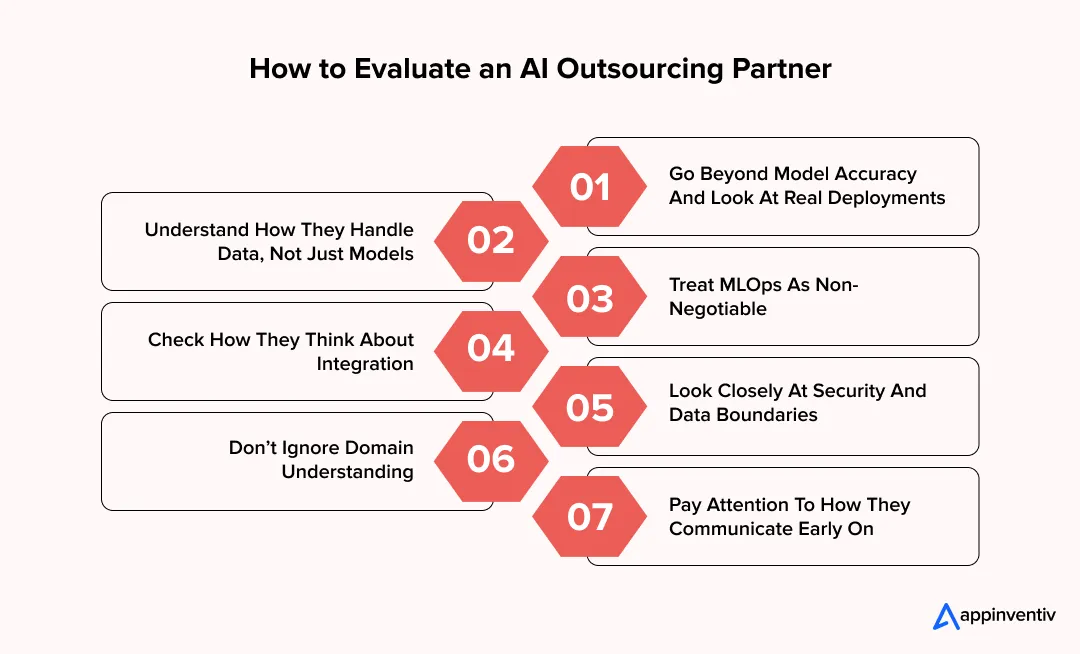
A practical framework to choose an AI outsourcing partner: evaluation criteria, red flags, IP and security, an...

AI outsourcing is how enterprises close the talent gap and scale faster. See the engagement models, what to ou...